Creative journaling as medicine
One of the most common questions I’m asked after “how did you make that journal?” is “what do you even journal about?”
I can assure you it’s never anything profound or as elegant and beautiful as the journal itself. Sure, I have deep thoughts, but not all of them make it into a journal. Mostly, I journal about ordinary observations. Like the other day I wrote about how a ladybird fell into my coffee, and I only realised when I took the last sip and it landed on my tongue like a coffee bean. There are loads of them hibernating in the woodwork of our old windows this Autumn. One or two are rather cute, but a cluster of them? Not so cute! My 87 year old neighbour told me they aren’t our native ladybirds, which have no more than seven spots, but darker harlequins that are slowly killing off the cheerful chubby bright red ones I grew up with, the ones that starred on the Ladybird books. Who’s old enough to remember those?
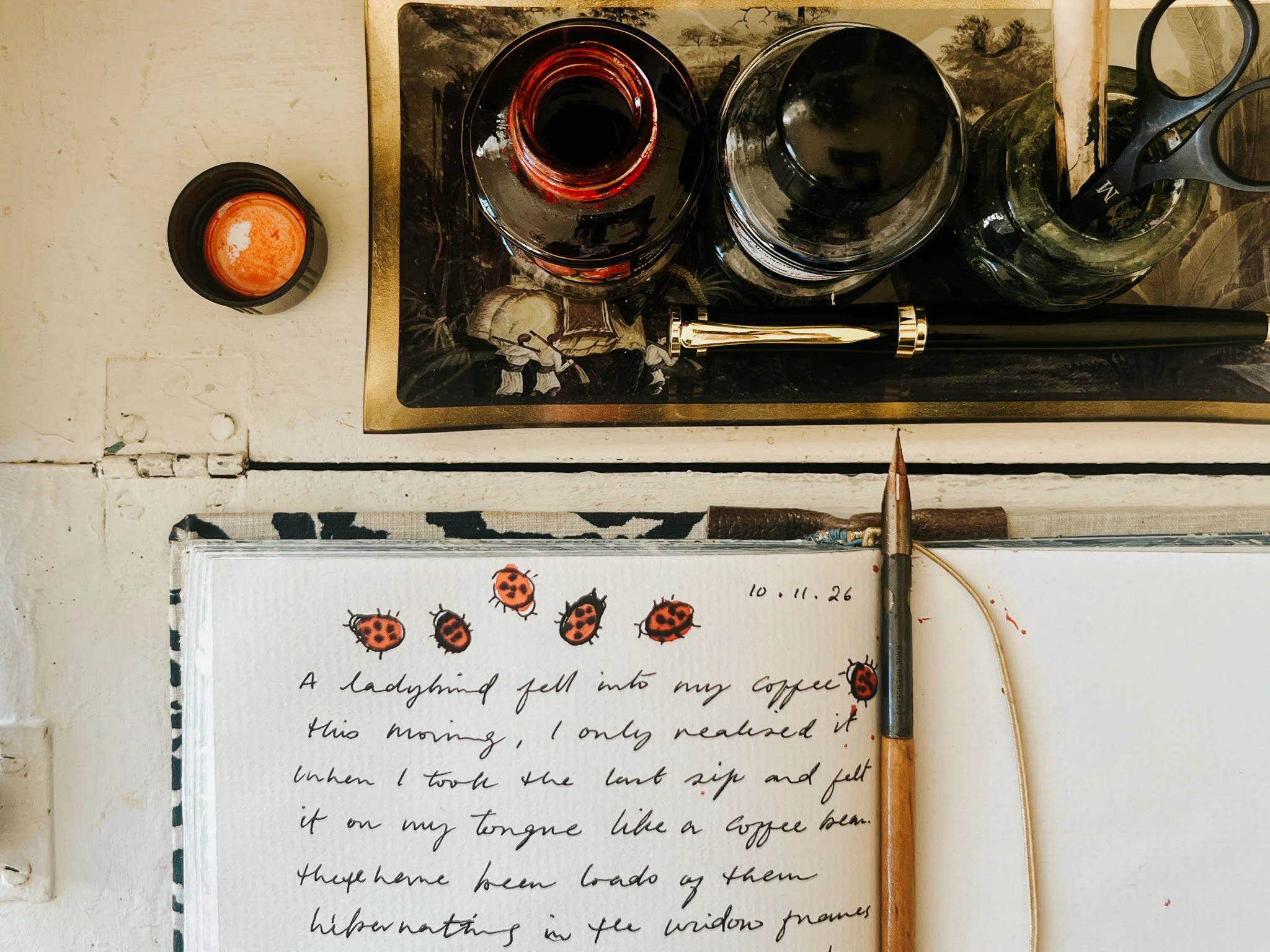
That is a perfectly good journal entry. So is the thought I’m left with after a chat with a friend, a neighbour or the stranger in a cafe holding a bunch of sunflowers. Some days it does go deeper, into life, health, seasonal blues. But mostly it’s just everyday life.
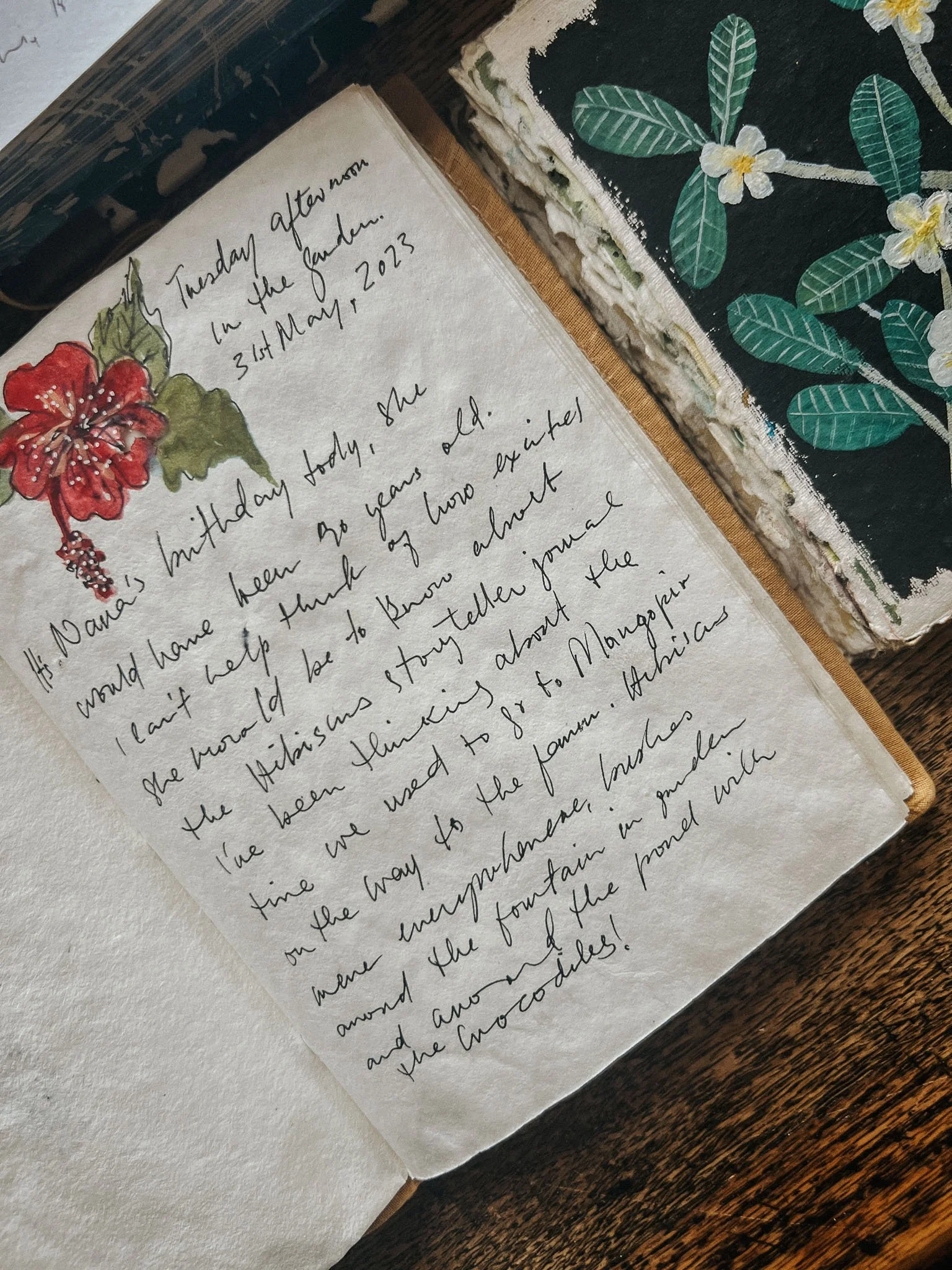
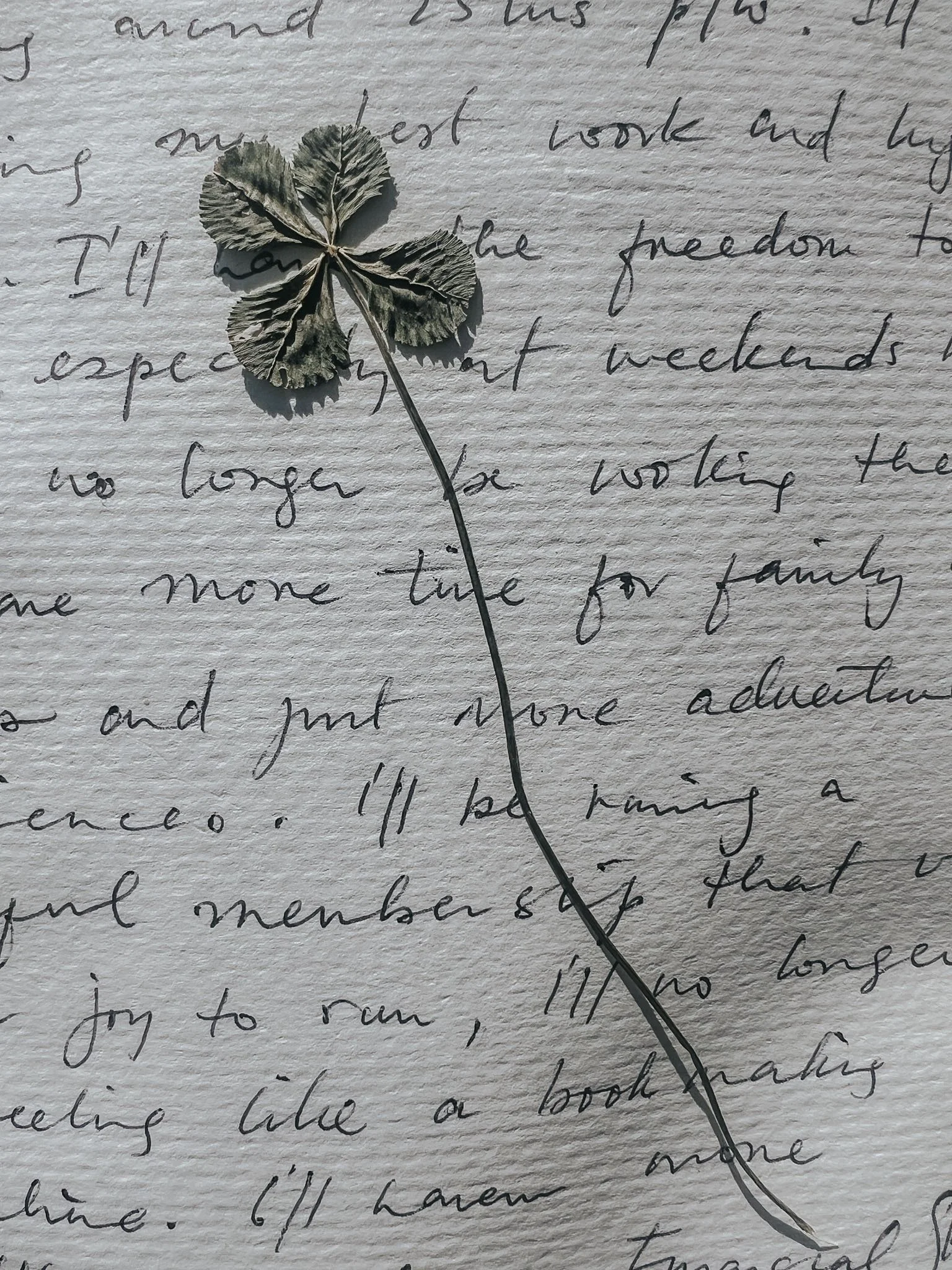
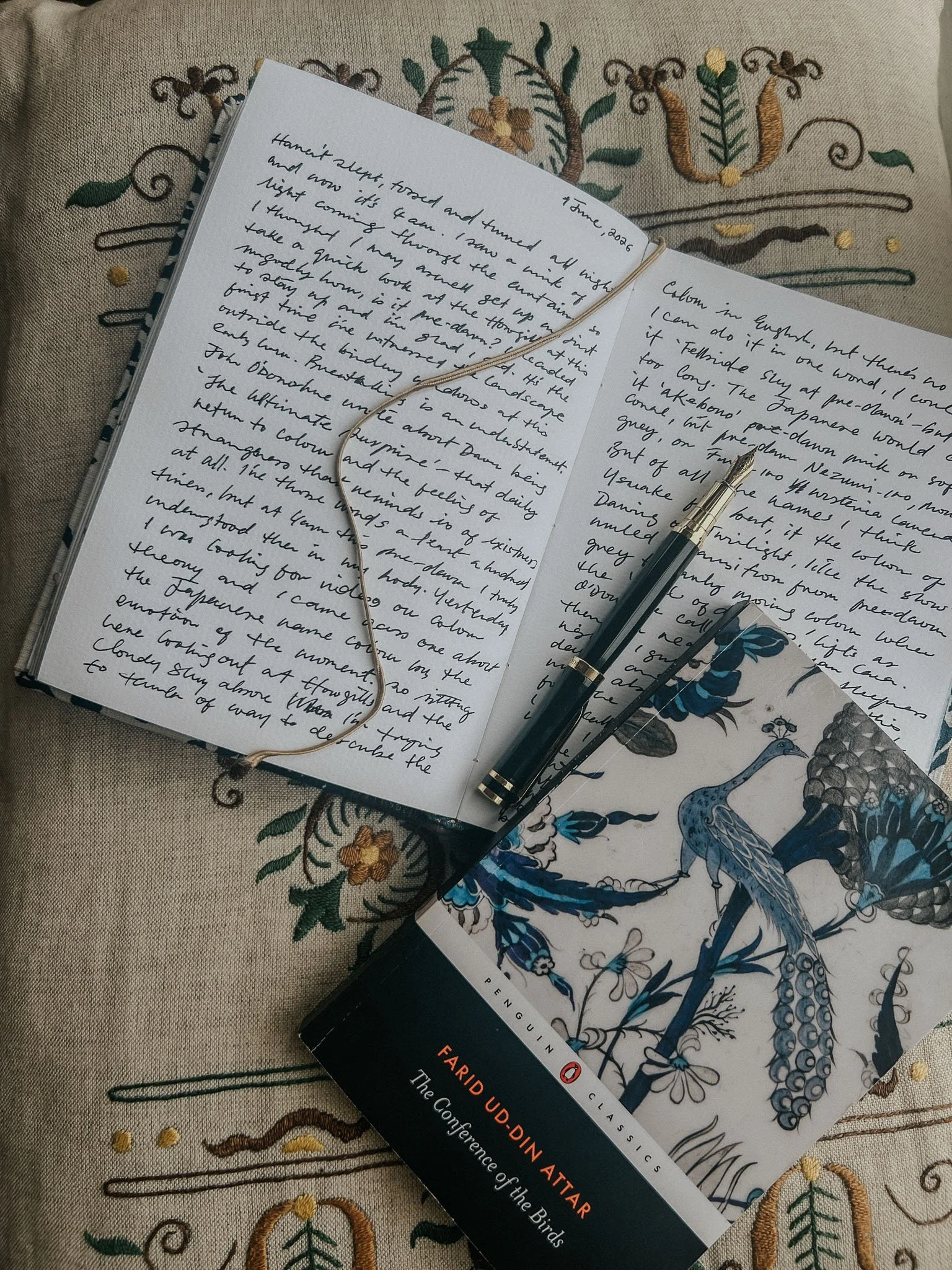
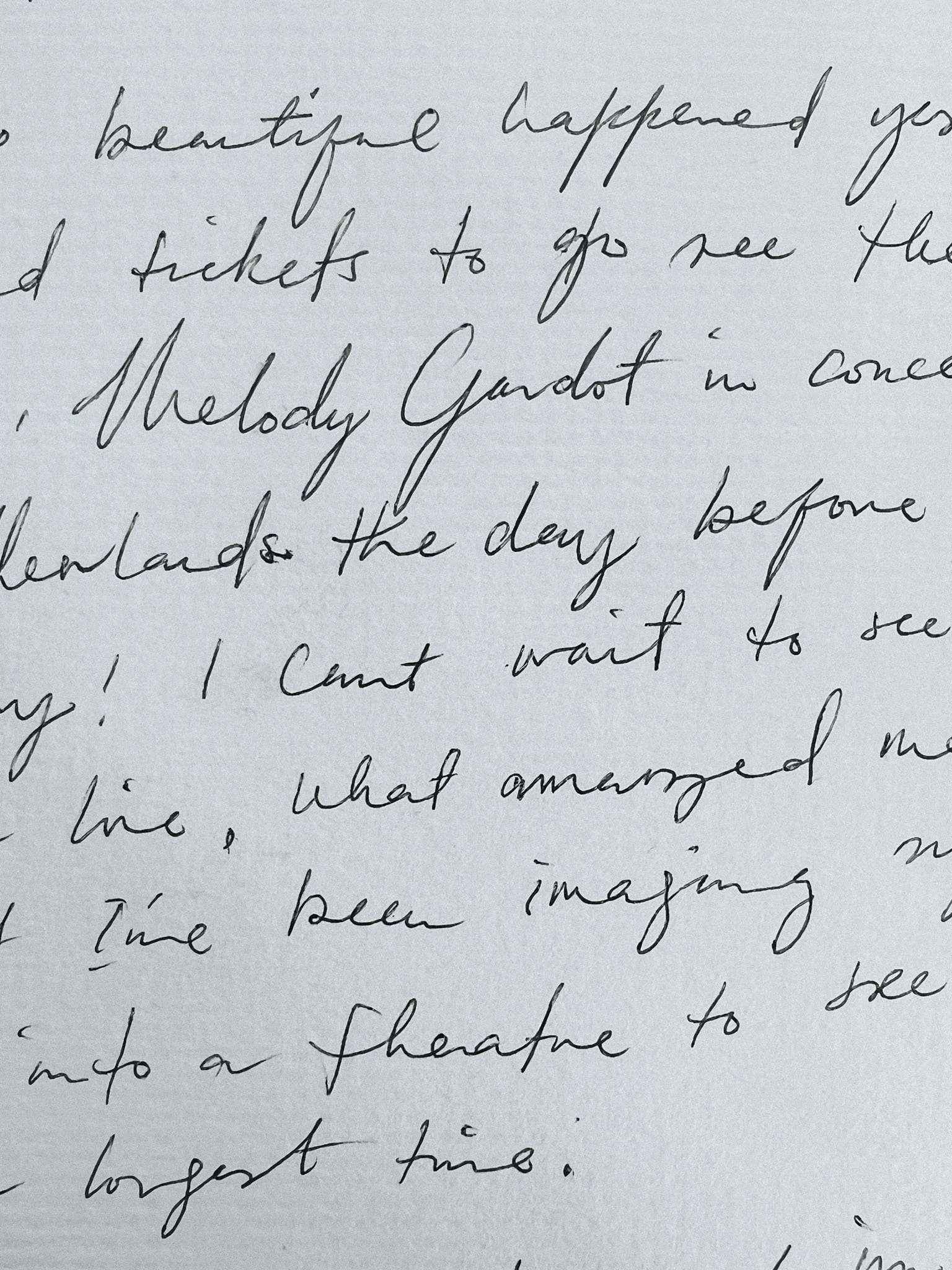
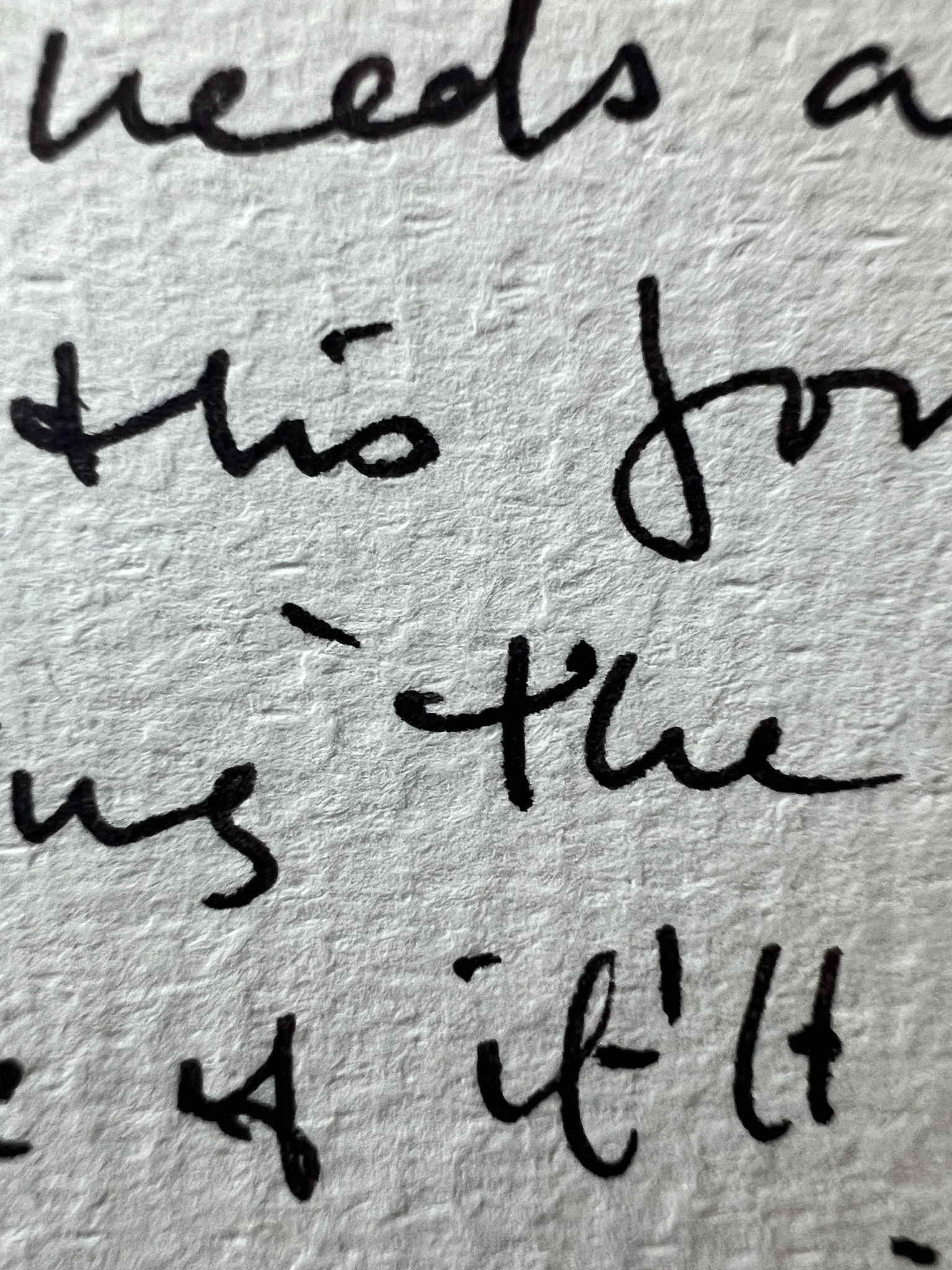
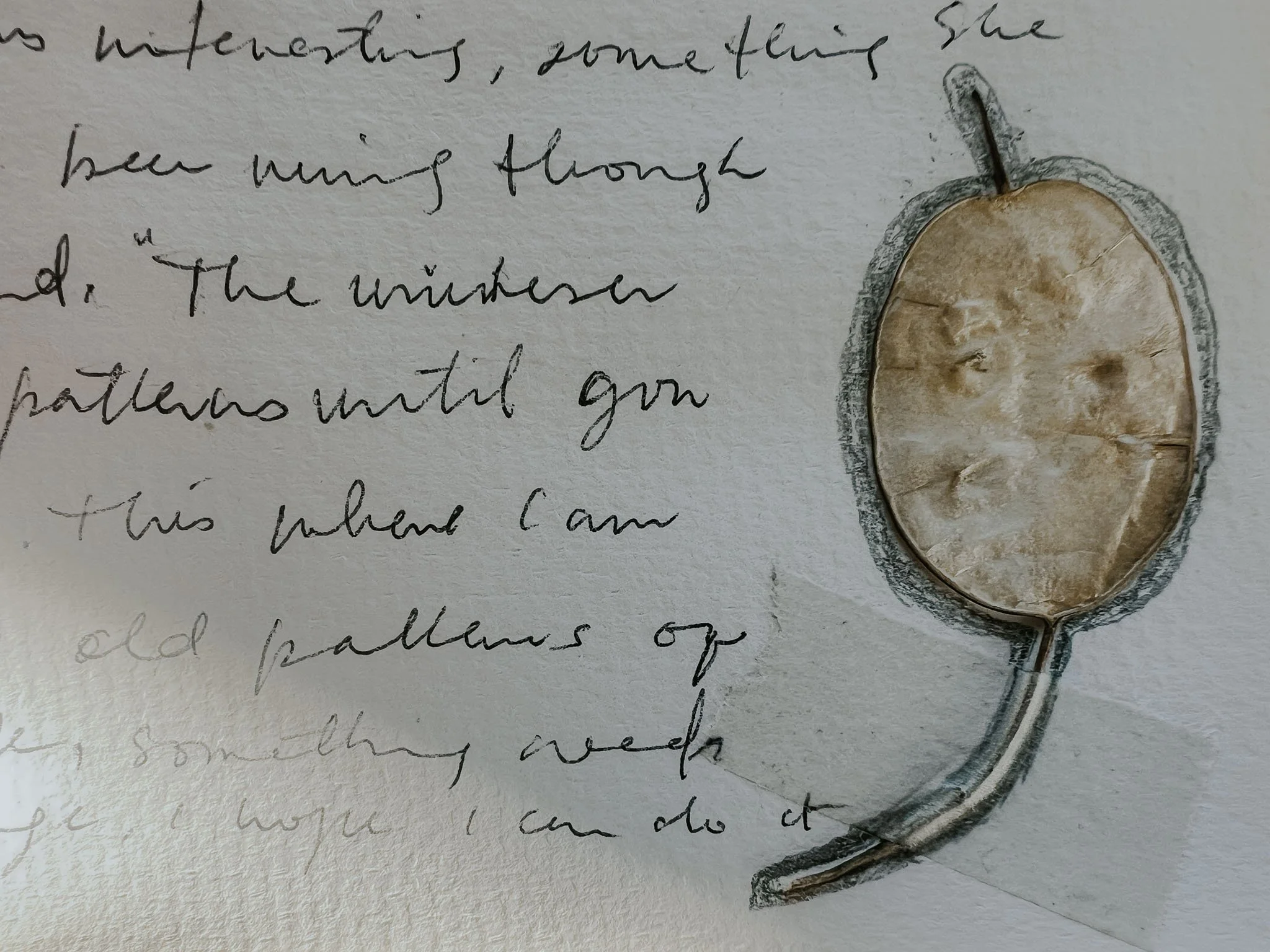
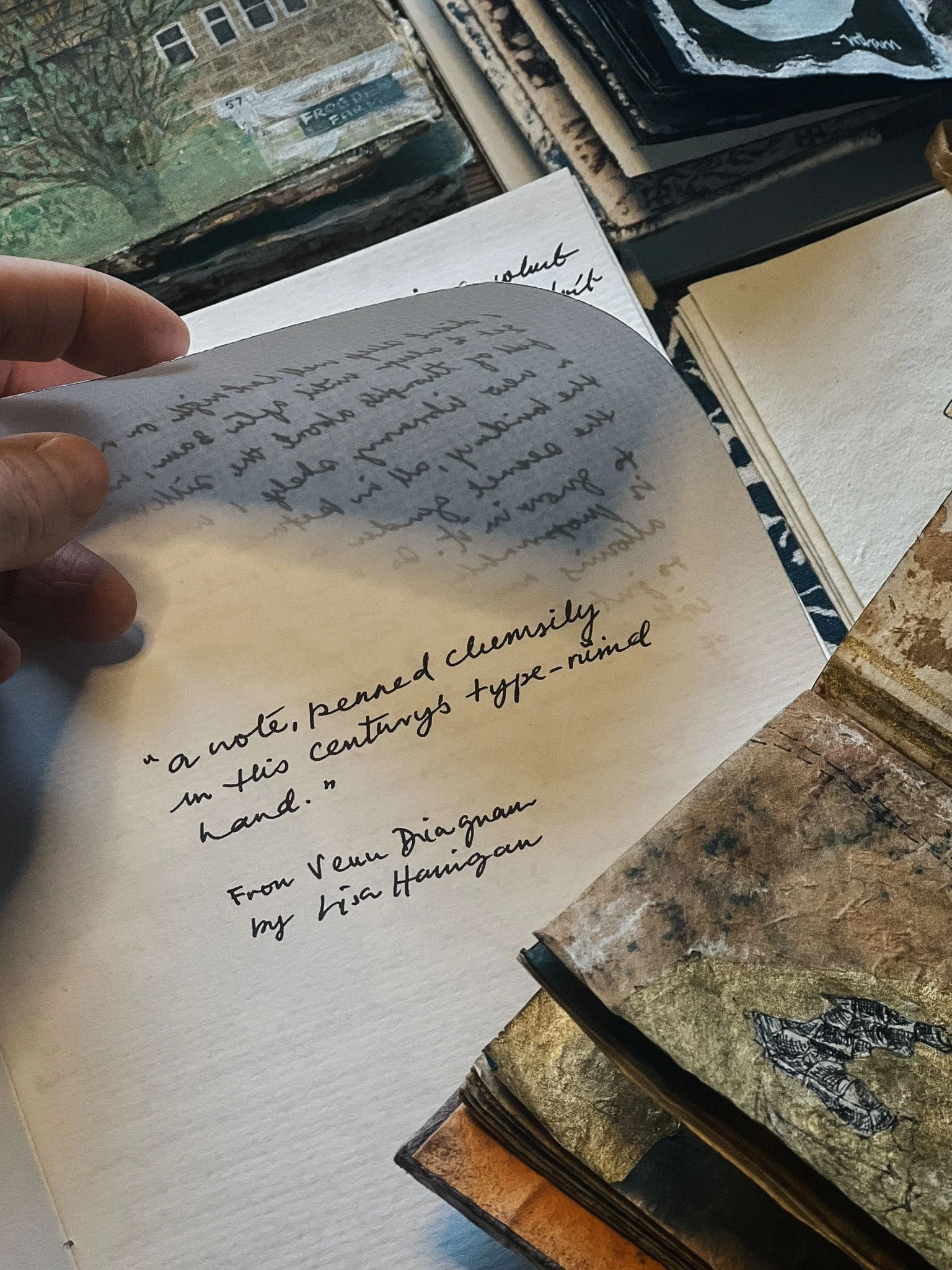
I wonder if you’ve been keeping a journal long enough to notice something I noticed only recently…that you can tell exactly how you were feeling on any given day just by the quality of your handwriting. When my writing is small and neatly structured, I know I was feeling well, content, motivated. When the words sprawl across the page barely legible even to my own eyes, I know it was a hard day; more often than not because of a scattered mind or worse, a flare-up of rheumatoid pain.
A confession first
I don’t journal every day. I never have. There have been long stretches, years even, when I didn’t write a single entry. During cancer treatment or when I lost my dog of 15 years, journaling felt impossible. Too much, too raw.
Some people reach for their journal to process grief and find it helps enormously. I tend not to journal through the stormiest periods of life. I process grief through the rhythm of my hands making something, usually journals for others to fill. I wait for the storm to pass, and sometimes, years later, it shows up in a few lines that acknowledge an emotion rather than relive it. When Glen Hansard died, I remembered the night I saw him at Belfast’s Ulster Hall; it was the night before my final diagnosis and staging from my oncologist. That night showed up in my journal this summer, 14 years later! Write during a storm or after it has passed, whatever works for you.
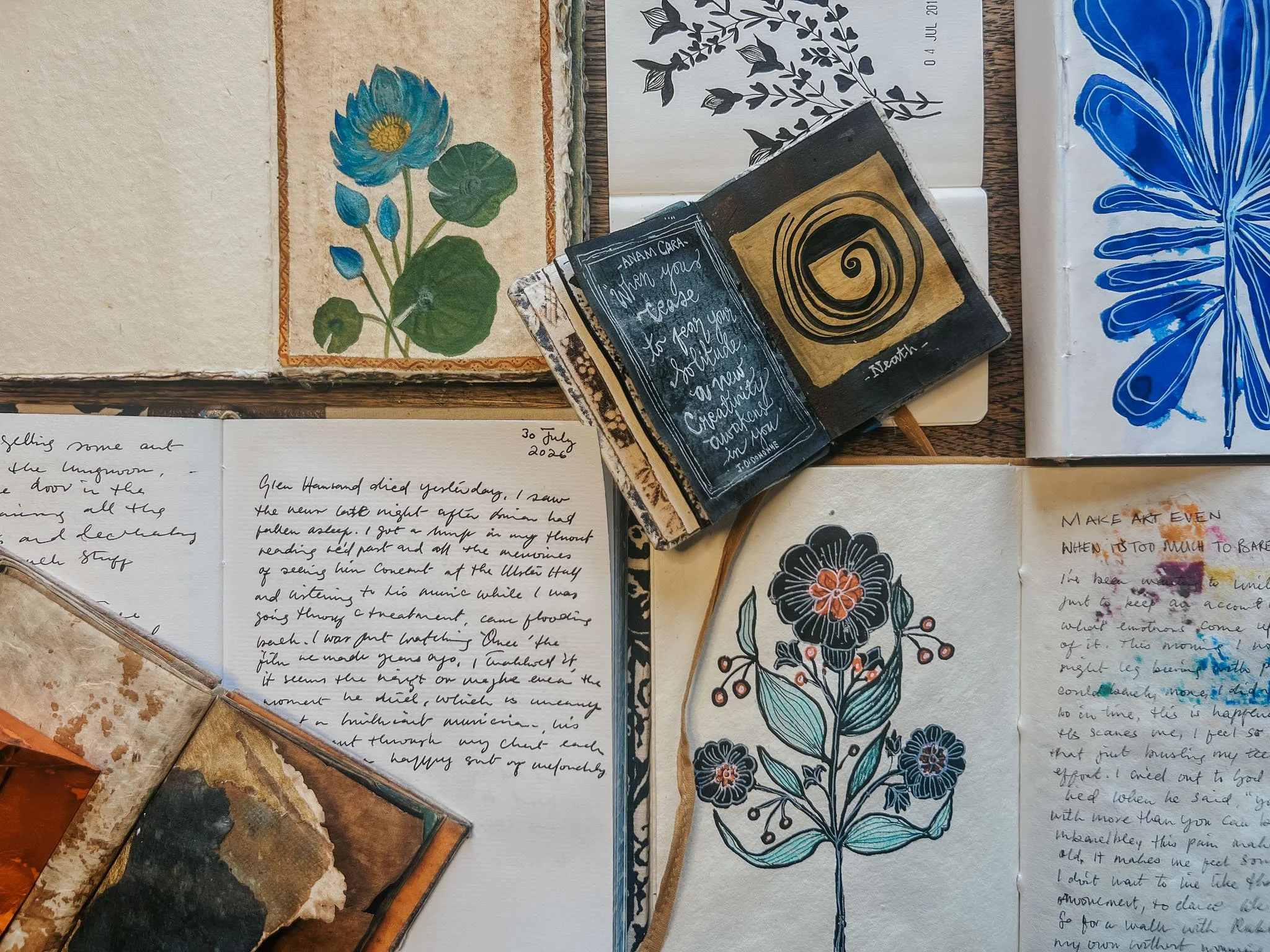
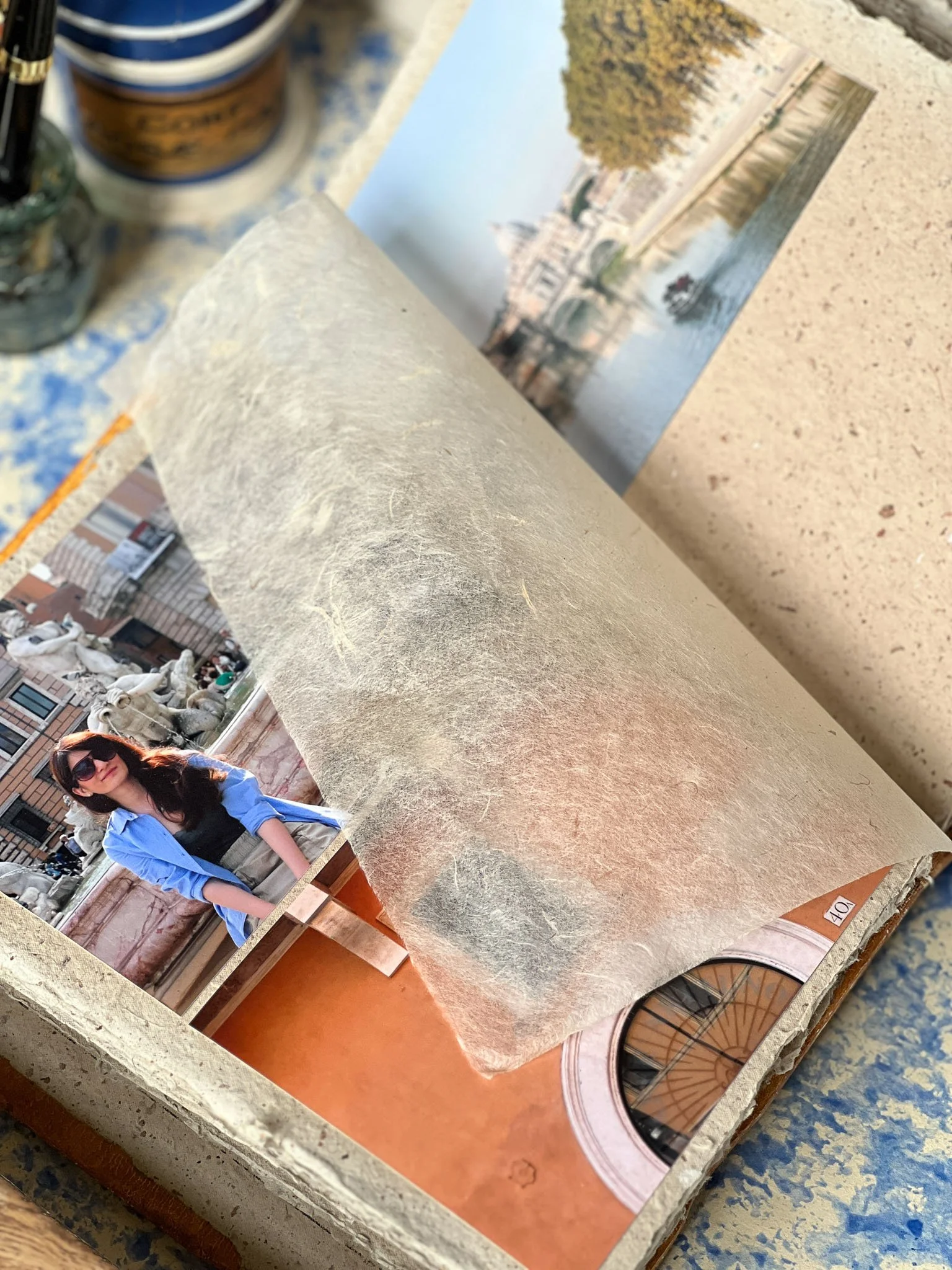
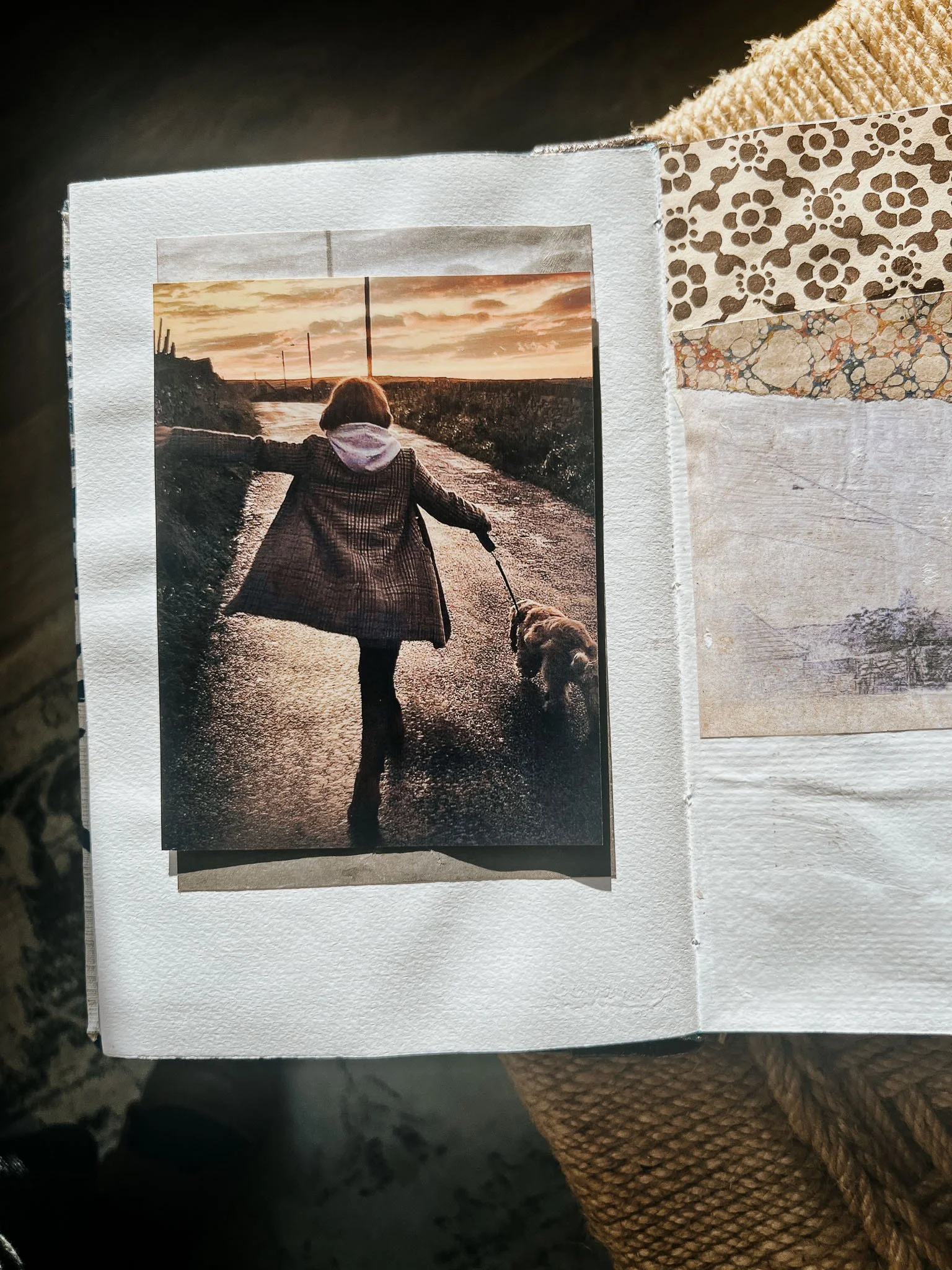
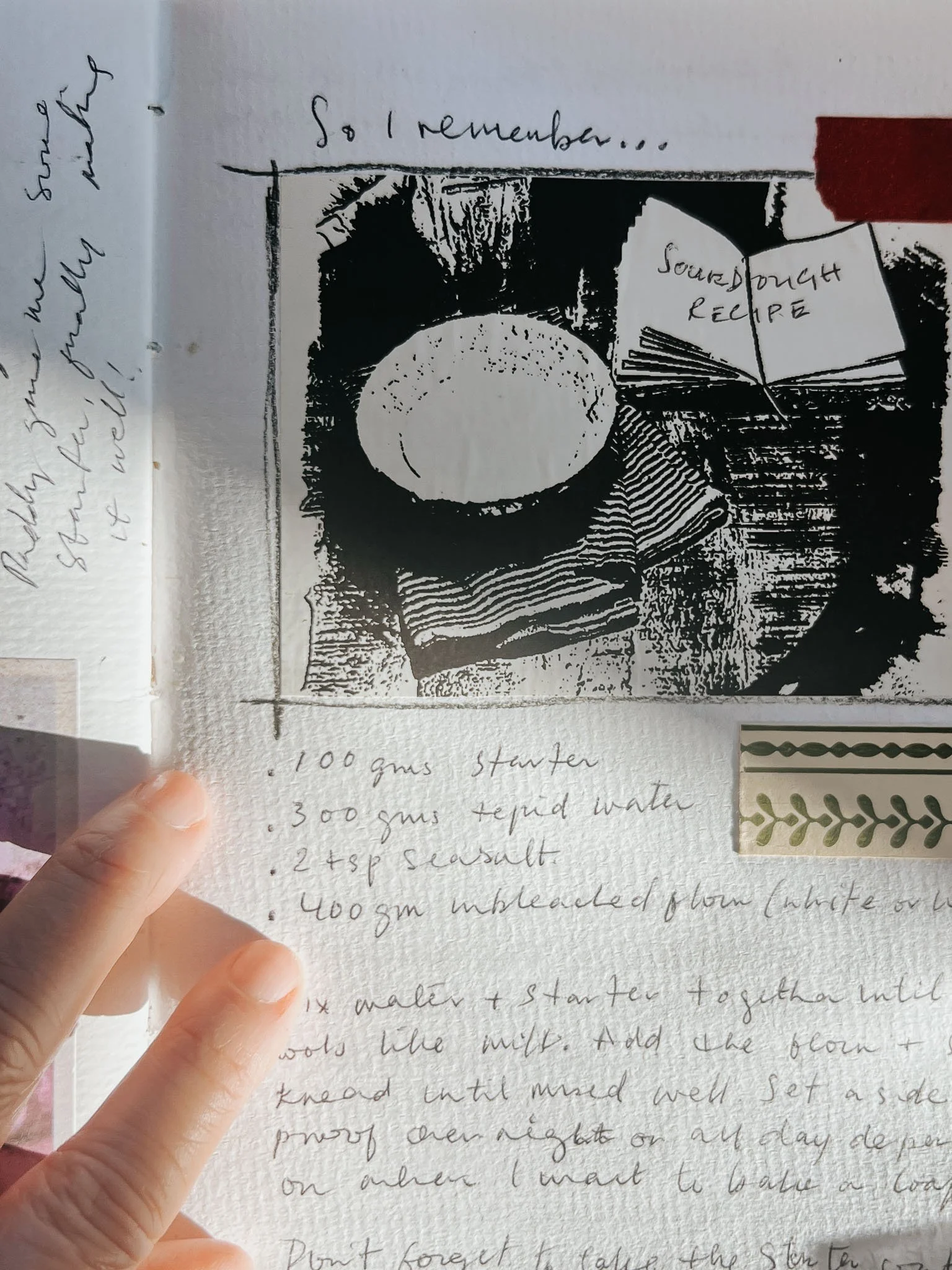
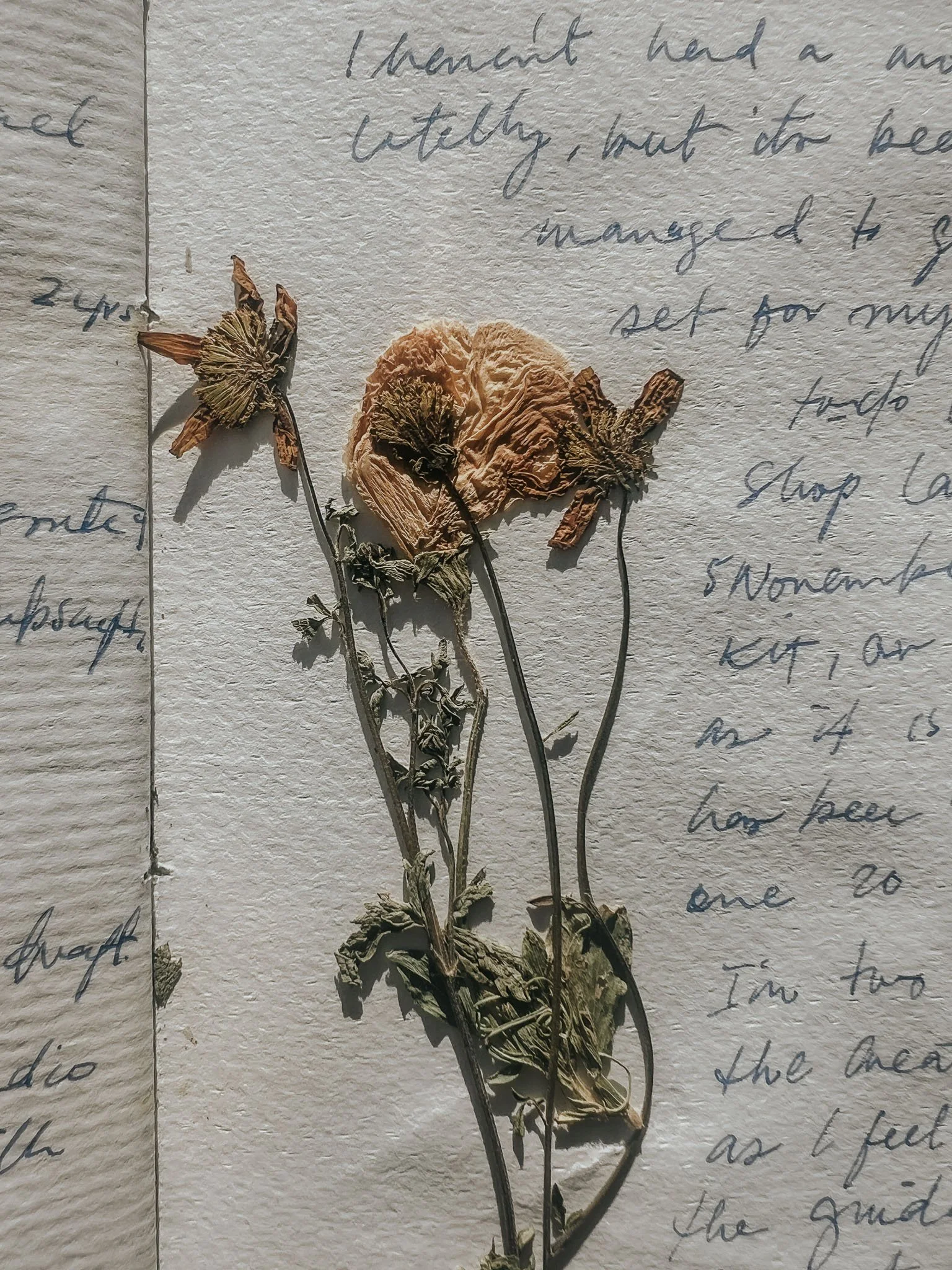
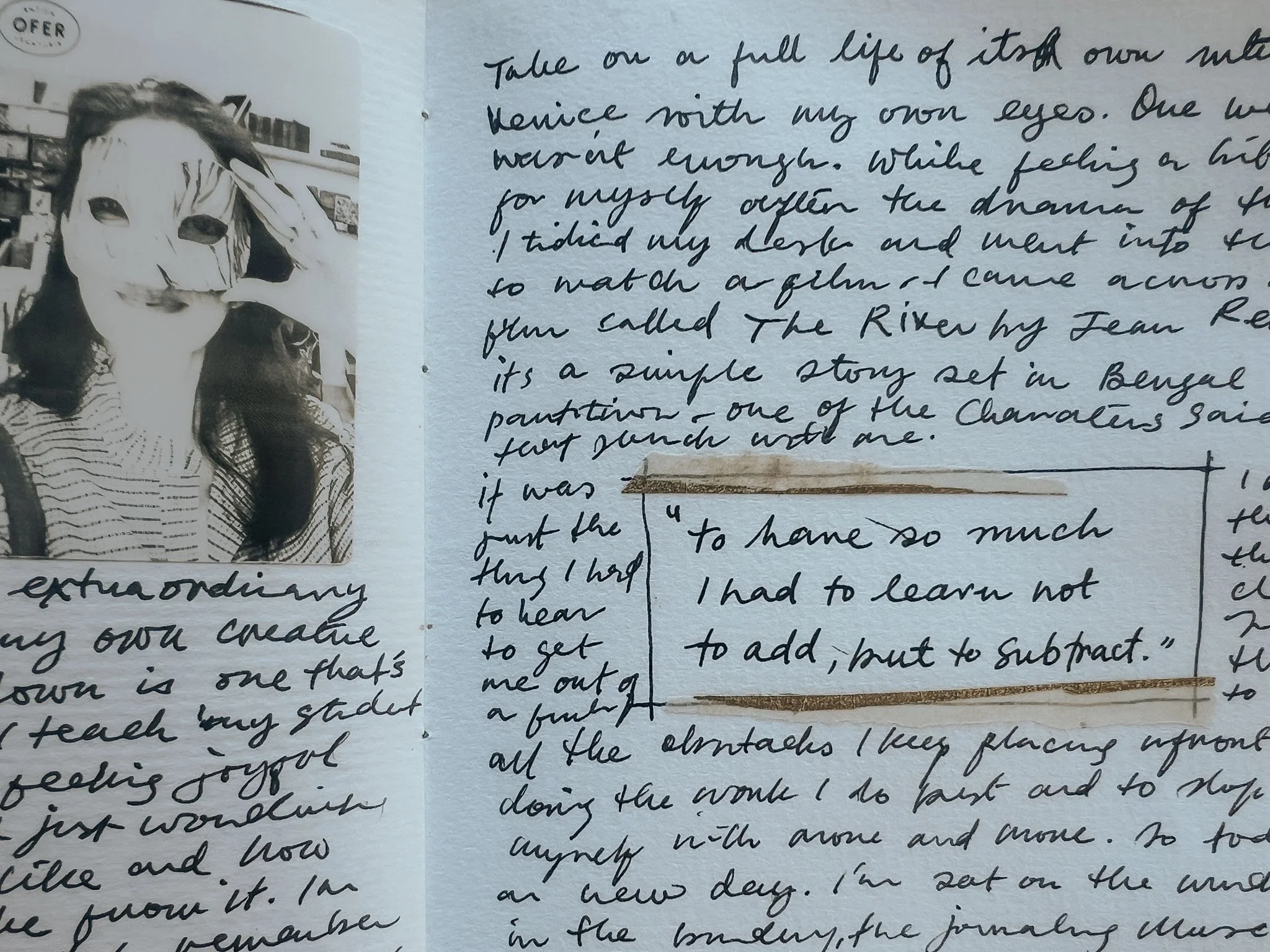
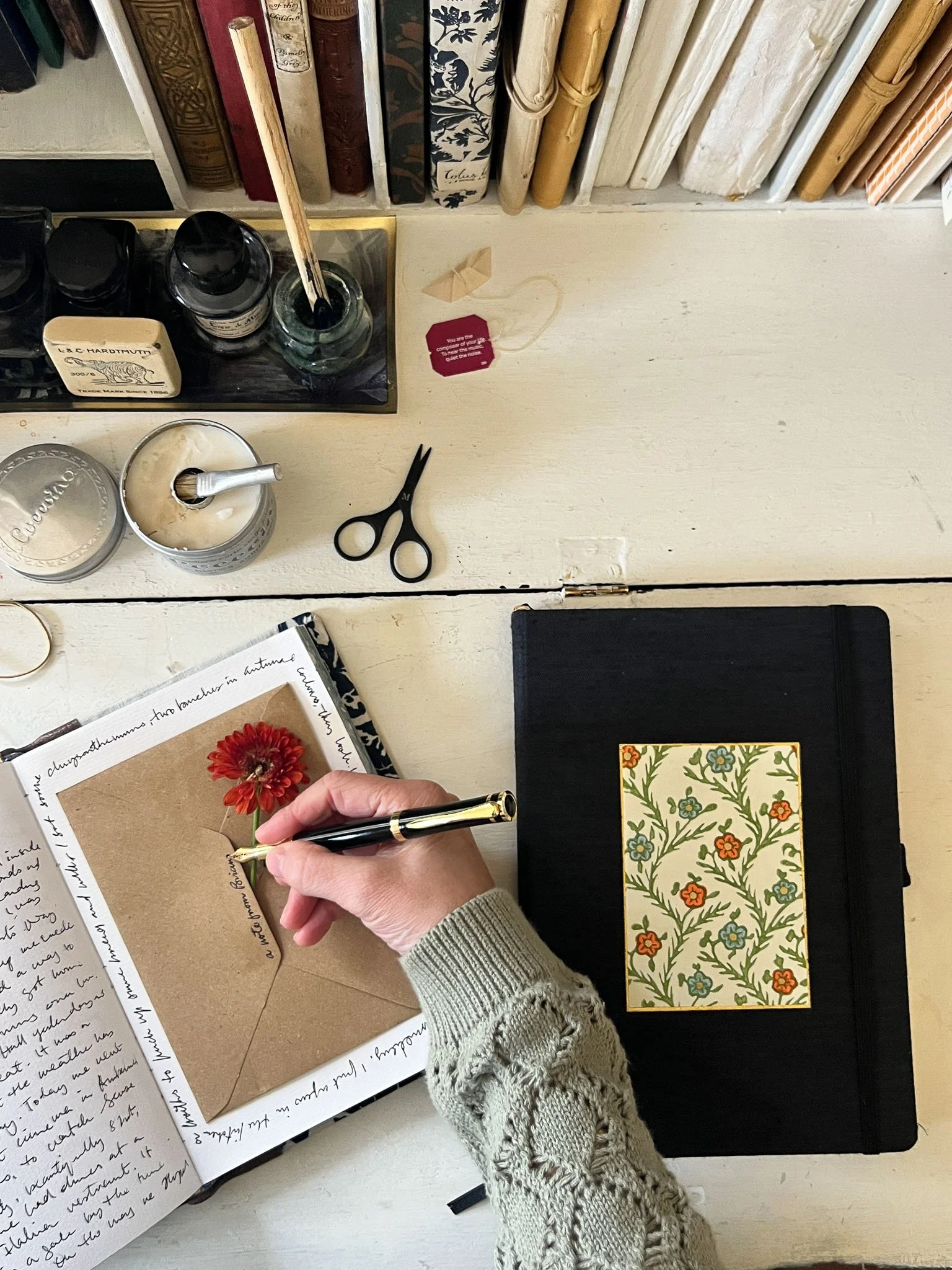
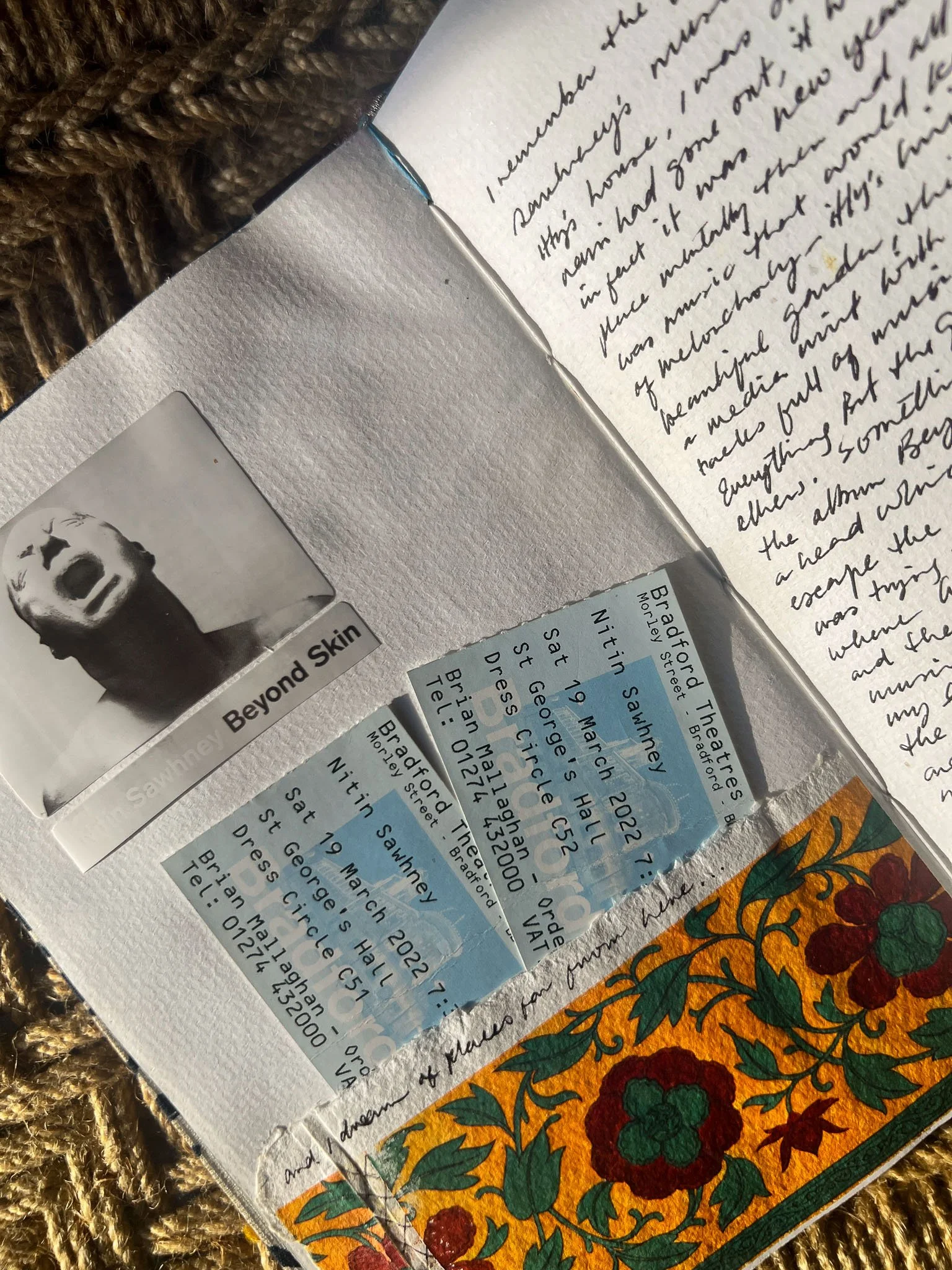
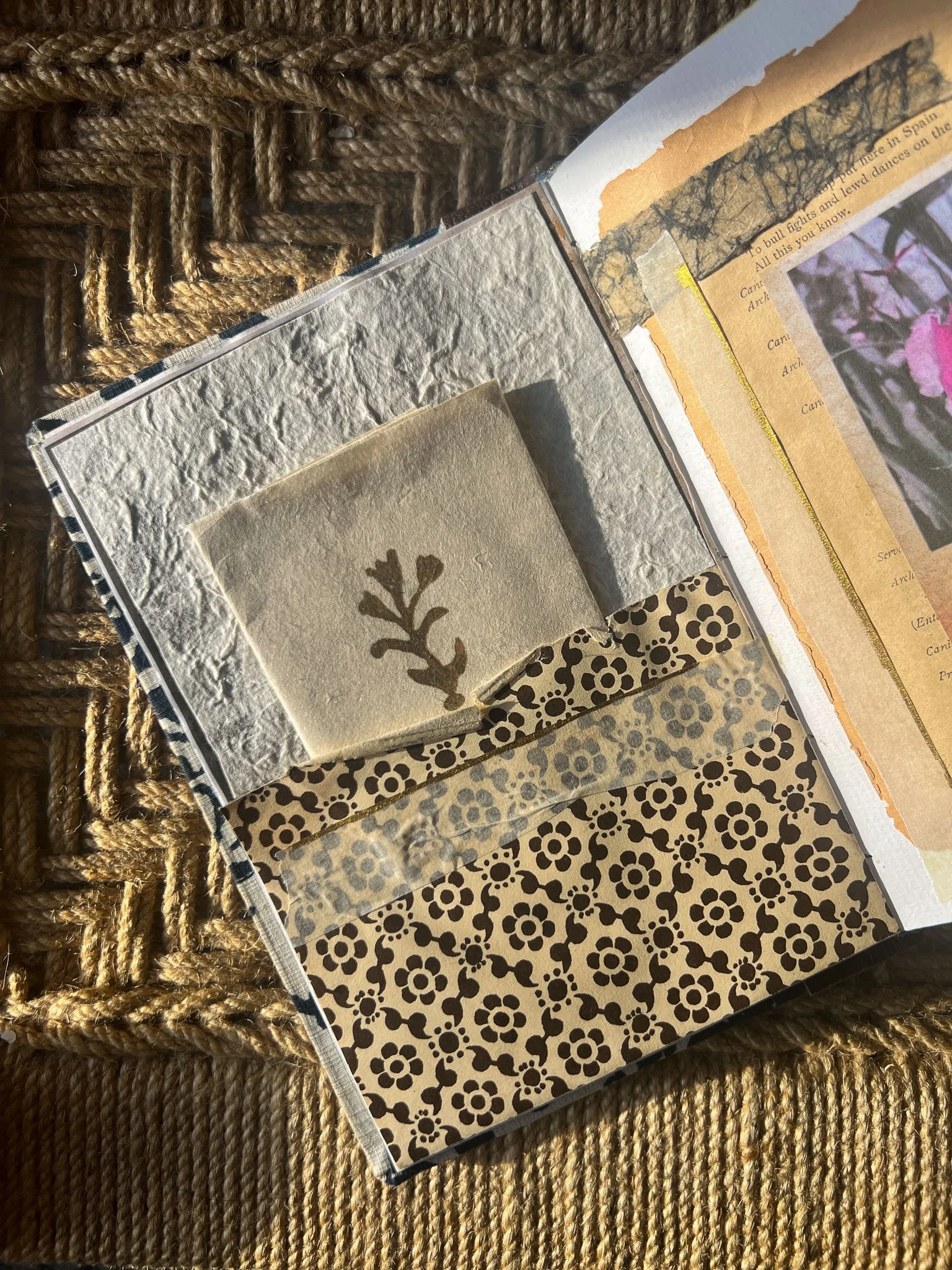
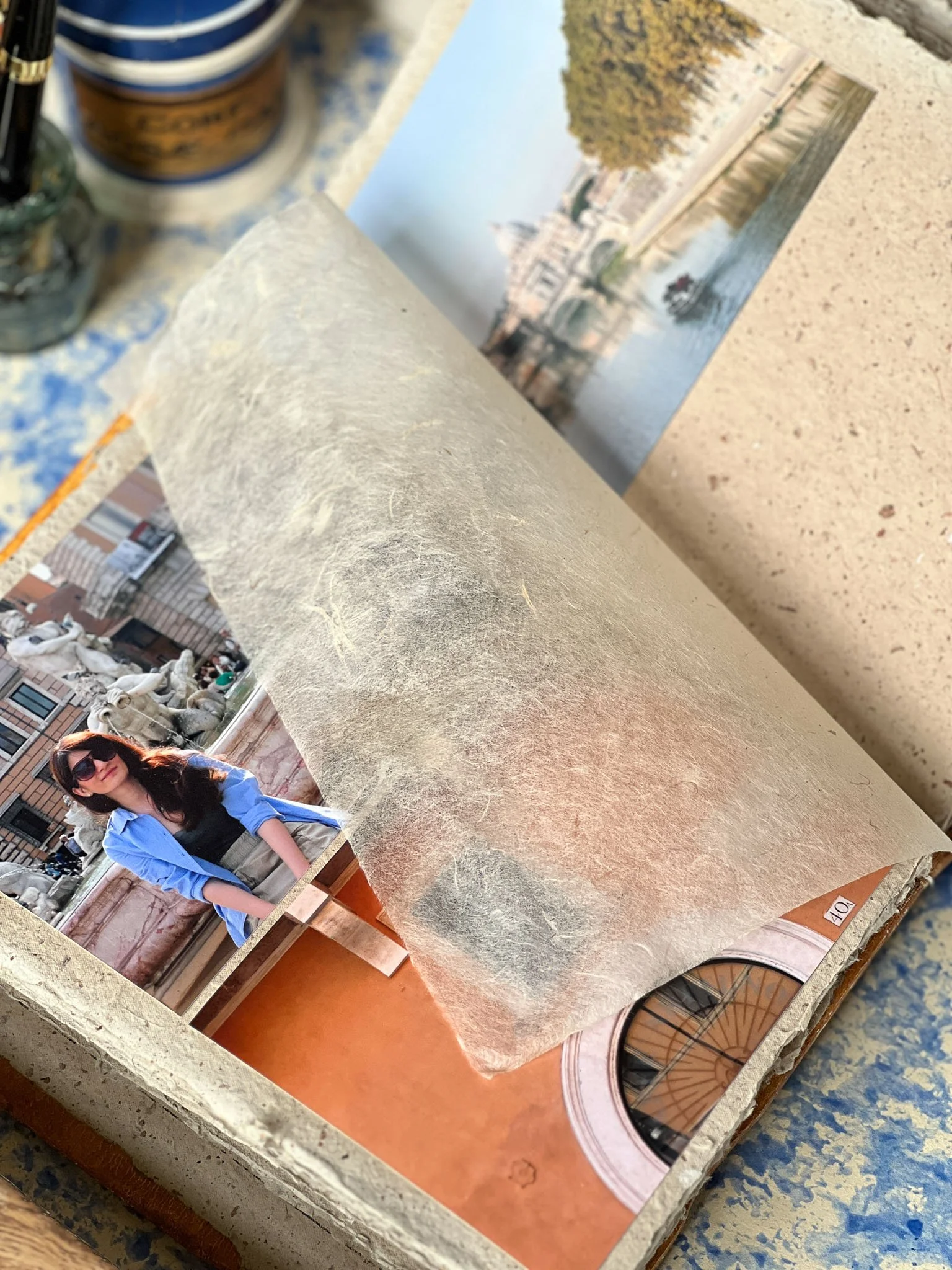
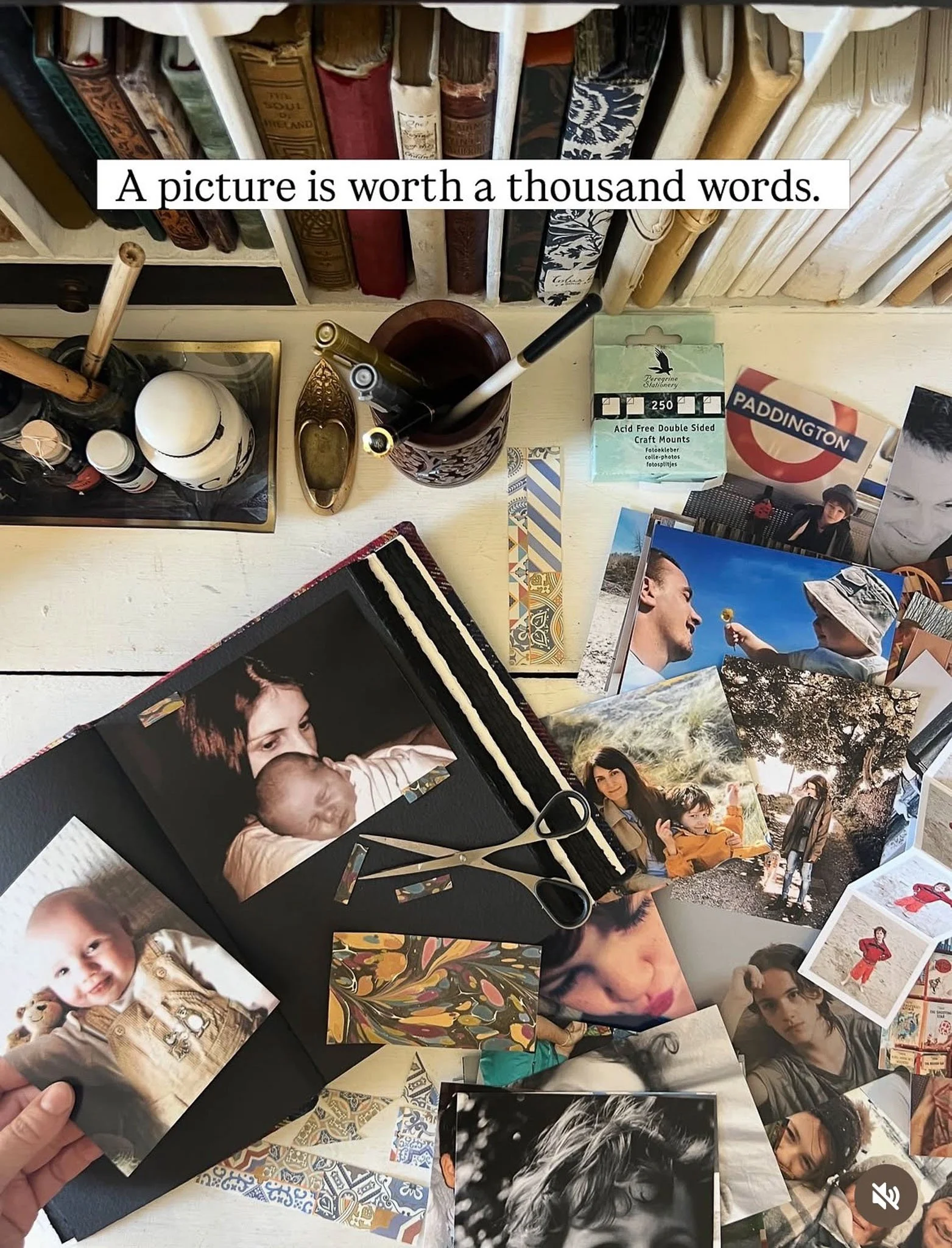
I find during difficult periods of life, I lean into more visual journaling, gathering beauty and colours, filling Keepsake Books I make to use like a mixed media scrapbook, I fill them with pressed flowers, collaged pages, photographs, quotes, lyrics of a song I love and passages from books I’ve enjoyed.
‘‘The page just held a different kind of language when I was mostly out of words.’’
I’ve never managed a daily journaling practice, and what works for me is coming to the page when I feel like it. I tried the 365 Daily Stoic journal with its morning and evening prompts. It served its purpose at the time, but it was shelved half filled, because there is only so much analysing of my thoughts and emotions I can do, and as much as I love the essence of Stoic philosophy, there are some of its teachings I don’t agree with.
Then I read The Artist’s Way by Julia Cameron. Loved it, but I only got as far as week six of the prompts before life got busy and I got distracted. I’d like to go back and see the full 12 weeks through someday. I hear it’s better done with a friend.
Morning pages stayed with me with though. If you’re not familiar it, morning pages is the practice of writing three pages first thing in the morning, stream of consciousness, before the judging mind wakes up properly. No editing, no structure, no performance. Julia Cameron recommends doing it every morning without fail, but let’s be real, that is not possible for everyone. I don’t always manage it, sometimes I journal at night, cosied up in bed, the best place in my opinion. Sometimes I journal only on weekends, as a reflection on the week past, rarely three pages and often just a sentence.
Journaling should fit around our life, no need for rules for something that should feel pleasurable, and I think that’s the only way the habit of it ever really lasts. What I keep from morning pages is the spirit of it, coming to the page without performing or editing, and without trying to make it look like anything other than exactly what your emotions need it to be in that moment.
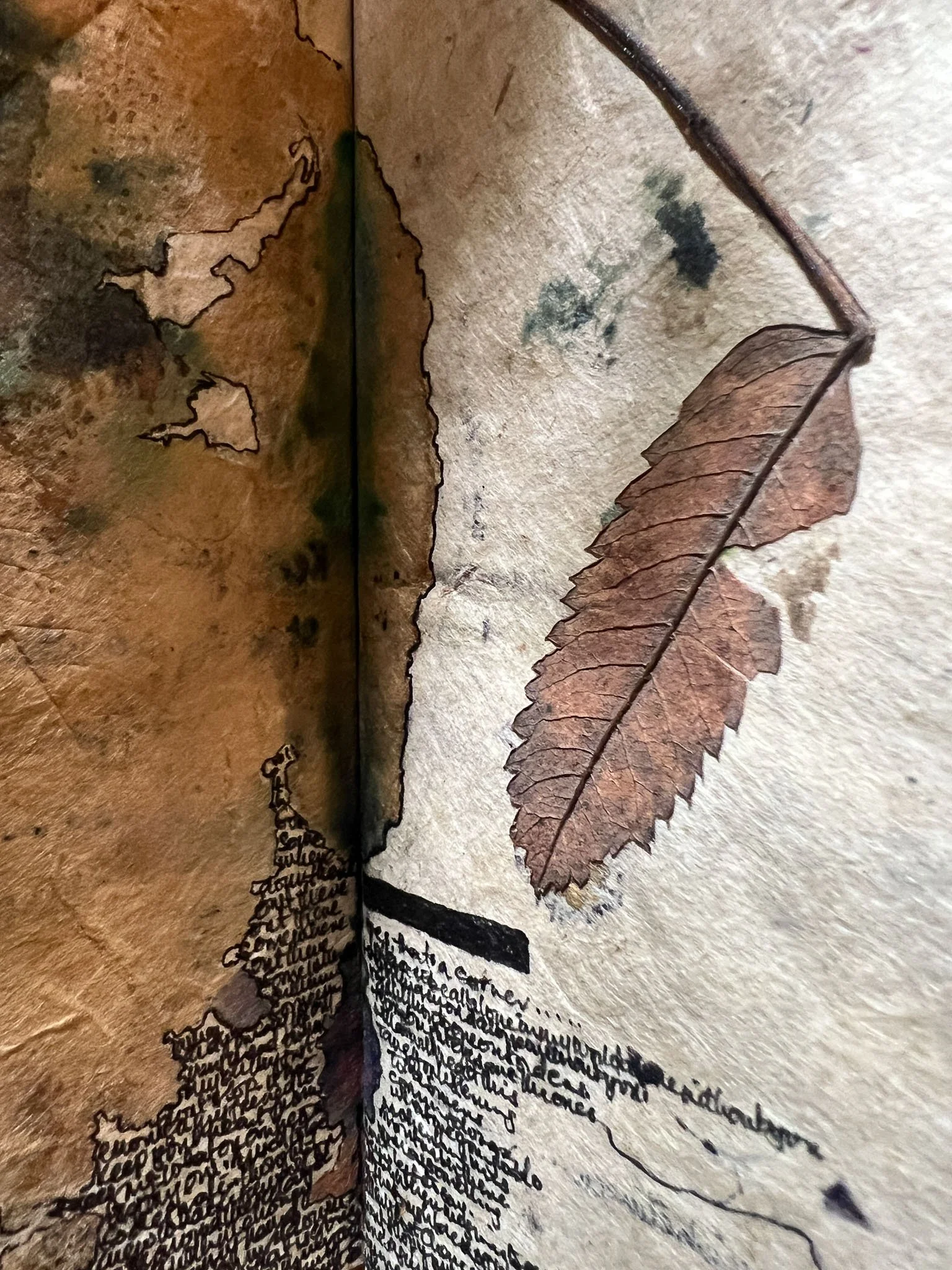
‘‘For a long time I approached journaling the way I approached everything… with a perfectionist’s eye.’’
I wrote in pencil so I could erase spelling mistakes. I agonised over sentence structure. I tried to make the pages look considered and intentional. And then, naturally, I stopped wanting to do it at all.
These days, when I journal, I never think about:
Pretty handwriting
Spelling mistakes
Proper punctuation
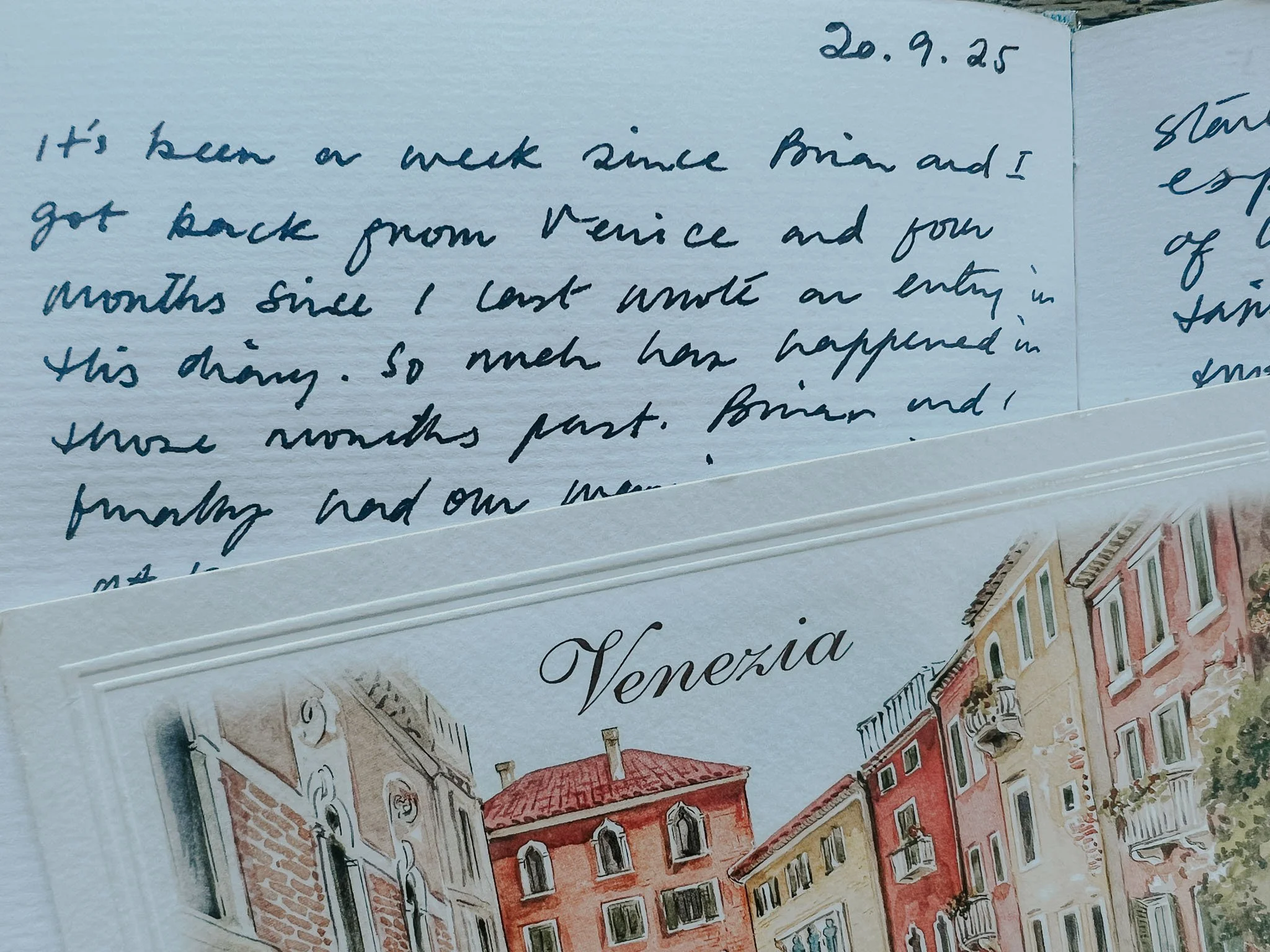
Neat paragraphs
Articulate or poetic language
None of it.
The whole point is to come to the page raw and unfiltered, whatever the emotion, without dressing it up. There’s no need for performative perfectionism on the page. The moment that happens even a little, you lose the thing that makes the act of journaling approachable and valuable.
What to journal about
I have different journals for different moods and purposes and none of them are precious.
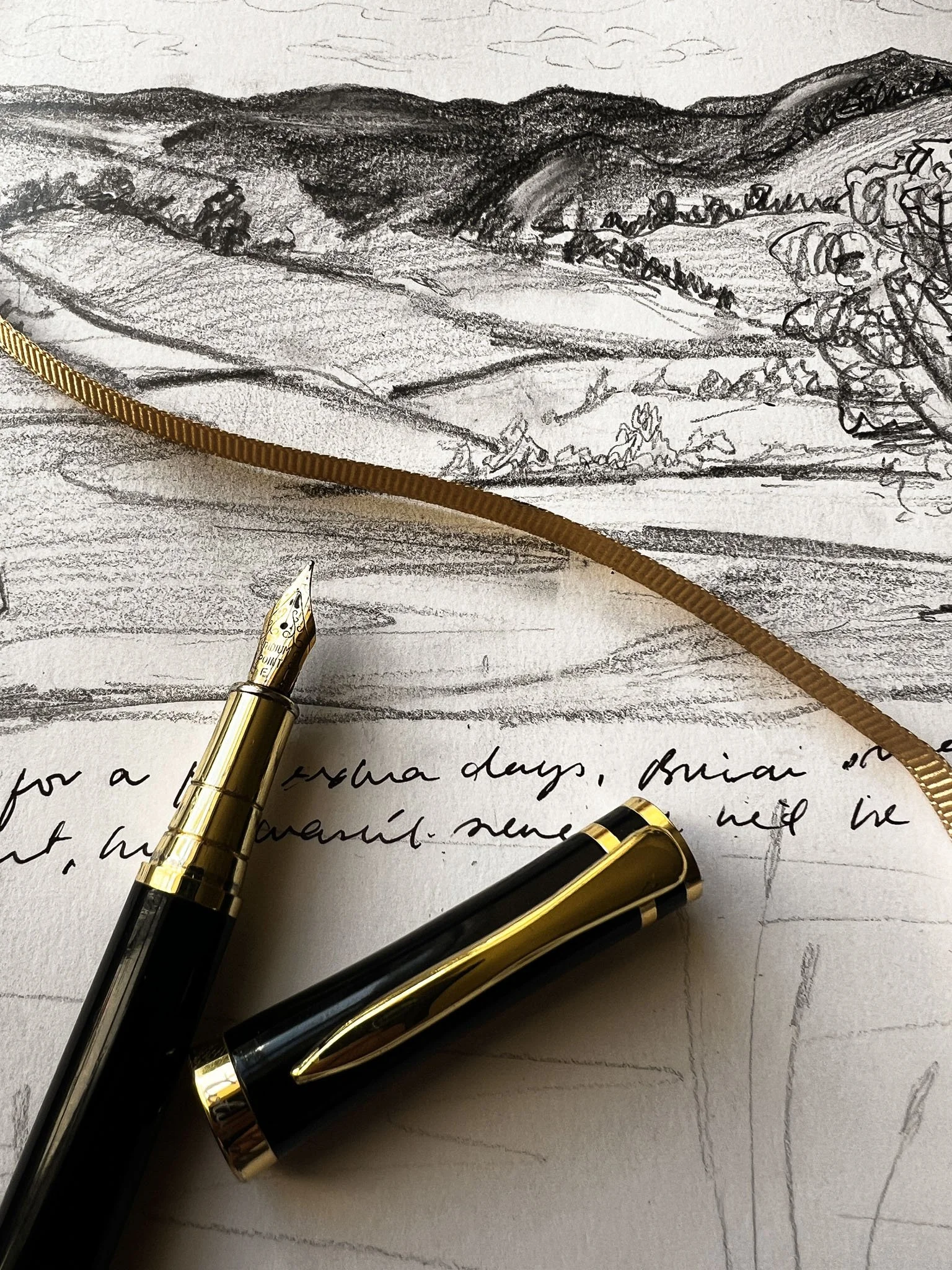
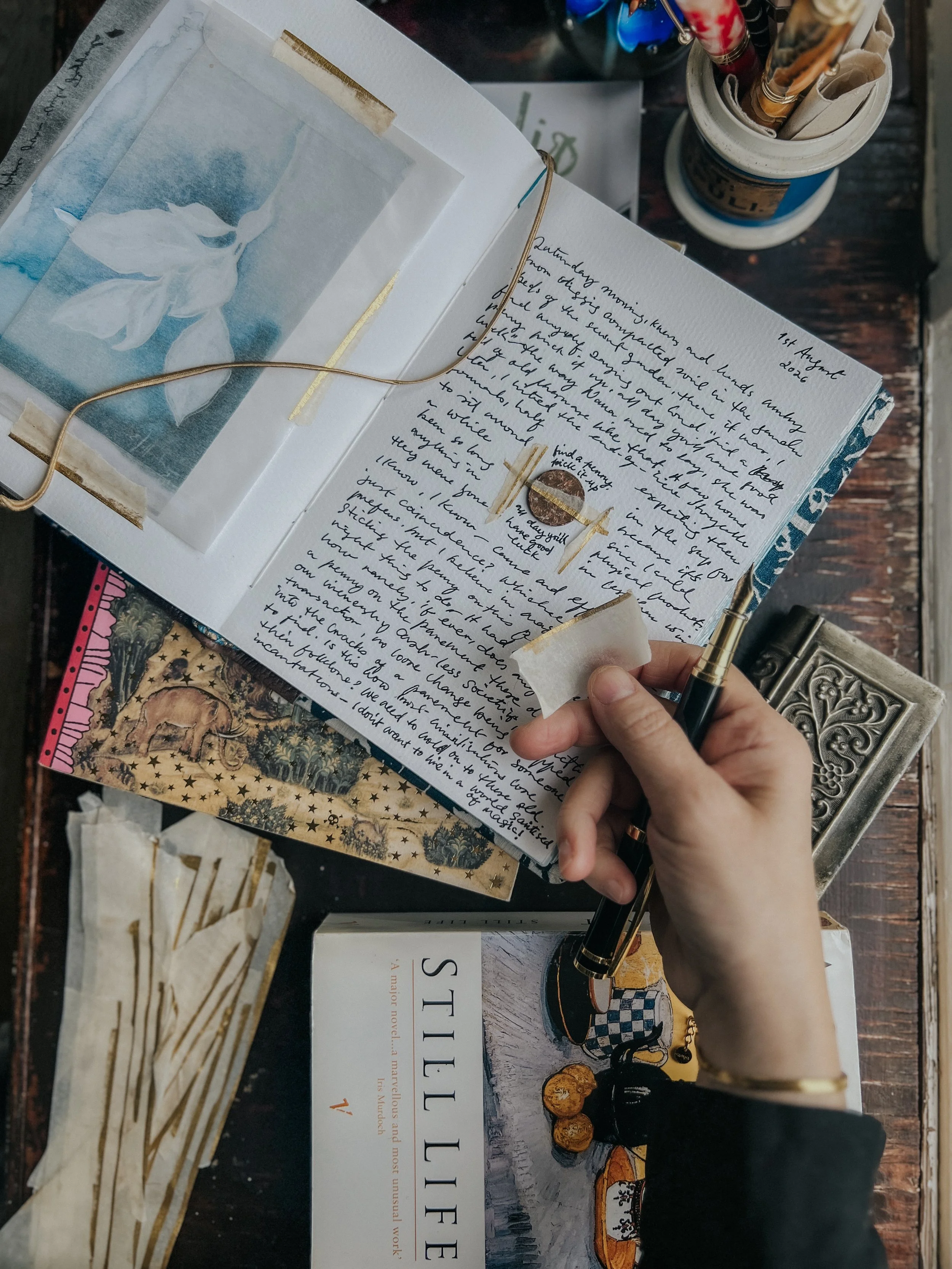
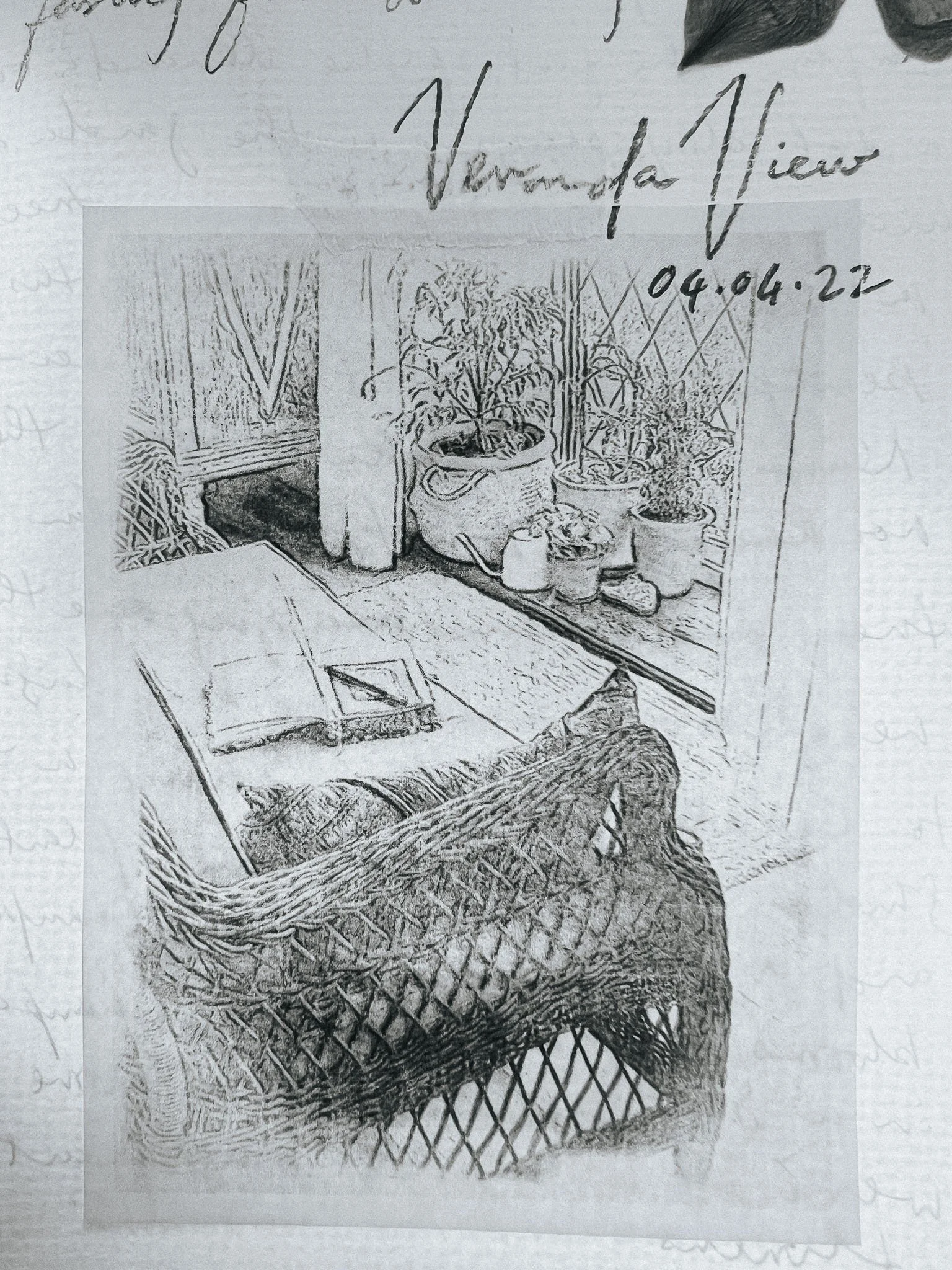
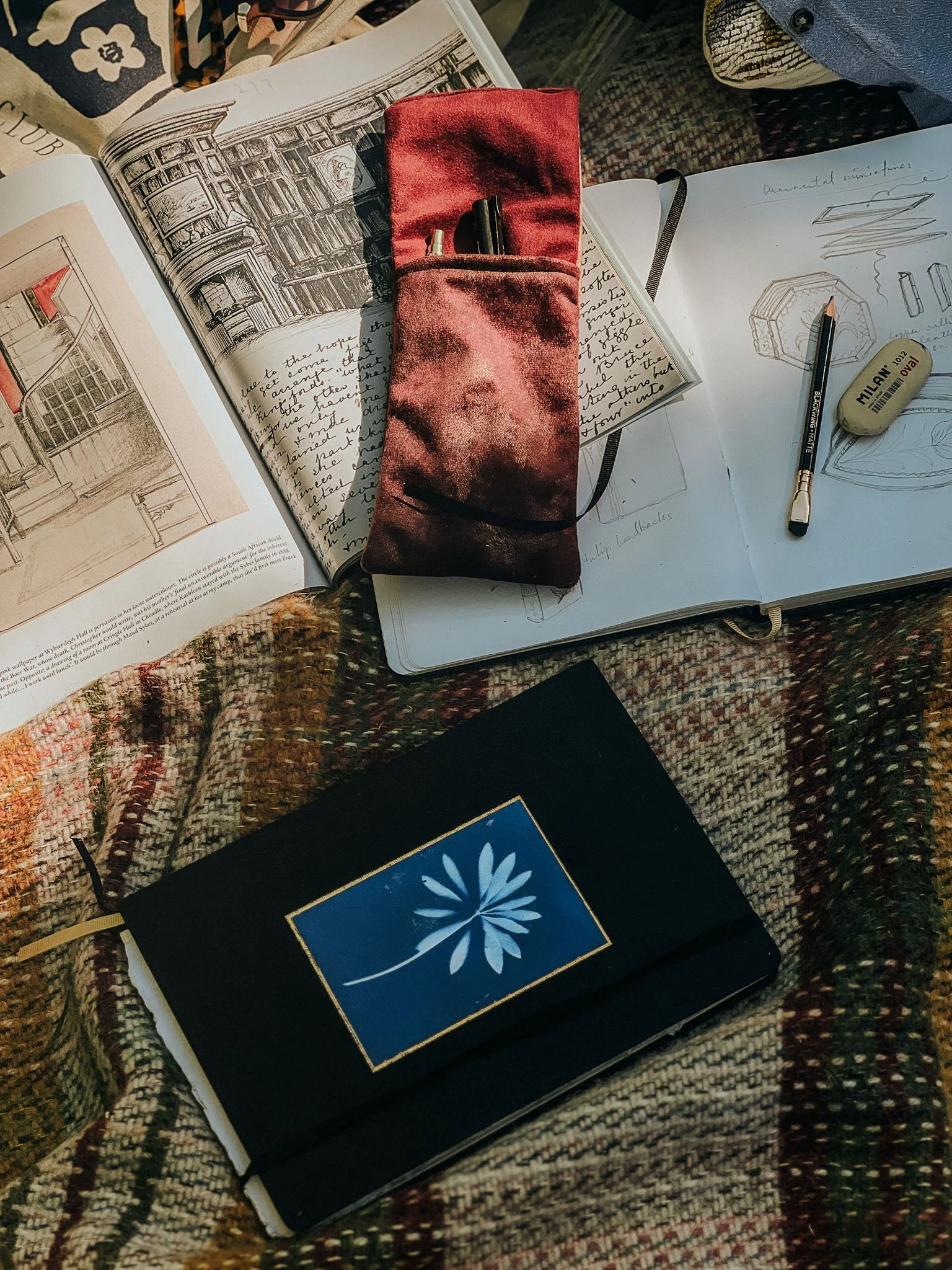
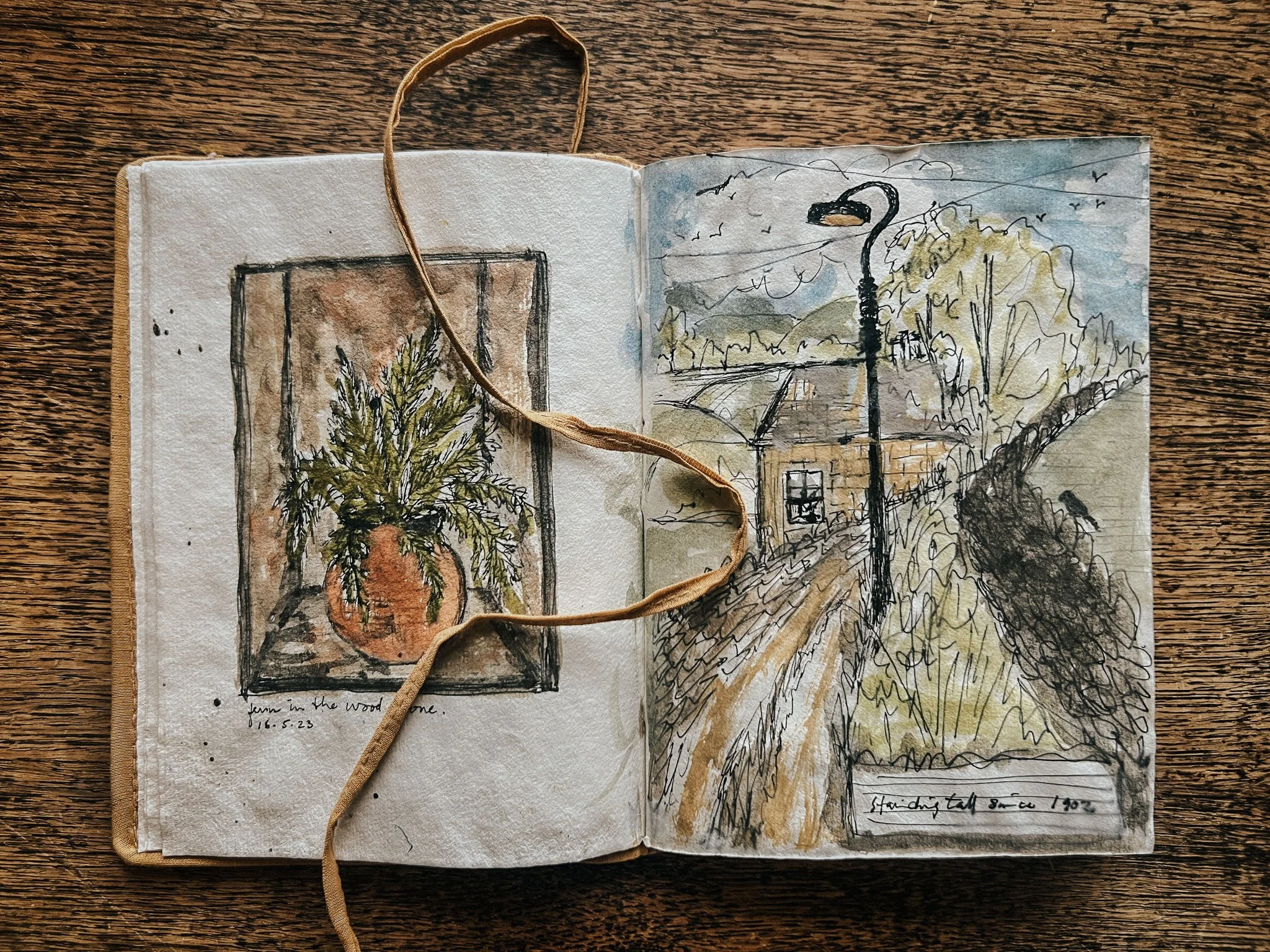
I have a main journal for writing and an everyday sketchbook where I mix words with doodles and quick sketches made with a fountain pen. Some are filled with a single colour; I keep an a journal just for blue inky drawings. Some are full of loose pencil sketches in the style of E.H. Shepard, the illustrator of Winnie the Pooh, whose style I just adore! I love the freedom of a line that captures a feeling rather than striving for accuracy.
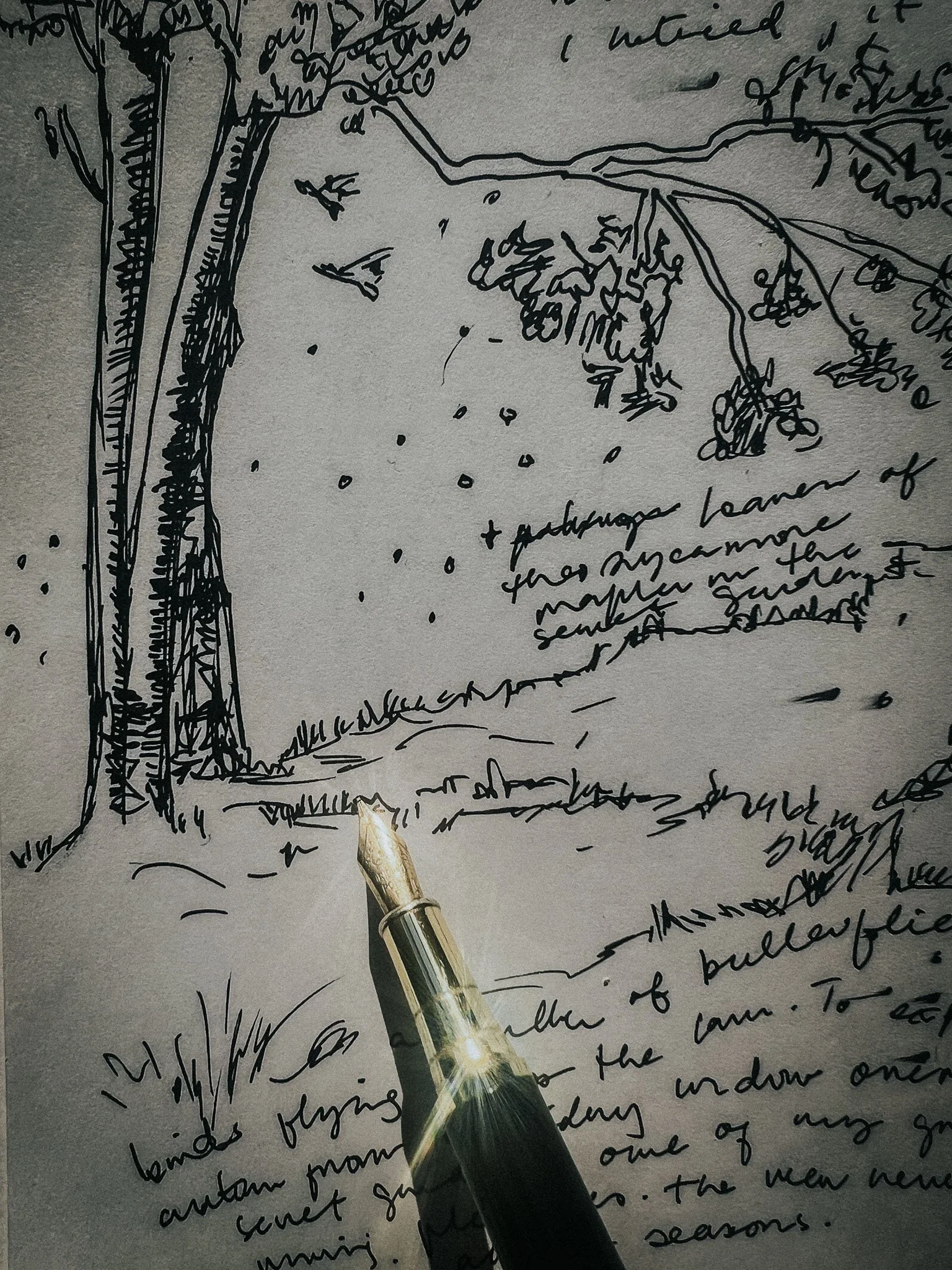
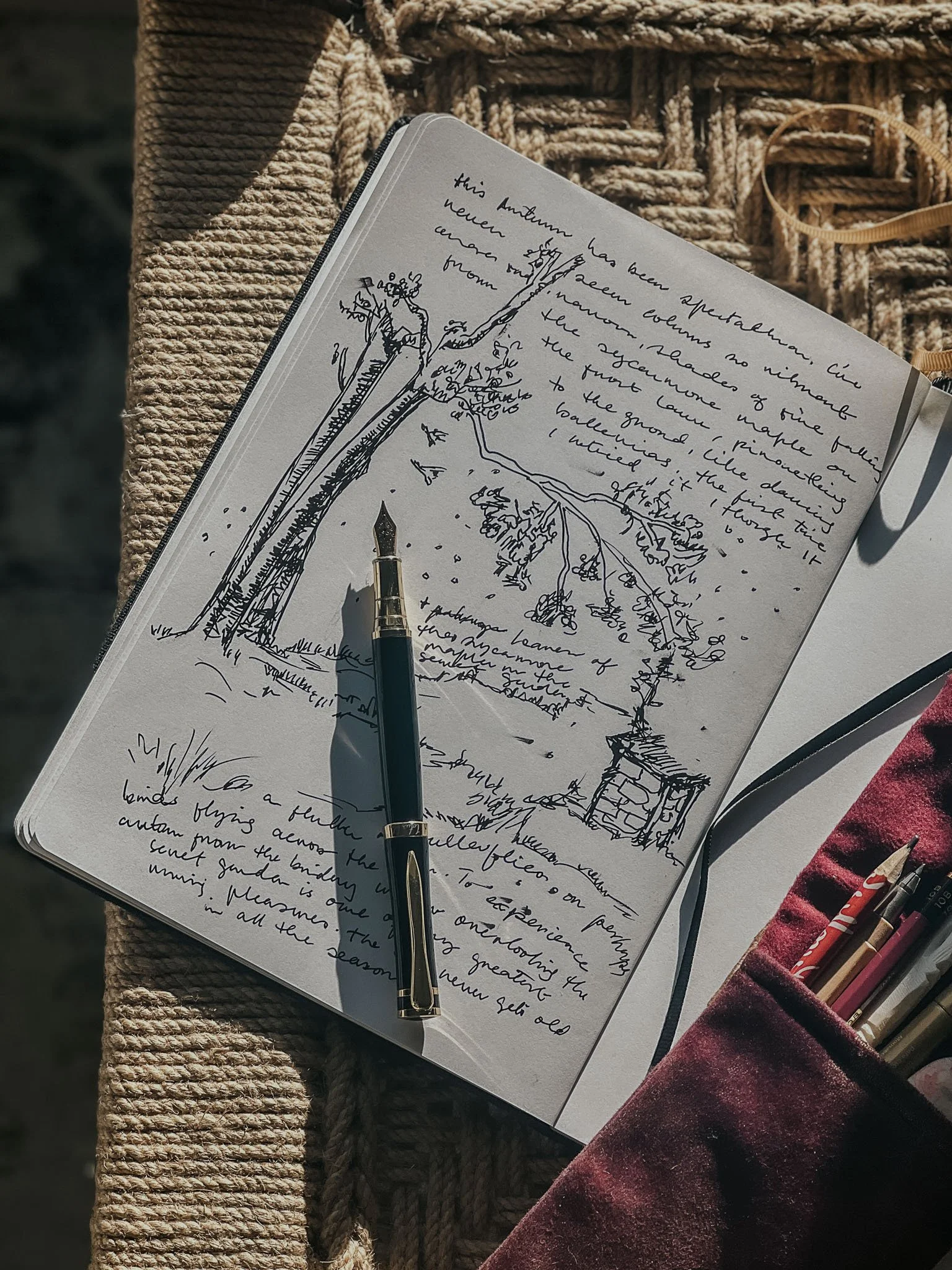
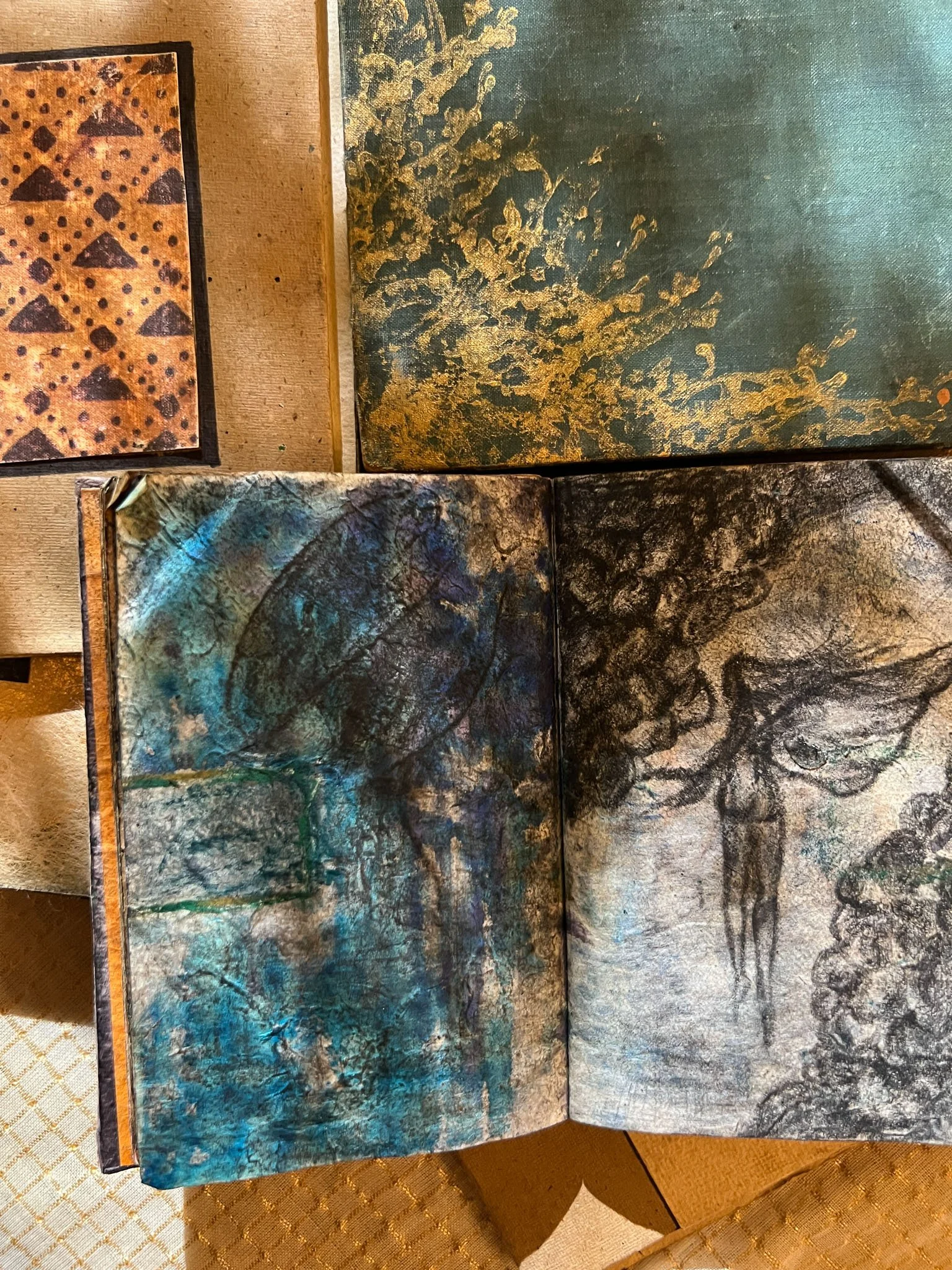
I’m no trained illustrator nor have I had any formal art education, but that’s never stopped me from making art. I often sketch with a fountain pen, some journals hold stylised gouache motifs, and now and then a painting made on the pages becomes the cover of a journal in the Storyteller collection.
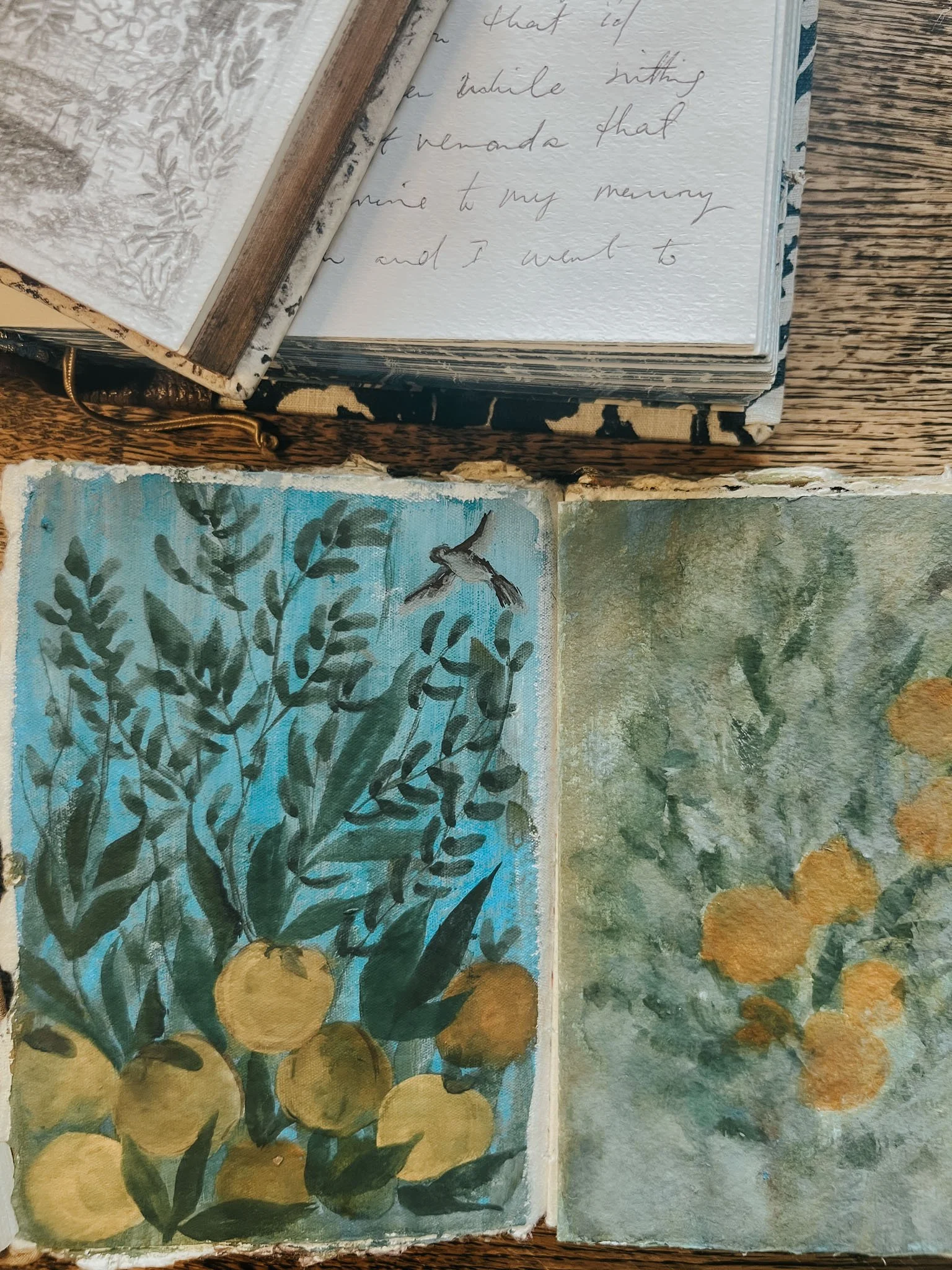
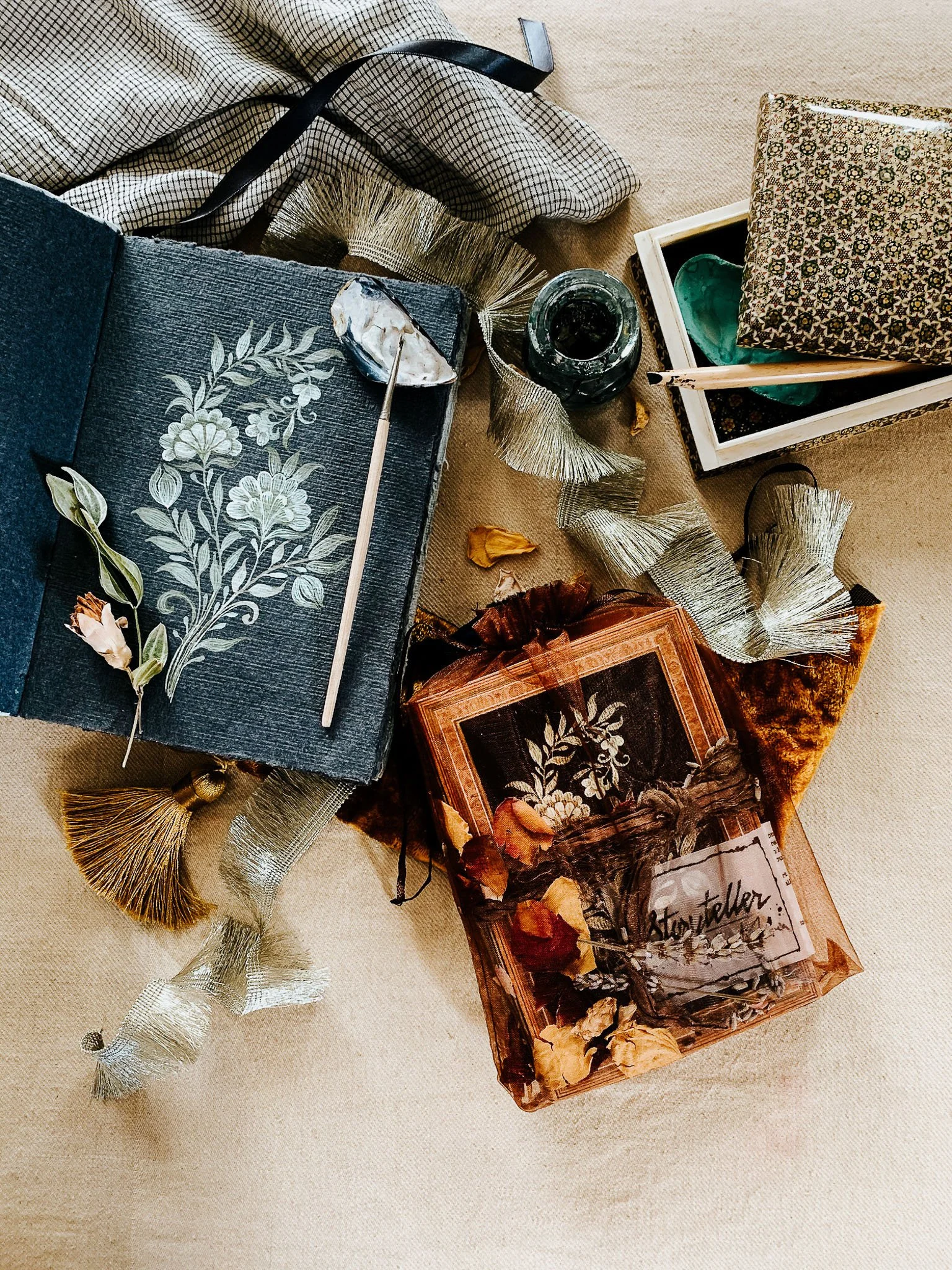
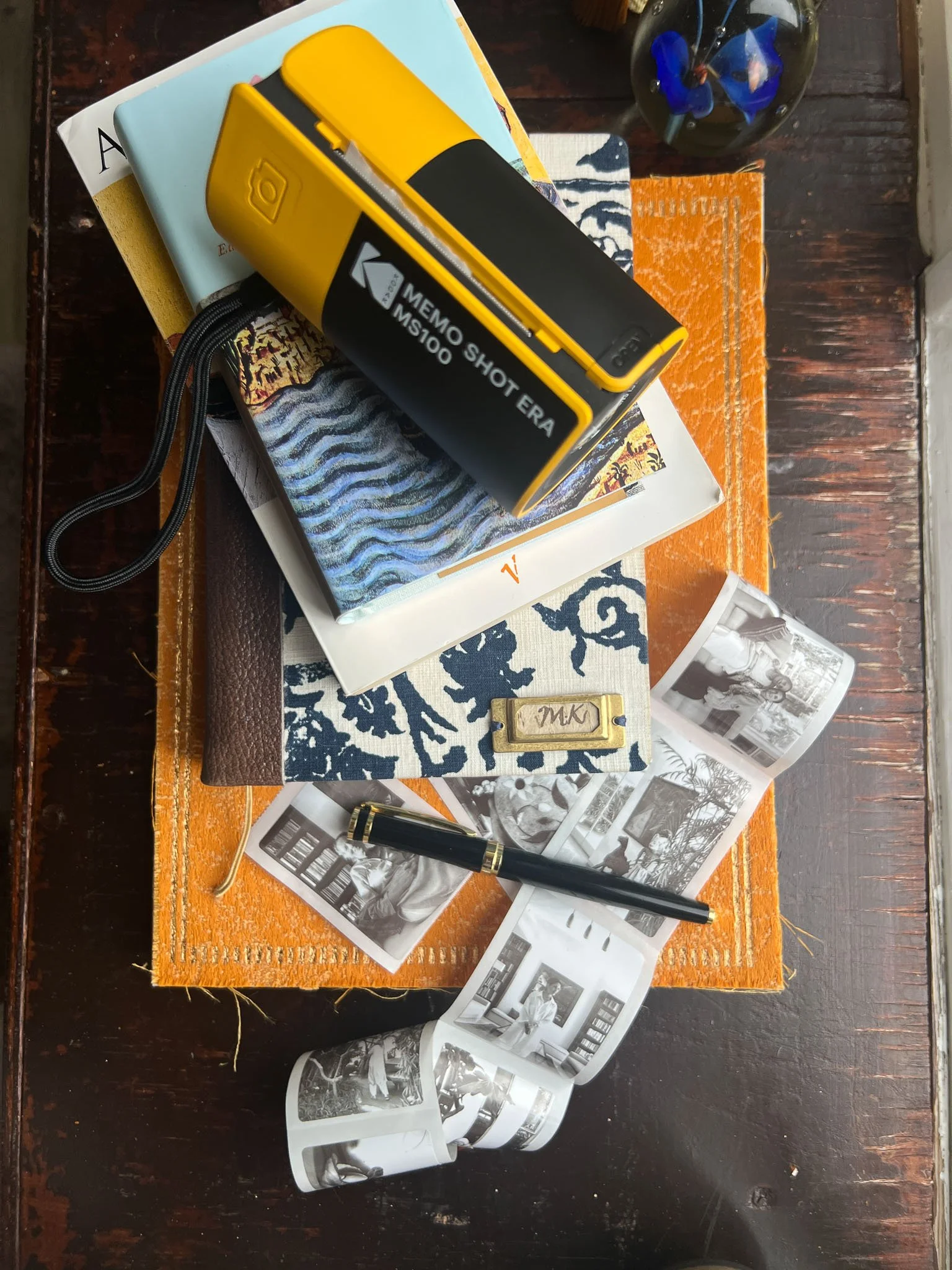
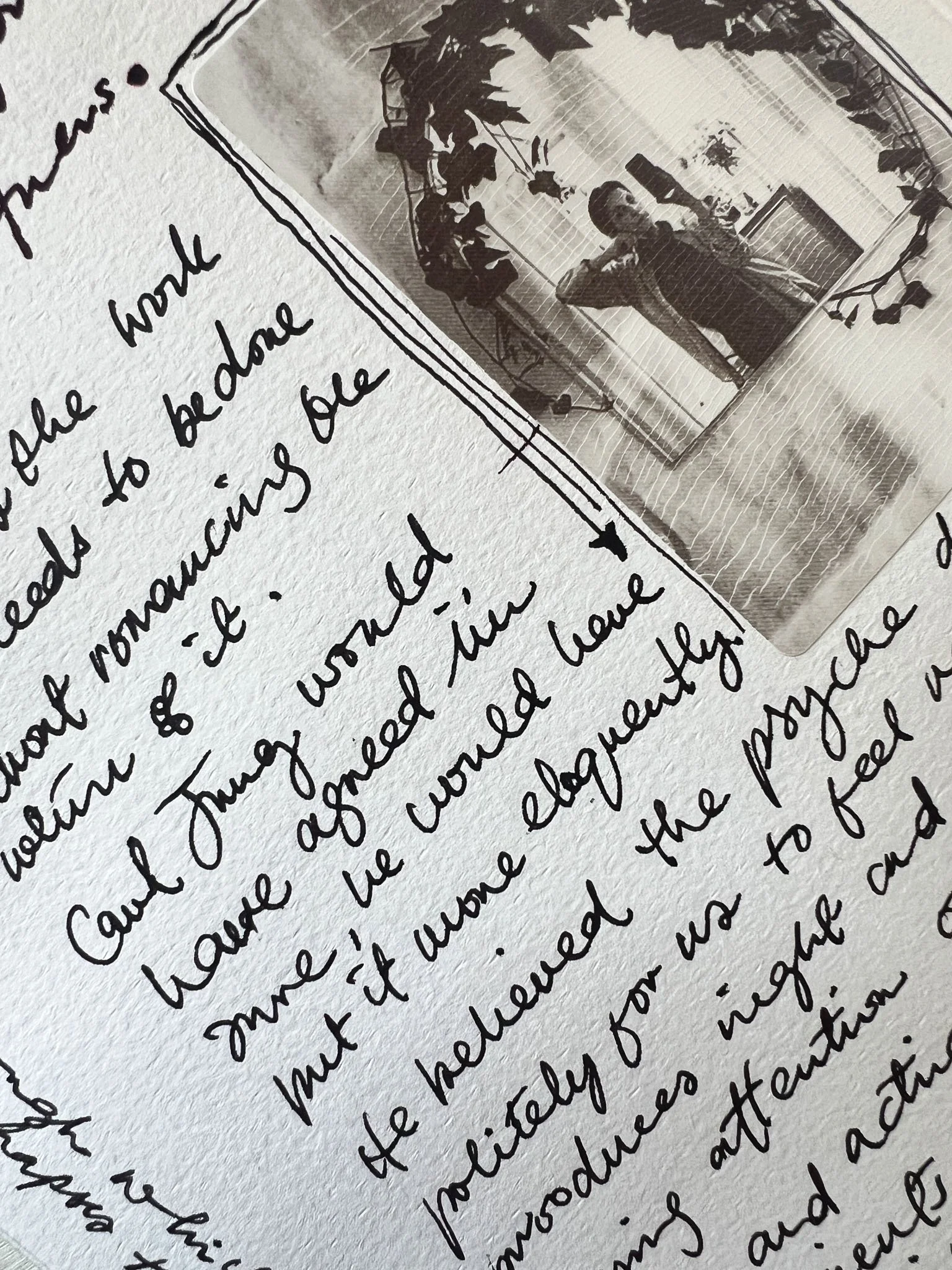
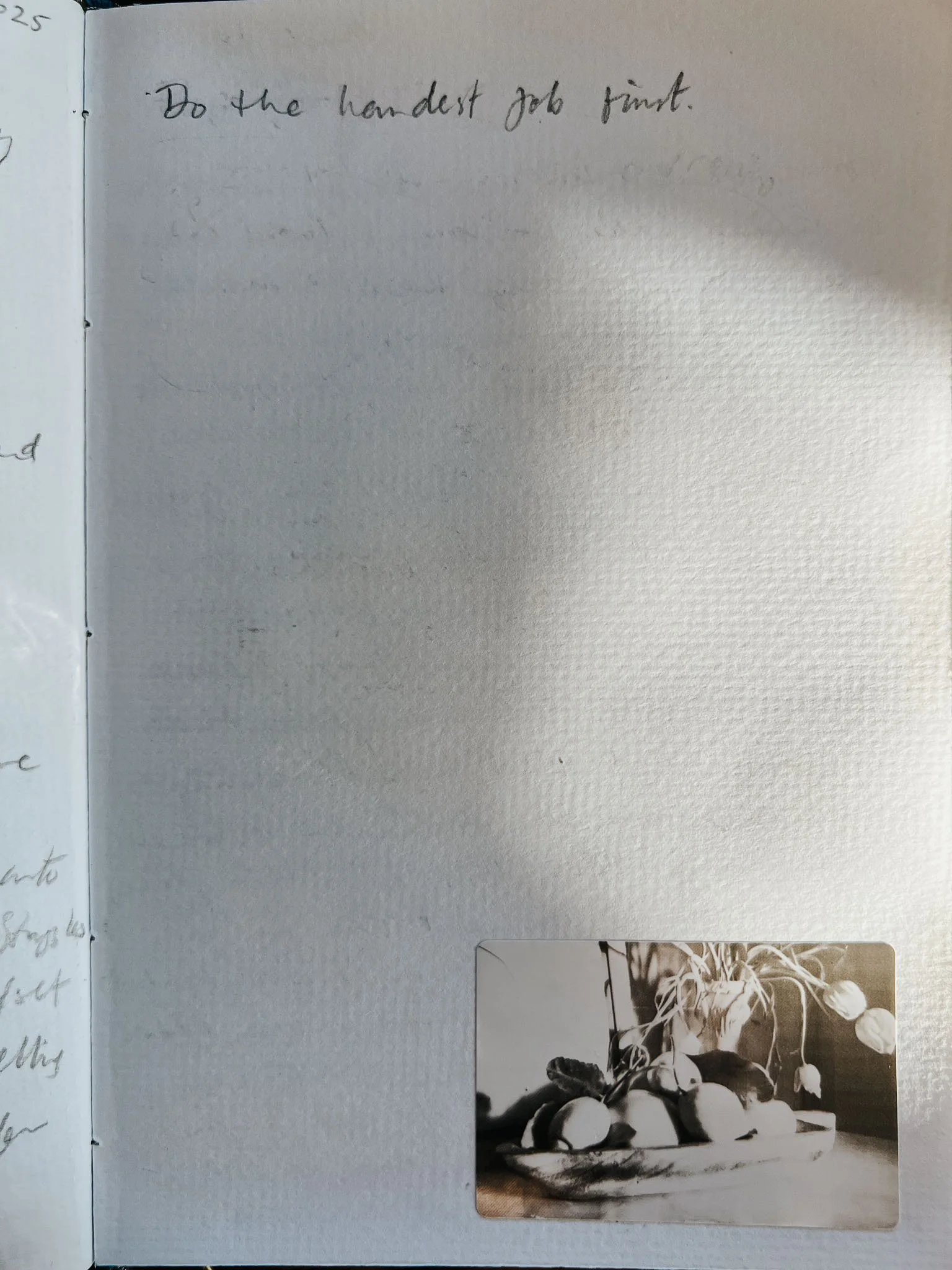
I try like to different mediums even when the paper wasn’t made for them. If there is bleed through, I like it, because it leaves interesting markings on the other page, which is a starting point for more art. Sometimes I’ll just add a short written entry alongside a print from my Kodak thermal printer.
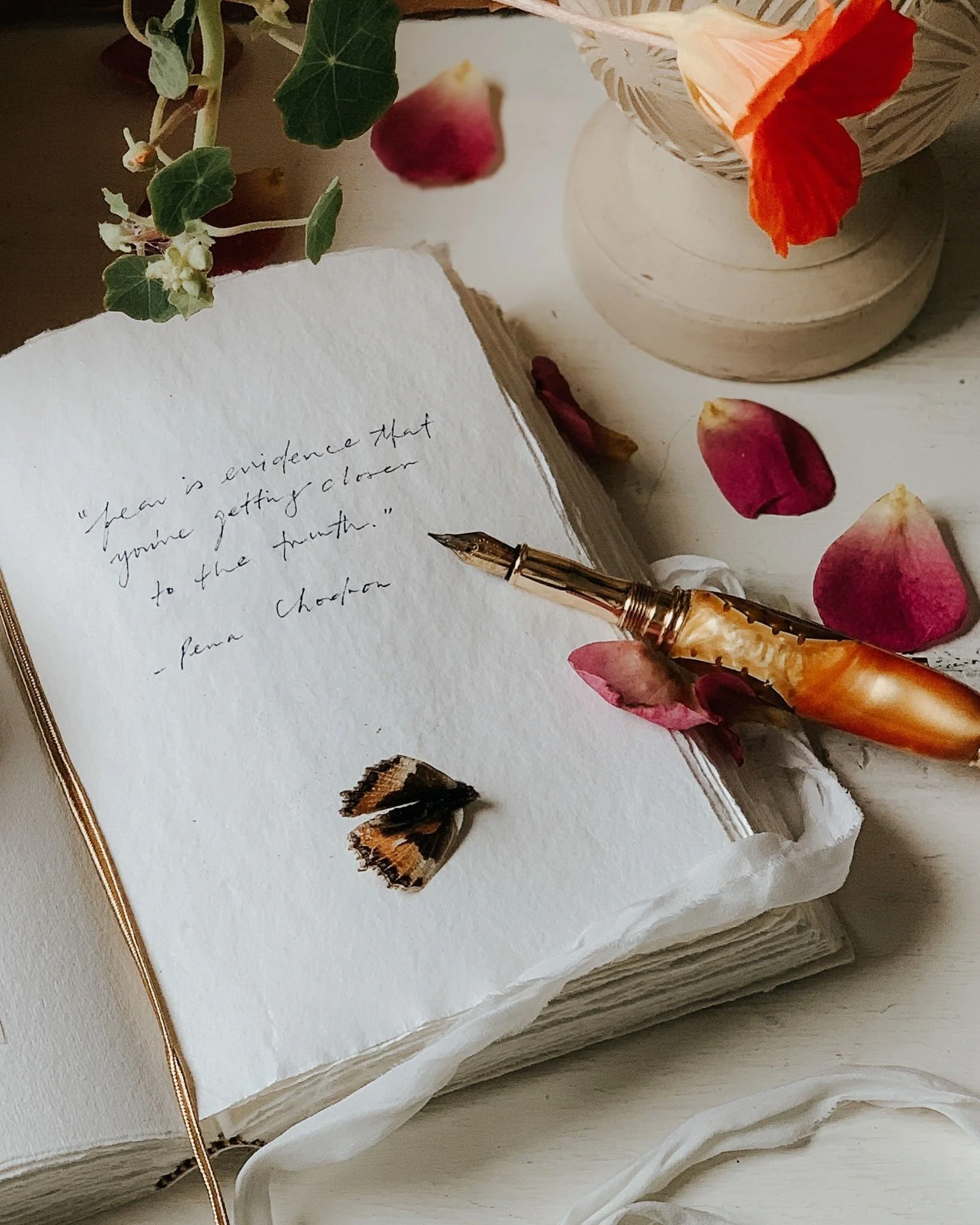
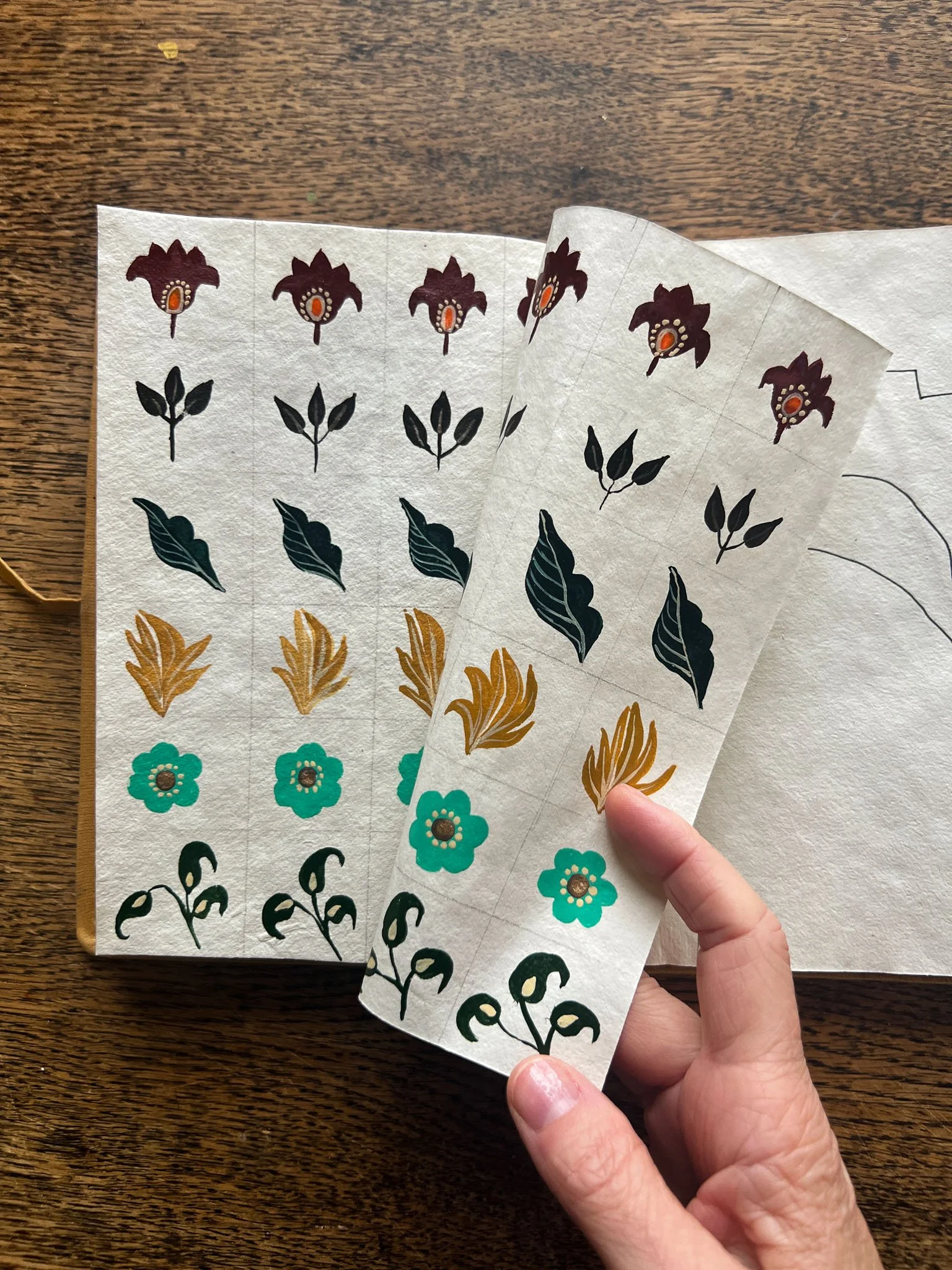
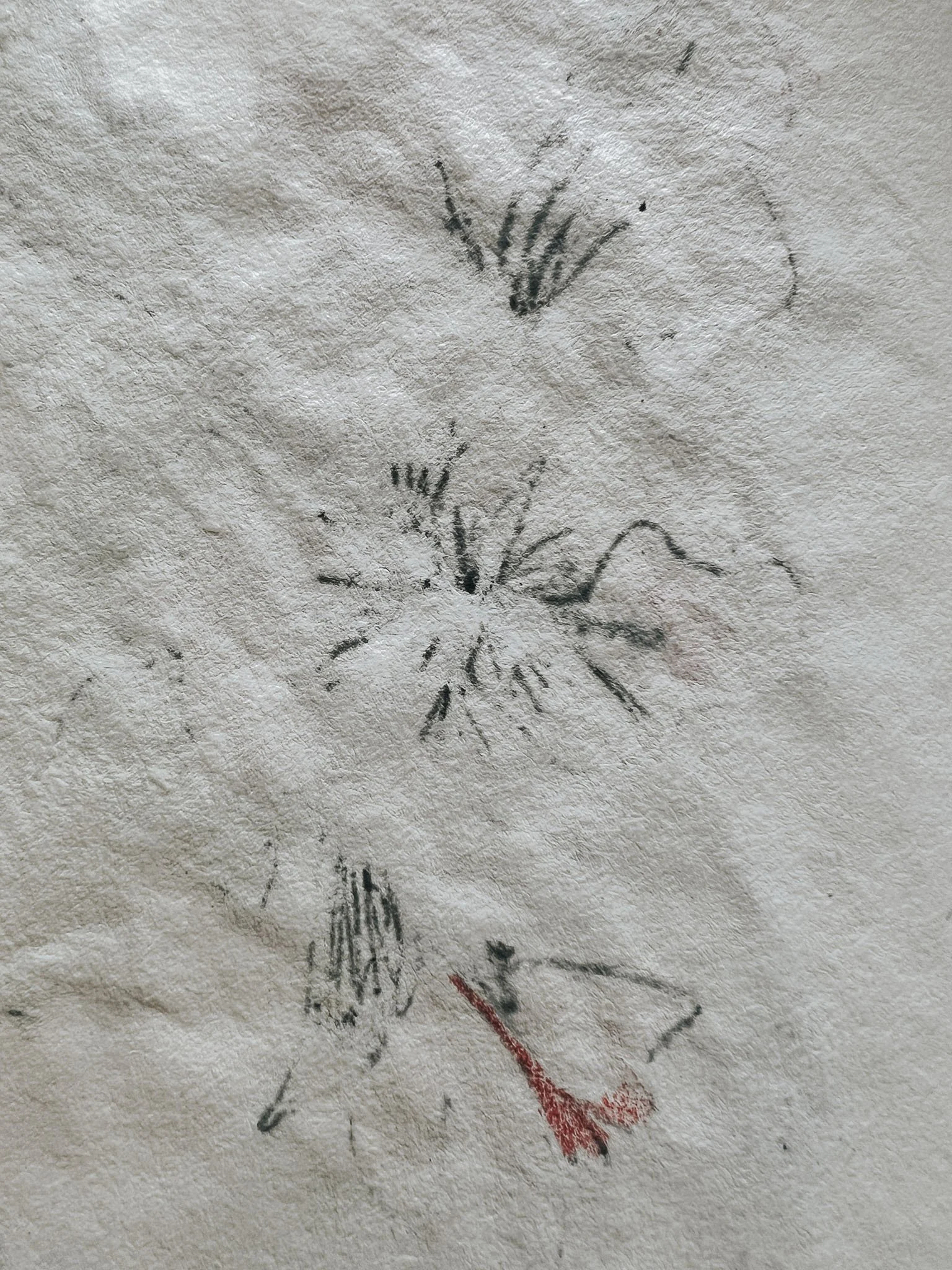
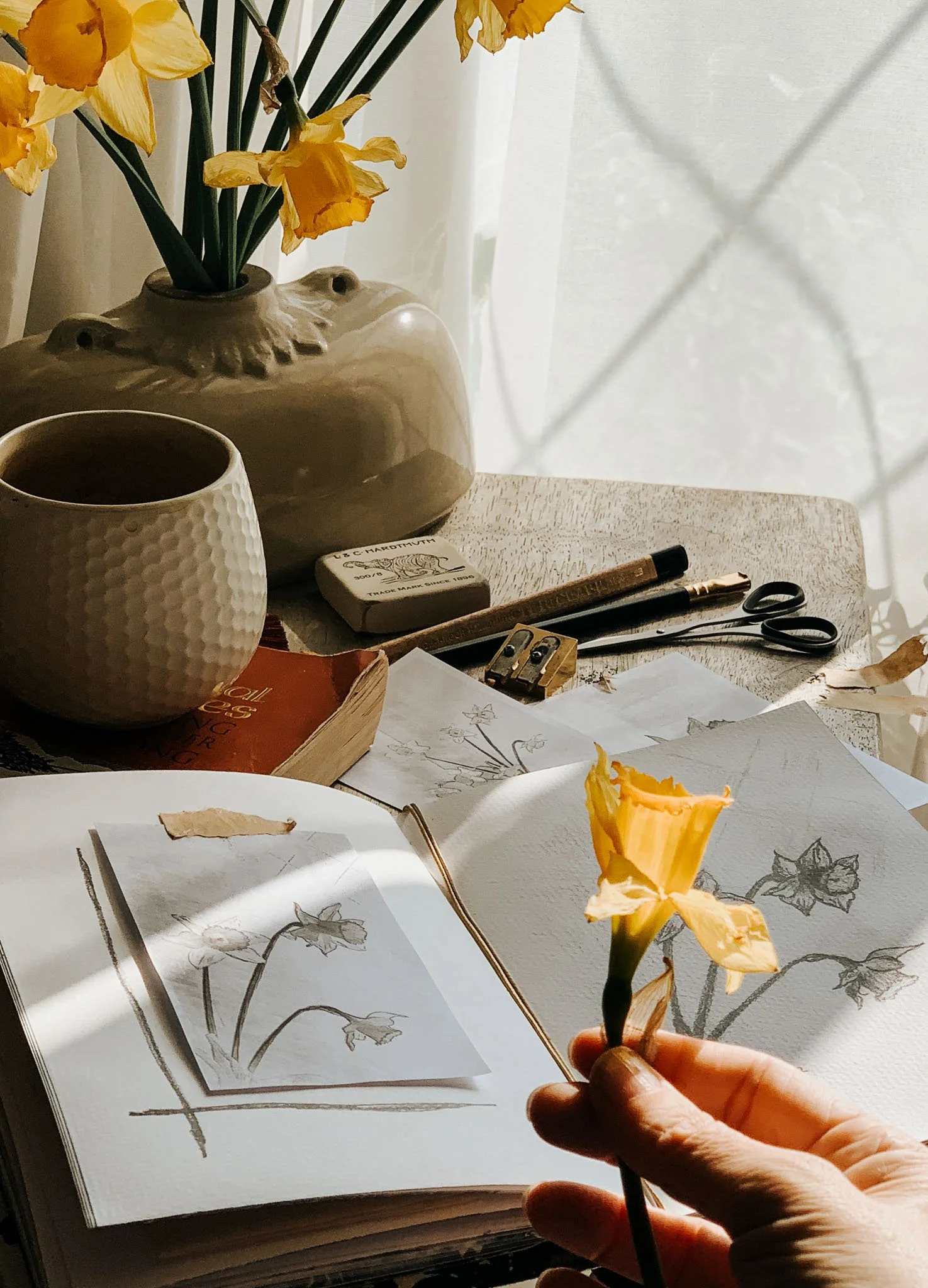
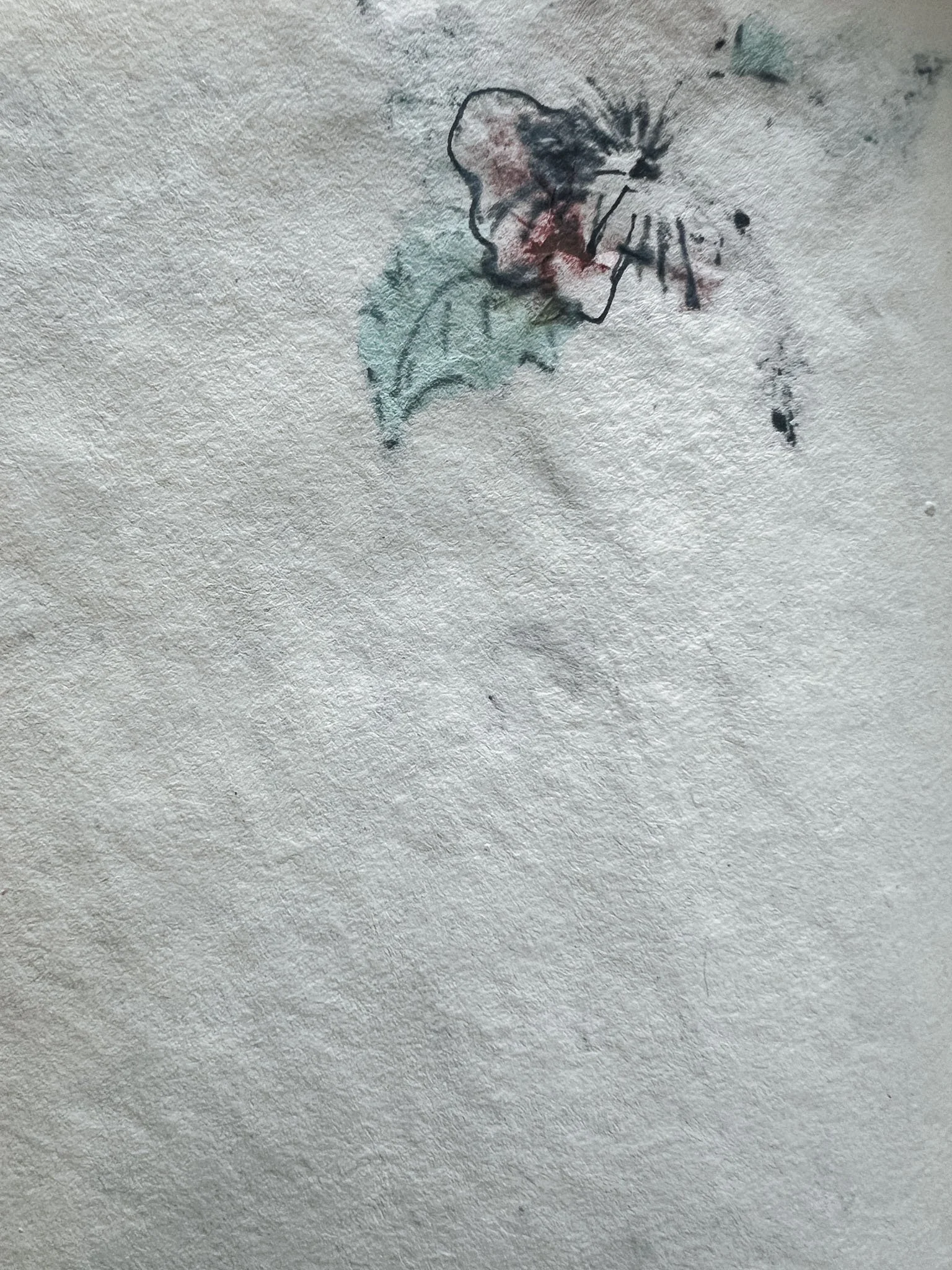
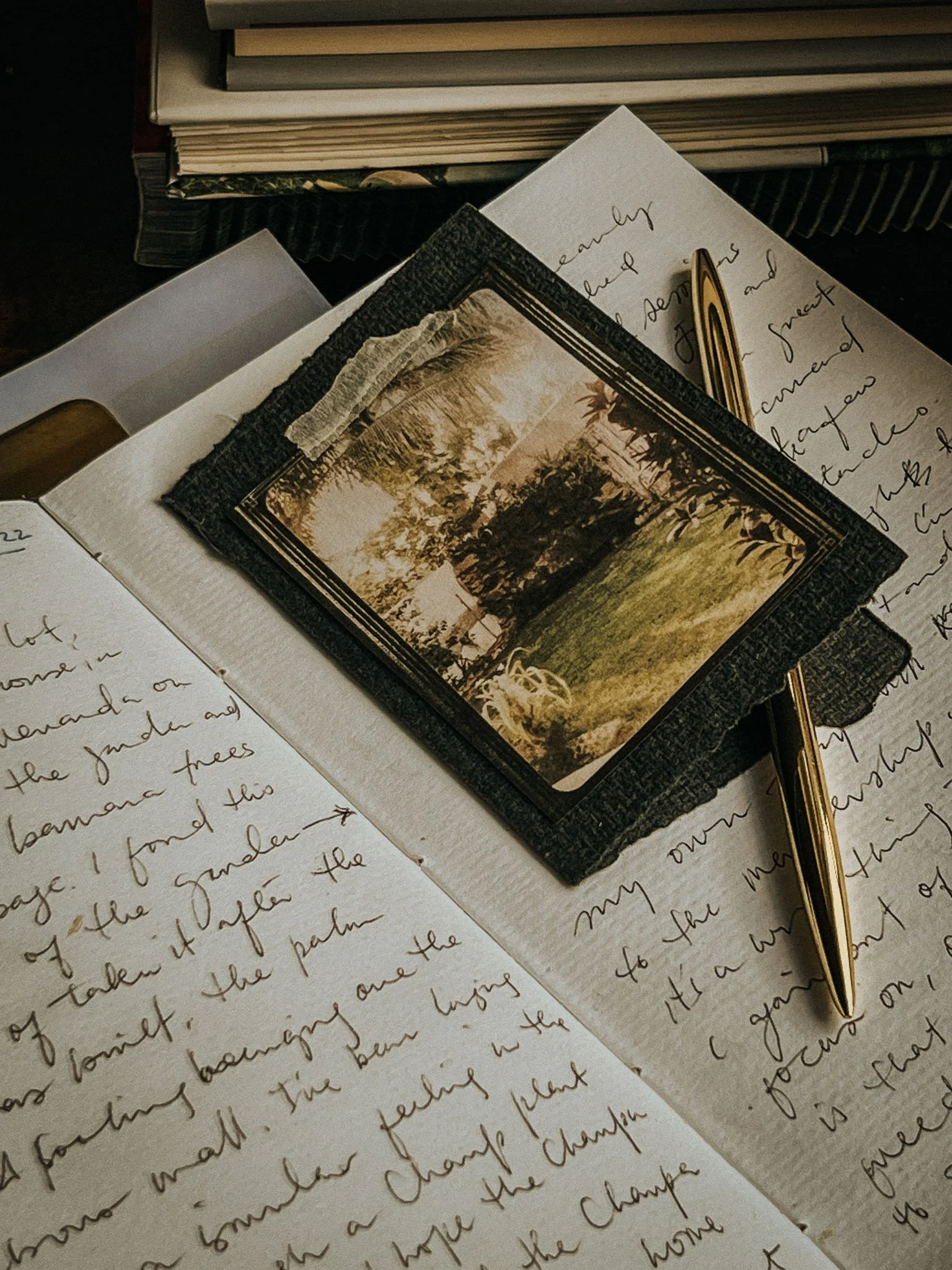
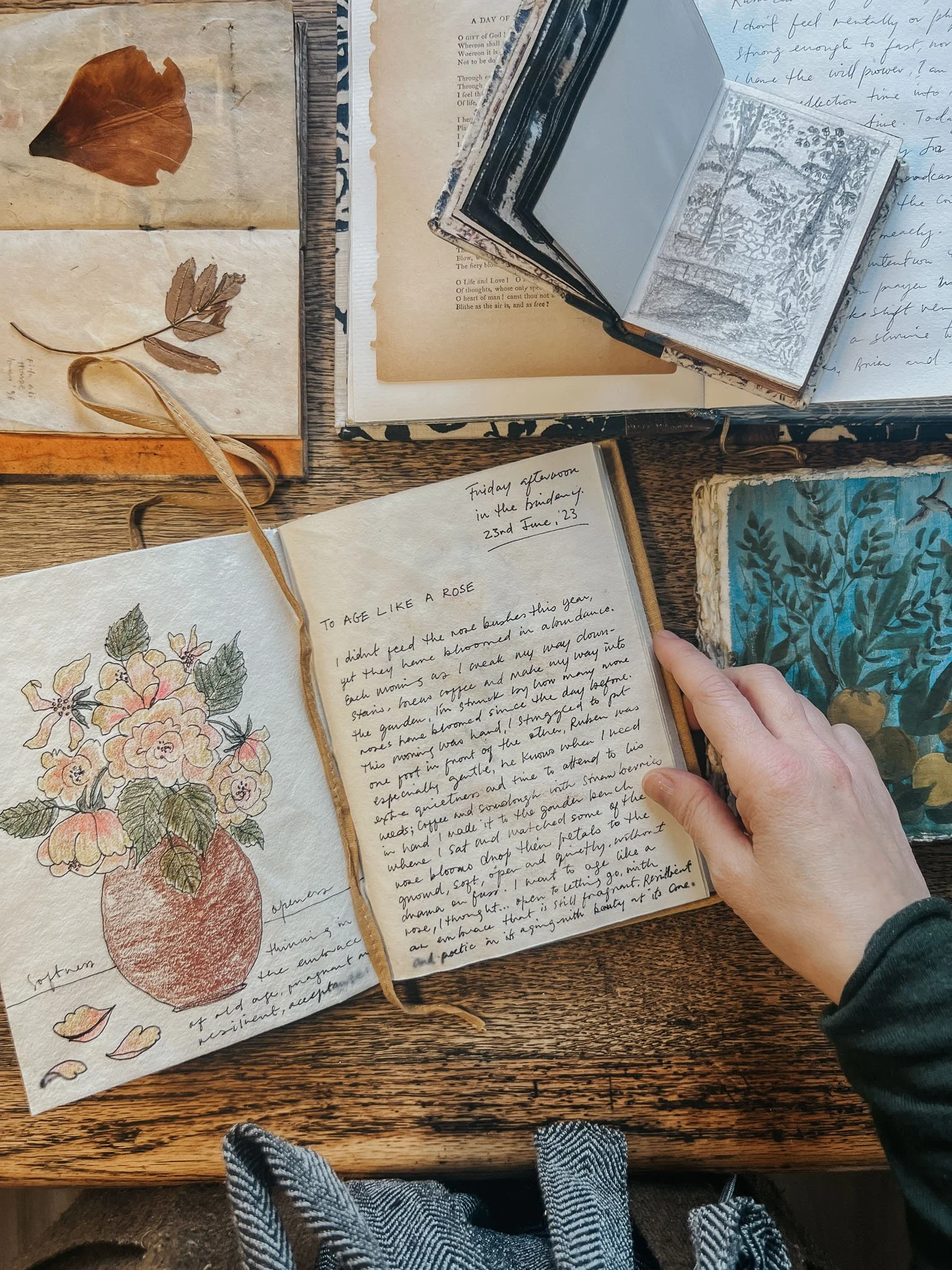
My journals are filled with a bit of everything that I am. I’m not fussy about how messy they get or how the pages curl. The only thing I’m careful about is storing them out of direct sunlight, mostly because it helps to preserve the covering material.
Writing it down makes it real
I rarely go back and read what I write, but recently I did and I came across an entry I made in 2022. I wrote about working from a bindery and studio with large windows overlooking an established garden, with big, old trees and a landscape that never looks gloomy, even in bad weather. I’m writing this from that studio now. I also wrote myself toward wellness by focusing on noticing the beauty around me and writing about that and the version of me who was healthy and making beautiful things with my hands. Call it manifestation, or just the clarifying power of a pen on paper.
Something about the act of forming the words slowly, deliberately, makes them more real, more committed to.
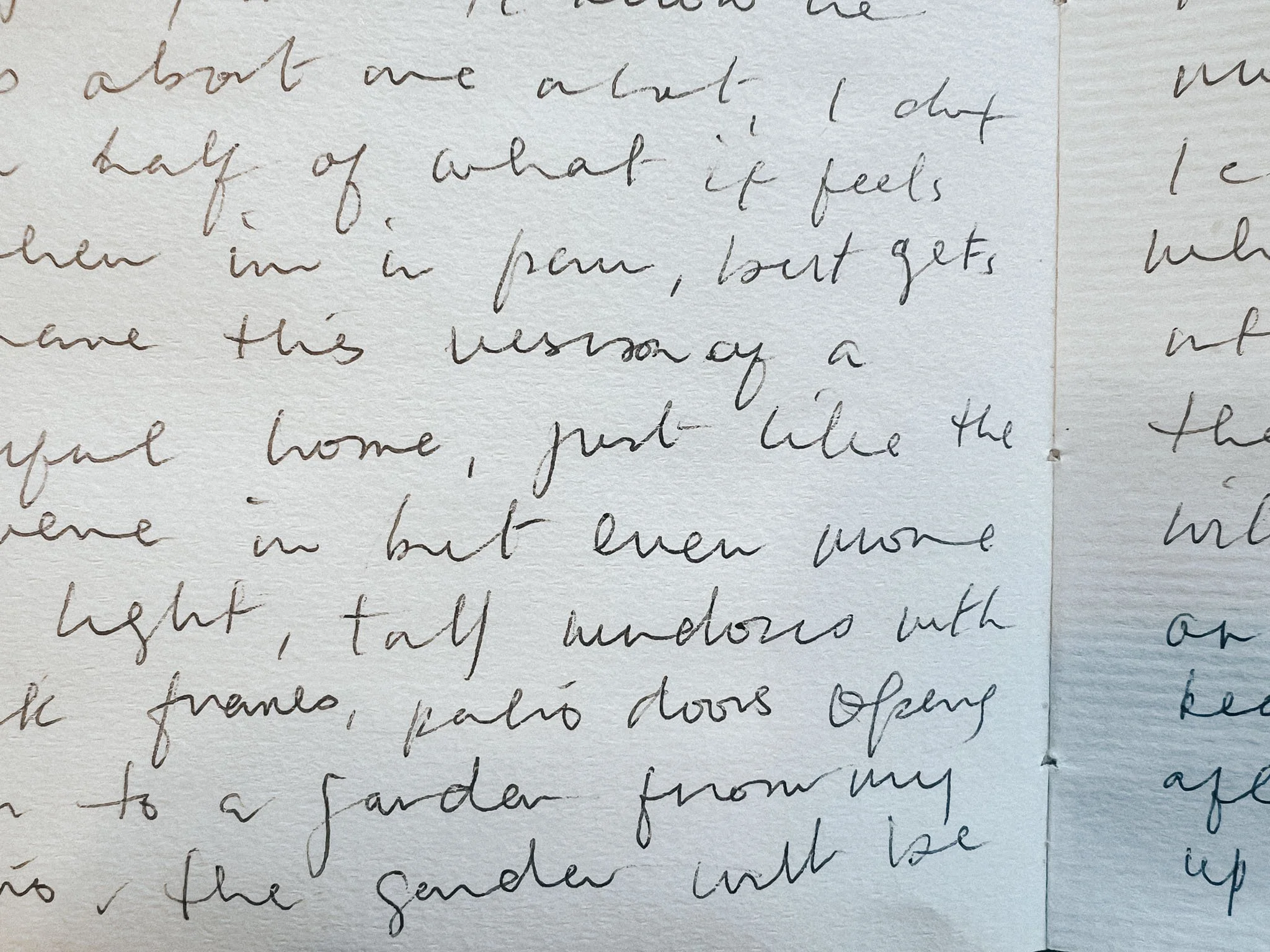
Journaling has always been medicine for me, as bookbinding is; medicine disguised as craft. I keep both simple, and come to both with curiosity.
My mind often moves faster than I can speak or write, with more ideas than I could ever bring to life. Bookbinding is my life, it appears often in my journaling. Writing ideas down and sketching them out calms my excited mind and lets me sit with them long enough to see if I'll still be excited to bring them to life in the future. It gives me time to ponder rather than rushing into a project.
I come to my bookbinding practice to calm myself from the stresses of life. Maybe it’s escapism, but mostly it’s medicine. Bookbinding has a reputation for being a meticulous craft, but it doesn’t have to be, and I keep mine simple, meditative and as fun as I can make it, because the last thing I need is for my creative practice to stress me out.
The same is true of journaling. Both practices share something essential: they work best when approached with simplicity and a curiosity about where they might lead, rather than a set of rules about how they should look or what they should produce. The moment either becomes a performance or an obligation, it stops being medicine and starts being another thing on a list.
This is why I teach bookbinding the way I do, with minimal tools, adapted techniques, and an emphasis on making the process easeful and joyful. And it’s why the only tip I would offer for developing a lasting journaling habit is to keep it simple, come as you are, and allow yourself to surprised!
The Great Diary Project
Journals have a life beyond us, too. The Great Diary Project is an archive of ordinary people’s unpublished diaries, founded by Irene Taylor in 2008 and housed at the Bishopsgate Institute in London. It exists because everyday diaries, the ones that aren’t written by anyone famous, were so often thrown away when their writer died. This brilliant project now keeps them safe for researchers and curious readers.
This a reminder that our day-to-day observations aren’t trivial. A hundred years from now, someone might be fascinated by what the weather was like and what you had for lunch on a Tueday in 2026.
Journal or Diary?
The two words are often used interchangeably, but there is a difference. A diary is a chronological record of daily events and experiences, whereas as a journal is usually a broader, more reflective space for thoughts, ideas, creativity and personal growth.
Think of the character, Bridget Jones. Her diary is a daily tally of her weight, wine units, cigarettes consumed and good intentions, with the odd romantic disaster thrown in. It’s funny, it’s honest, and it’s entirely about what happened that day. Now think of Sylvia Plath’s journals, which dig into ambition, self-doubt and the writer she was determined to become.
If I wrote about my day in the style of Bridget Jones it would read something like this…
Hours spent in the bindery today: 6
Hours spent staring out of window: 3
Cups of coffee gone cold: 2
Resolution to be more productive with my time: noted!
Sylvia Plath, as she might have written it: Six hours in the bindery and what did I make? Not much, but I watched the autumn leaves dance on the breeze. Why does gazing out the window feel like both the work and the escape from it?
The same facts sit in both entries, but one keeps score and the other asks questions. Neither is wrong, you could write bit of both. The style you choose for a written entry in your journal or diary may change depending on your mood, your environment and the amount of time you have to dedicate to it.
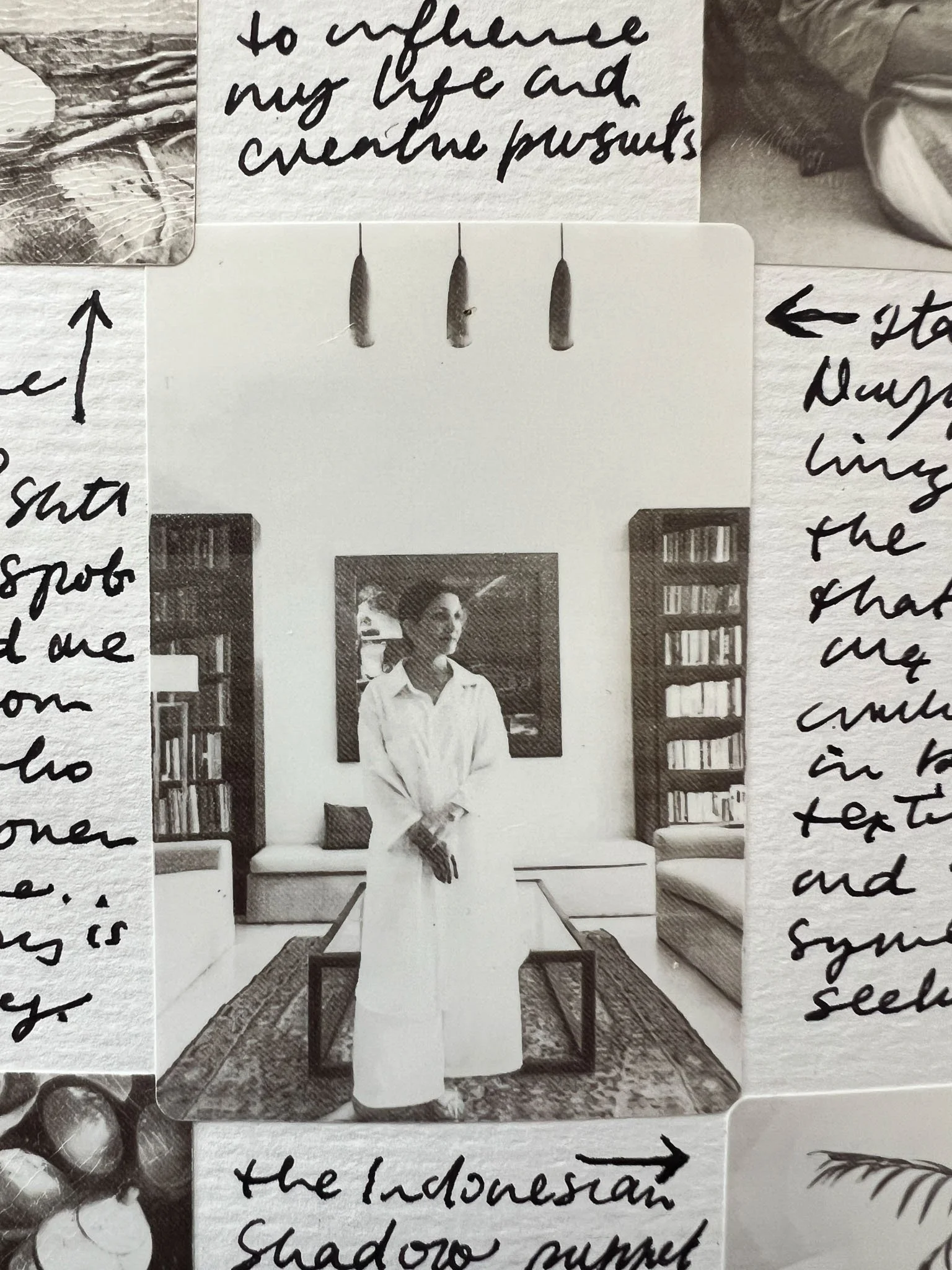
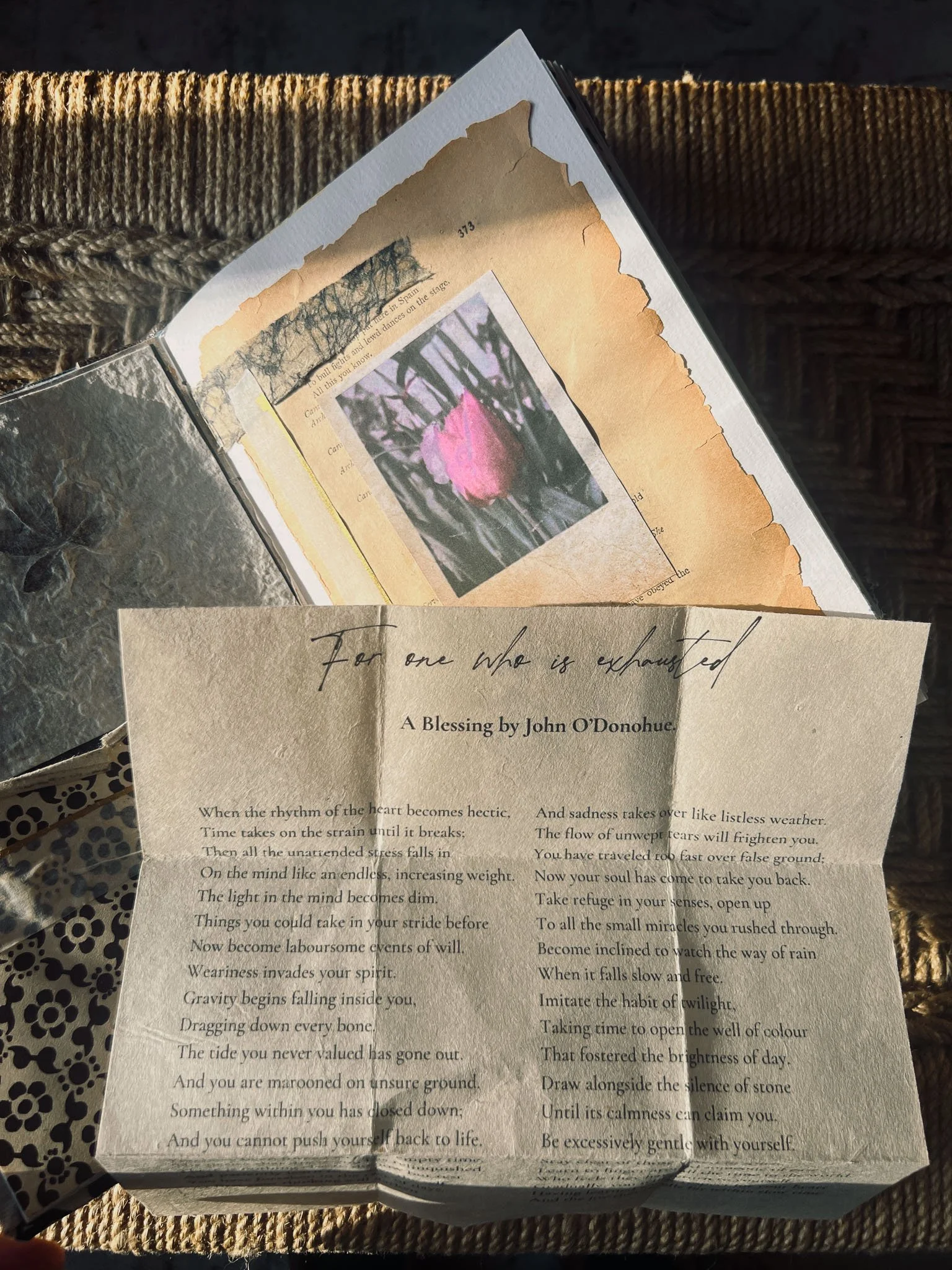
Take a page from famous artists’ journals & diaries
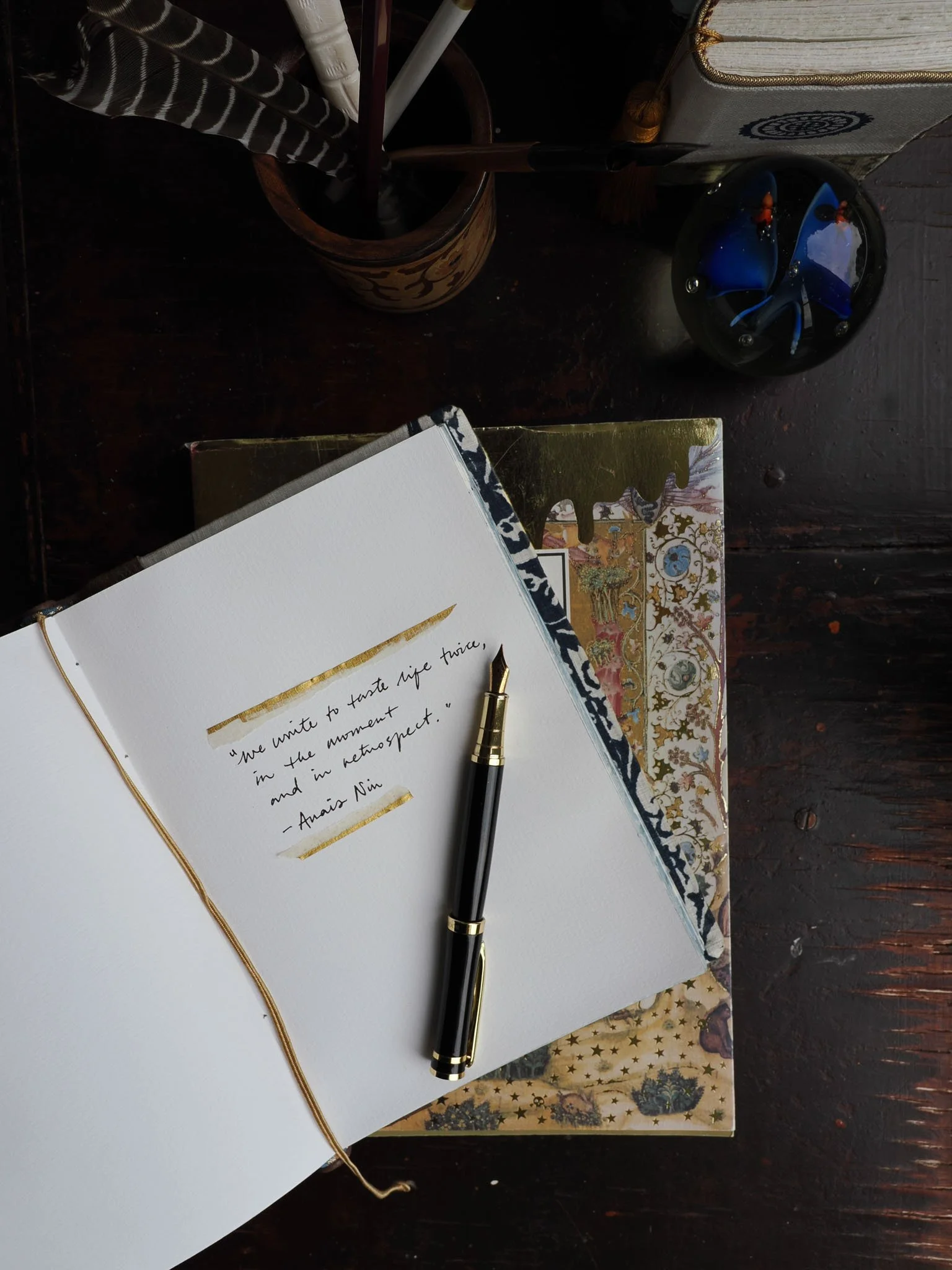
I really enjoy reading books based on journals [and letters] written by artists and writers. I find it fascinating to get a glimpse of their creative mind beyond the art they create.
Frida Kahlo filled an illustrated diary in the last decade of her life with watercolour, drawings, poems and private musings. Sylvia Plath kept journals from her teens, and Virginia Woolf used her diary to write quickly and loosely, as a warm-up for the real work. Anaïs Nin kept one for over sixty years!
Marcus Aurelius wrote his Meditations as private notes to himself, never intended for anyone else to read.
The brilliant actor Alan Rickman kept a diary for over twenty years, published after his death, Madly, Deeply is full of rehearsals, dinner chats with friends and the odd grumble. When I read it, it was his icon voice I heard throughout.
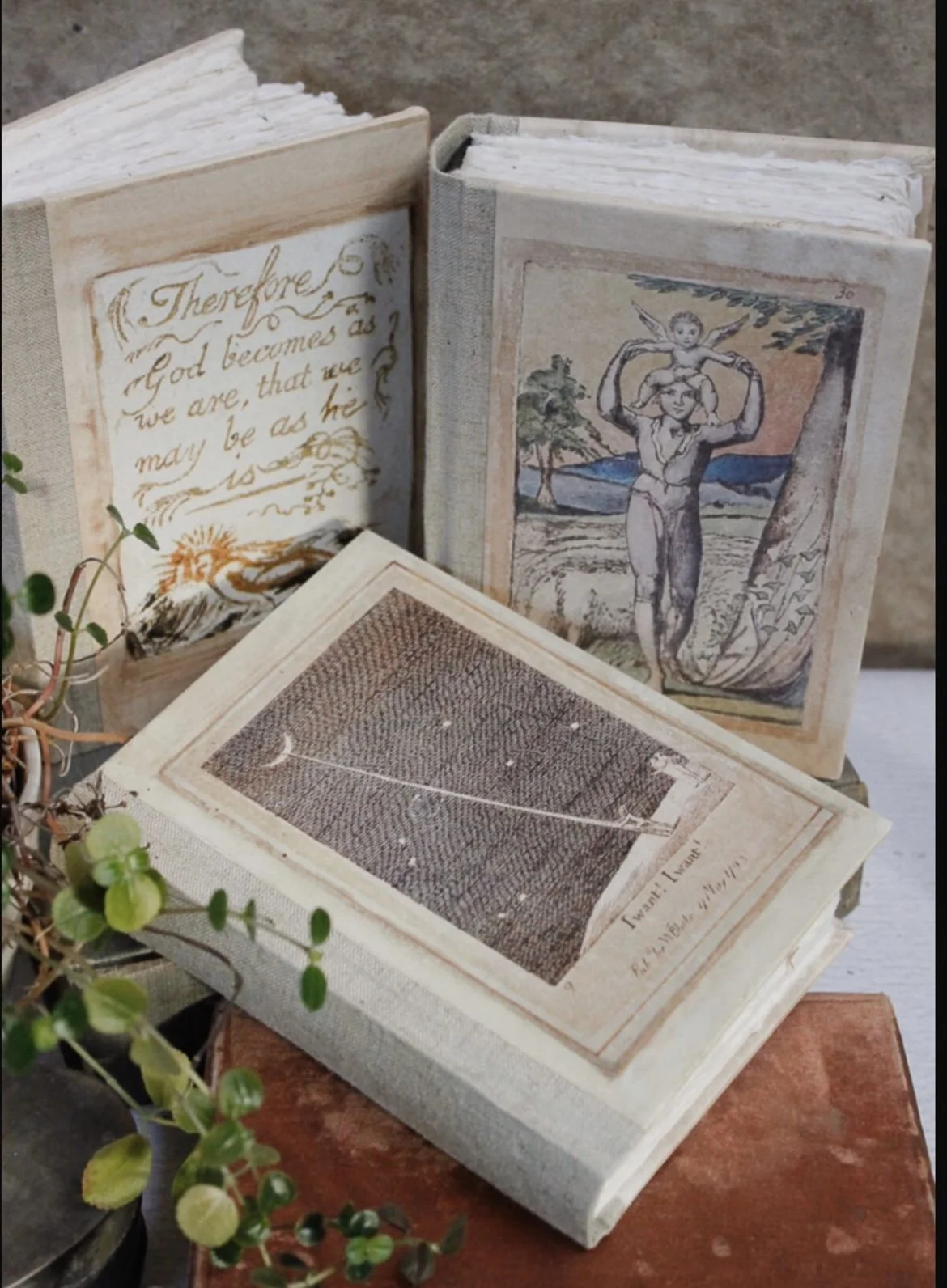
William Blake’s journal is a beautiful example for anyone who dislikes a tidy page. Sketches, poems, scribbled drafts and notes fight for space, squeezed into margins and between drawings because he wasn’t about to waste a scrap of paper! Early versions of some of his best-known poems like Songs of Innocence were worked out in his journal. Some of his sketches ended up on the covers of a couple of journals I made years ago; they’re still among my favorites.
Carl Jung recorded his dreams and visions in a series of private notebooks which the transcribed and elaborated in calligraphy and with his own paintings, into The Red Book (Liber Novus), a large illuminated volume he worked on for around sixteen years. It stayed private during his lifetime and was only published in 2009. It is part journal, part illuminated manuscript, part art project. I like to think of it as the ultimate art journal, part writing, part painting, and entirely unconcerned with whether anyone approved.If you’re ever in London, you must visit the old Watkins Bookshop on Cecil Court, they a facsimile on display which you can to look through at leisure, it’s magnificent.
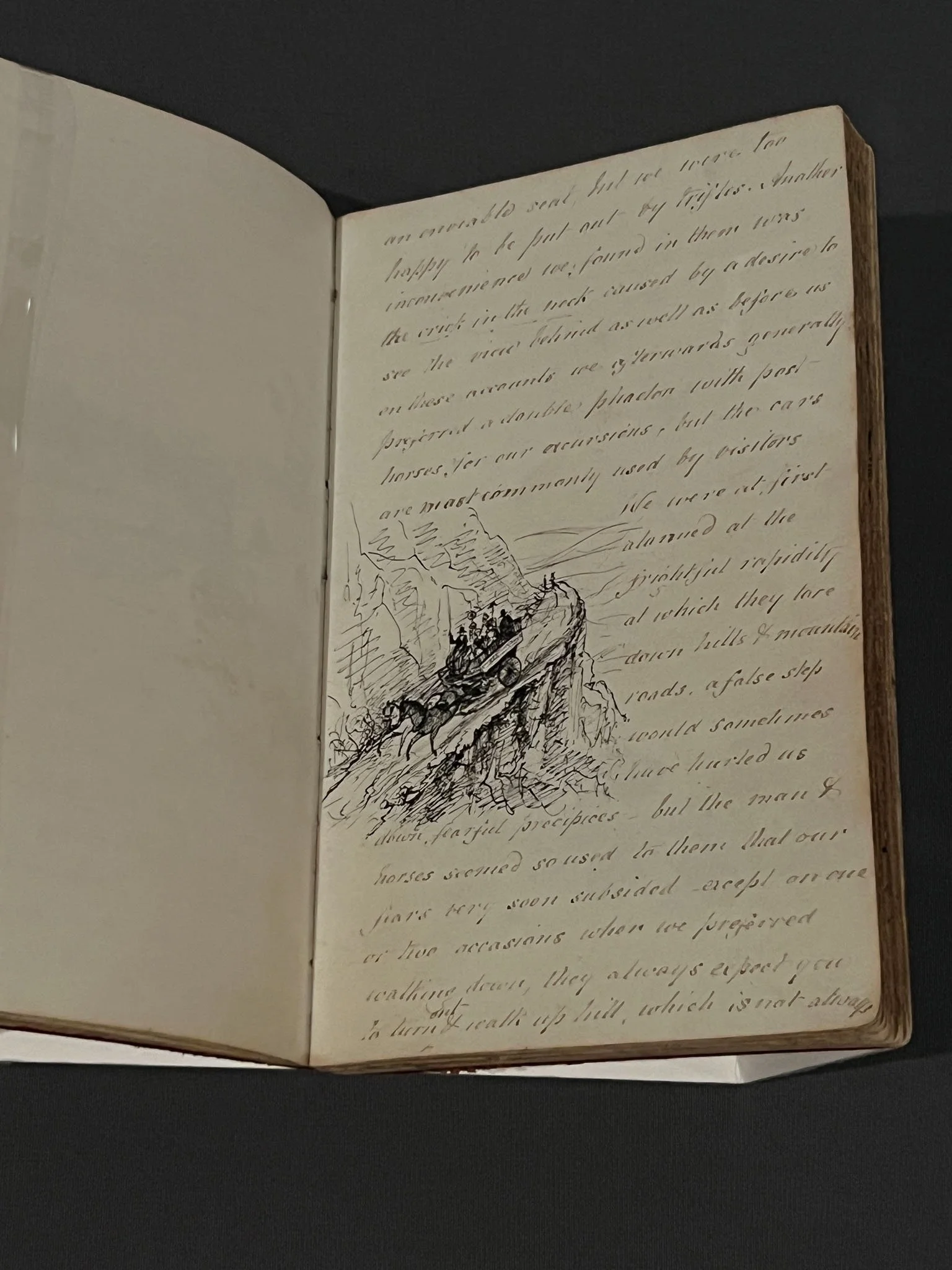
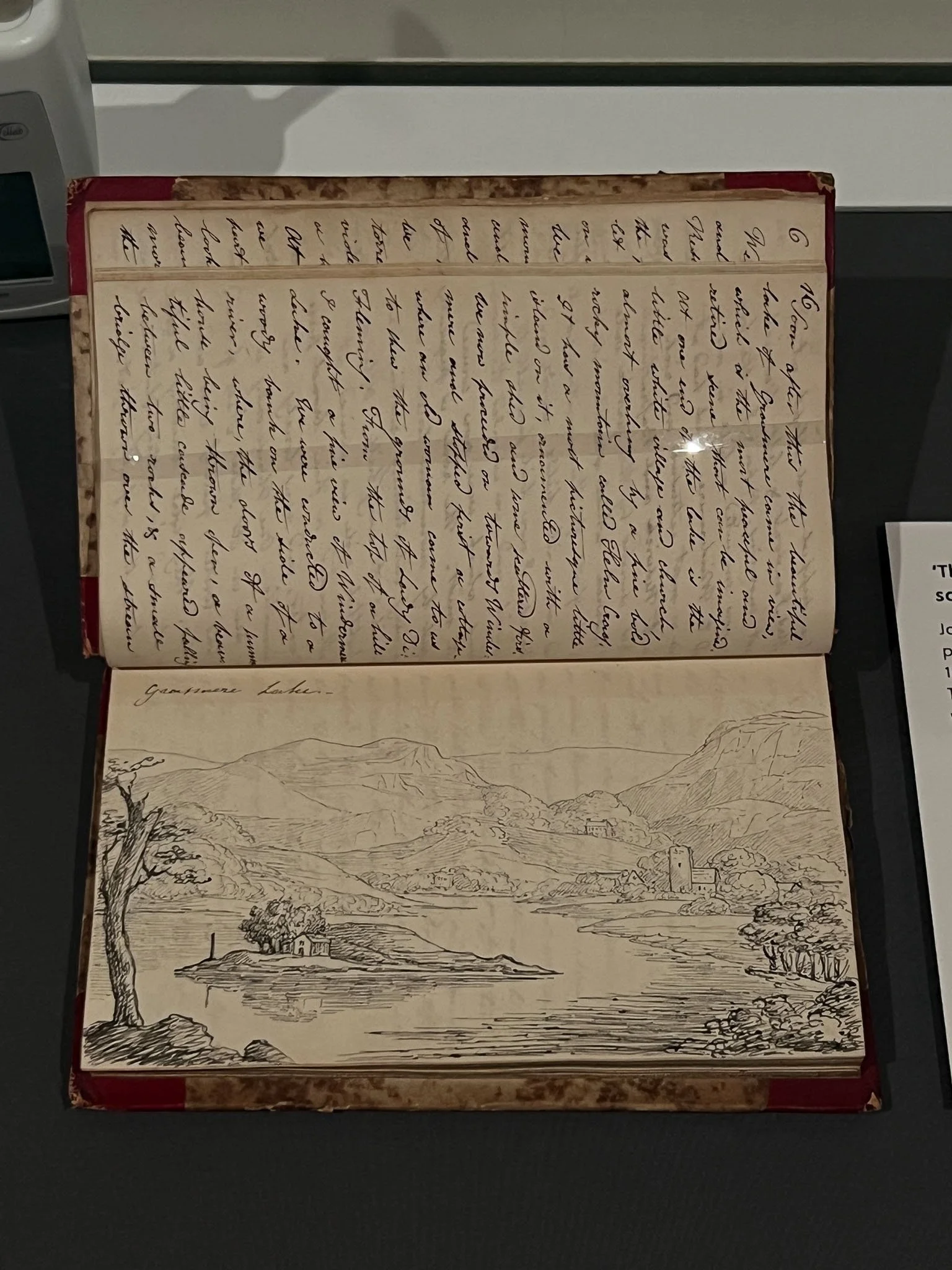
Closer to home, Dorothy Wordsworth recorded the Lake District light, flowers and weather in her Grasmere journals in plain, observant detail. Her notes on a windy walk past a host of daffodils are said to have inspired her brother’s famous poem. William Wordsworth got the credit, but Dorothy wrote it down first in her diary. Beatrix Potter sketched in her journal and she often wrote in a code of her own devising, which was not cracked until the 1950s.
{ Dorothy Wordsworth’s journal which can be viewed
at the Wordsworth museum in Grasmere.}
Please, use your beautiful journals
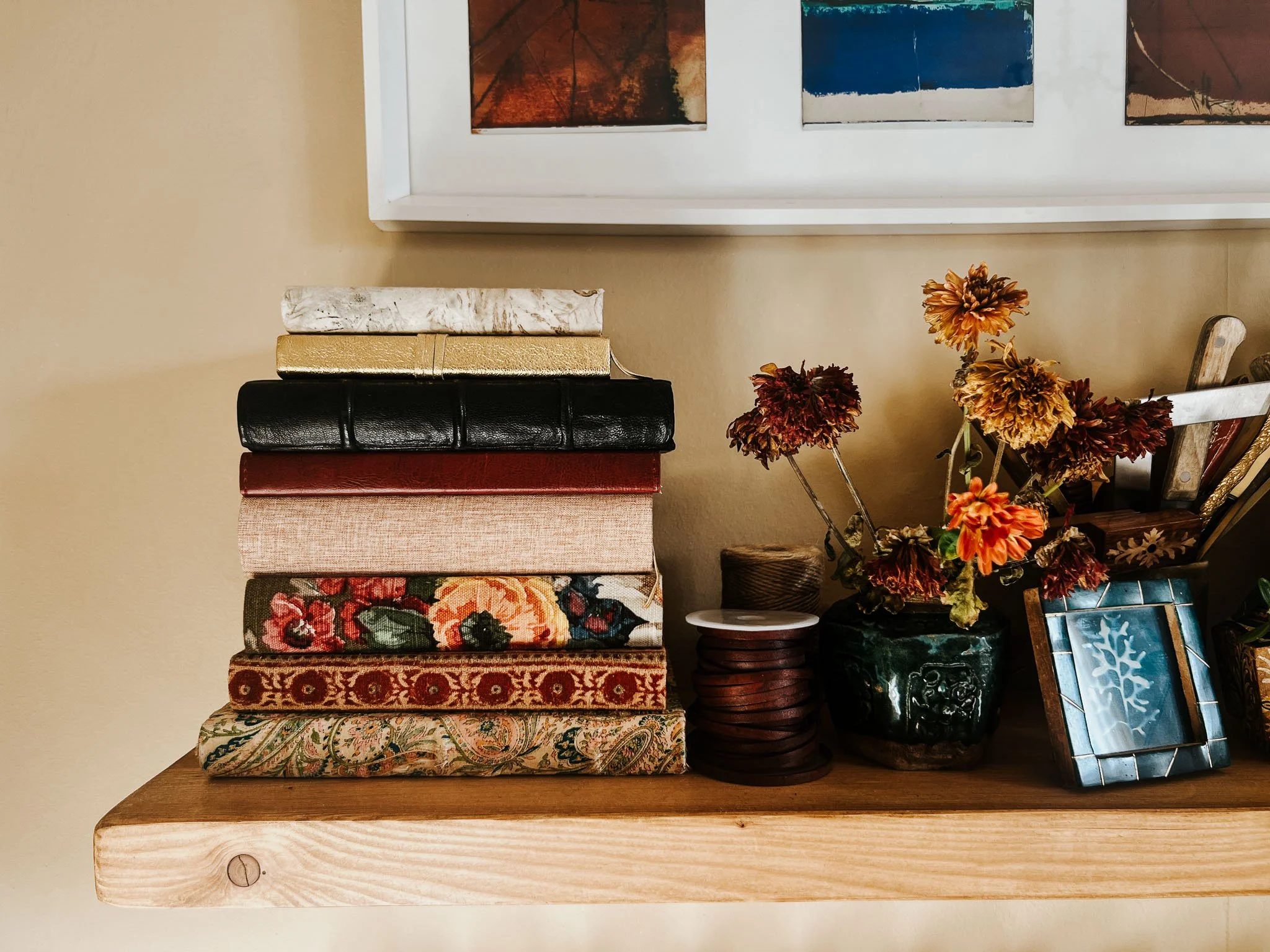
If you have ever bought one from my shop, I hope with all my heart that it is being used. Not saved. Not stored on a shelf waiting for the right moment, the right project, the right frame of mind or anything less than perfect writing and art. Knowing it is sitting in a drawer or on a shelf somewhere, pristine and unopened, unloved, would make me genuinely very sad.
There is no perfect day to begin journaling if you really want to start. Today is the day.
Whether it’s a £5 notebook stapled together or something you’ve saved up for, don’t be precious about it. Find a pen you love to write with, one that moves smoothly and doesn’t strain your hand and that writes well on all kinds of paper, and can be used for both writing and drawing [may I suggest this one].
Writing in a journal you’ve made with your own hands is a whole other experience.
There is something about knowing you stitched those sections of paper together, chose the cloth or leather covering material specifically, it changes your relationship with a journal and the blank page entirely. It feels less precious somehow, and more personal.
If that idea of making your own journals appeals to you, I have two self-paced online bookbinding courses that can get you started.
The Keepsake Book is my evergreen course and open to join anytime, it’s a wonderful place to begin, particularly if you love the idea of journals that hold bulky ephemera and mixed media alongside your words, but made with structural integrity, sturdy enough to hold all your memories without falling apart.
My signature course, The Art of Bookbinding, is a deeper dive into the craft. This course opens its doors to new students just once a year and if you’ve been curious about it, you’ll want to be on the waitlist so you don’t miss the next student registration.
But what if someone reads it?
It’s a real concern and I won’t dismiss it. If the thought of someone stumbling across your pages makes you clam up before you’ve even begun, a journal will never feel like a safe place to pour your heart out. A few things that might help. If it’s something deeply personal, some people write and then tear out the pages out and burn them, just to express the emotion privately. Others write in a hand that speeds up and becomes illegible when the content is too personal or tender. Honestly, I do this without even trying, my handwriting is barely-legible even to myself, so good luck to anyone trying to read them!
So find whatever solution lets you feel safe enough. That’s the only rule that matters.
How to start journaling
If you’re just beginning, or journaling after a long time:
Start with five or ten minutes. Set a timer if it helps. You don’t need more than that to begin with.
Only journal when you really want to. Journal at night when the day has settled. Journal on Sunday evenings as a reflection of the week past. Journal when something is troubling you and you need to get it out of your head and onto the page. Some days just draw, press in a flower or photos or write out the lyrics of a song you love, a quote or passage from a book you’re reading. All of it counts.
And of course some soothing instrumental music while you write can really help to get you into flow. I have the perfect playlist for you.
Some journaling prompts to get you started
If a blank page feels too overwhelming and you don’t know what to write about, try one of these prompts.
Try not to overthink as you write…
Something you keep meaning to do that you can never quite begin.
An aspiration you have that would change your life if it became true.
What stayed with you today, good or bad? Write about it for five minutes.
Describe a conversation you keep replaying. What do you wish you’d said, or not said?
Write down a line from a book or song that has been following you around.
If your life right now were a chapter in a book, what would you call it?
Something you would do differently if you knew today was your last day on earth.
Something beautiful you noticed this week that you almost didn’t stop for.
An encounter with a stranger that made your day.
Something heavy that you’re carrying at the moment that isn’t yours to carry.
Creating a corner of calm
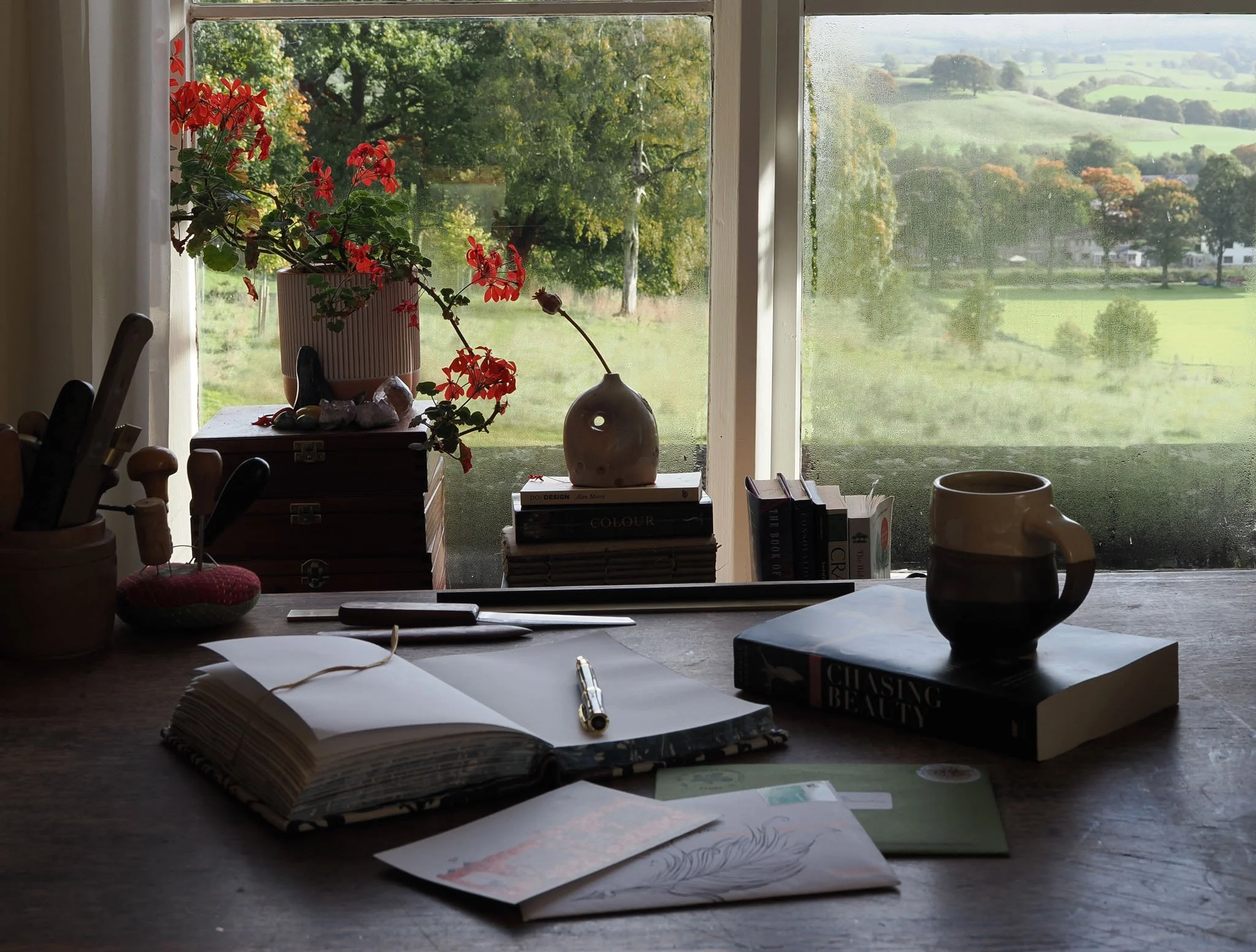
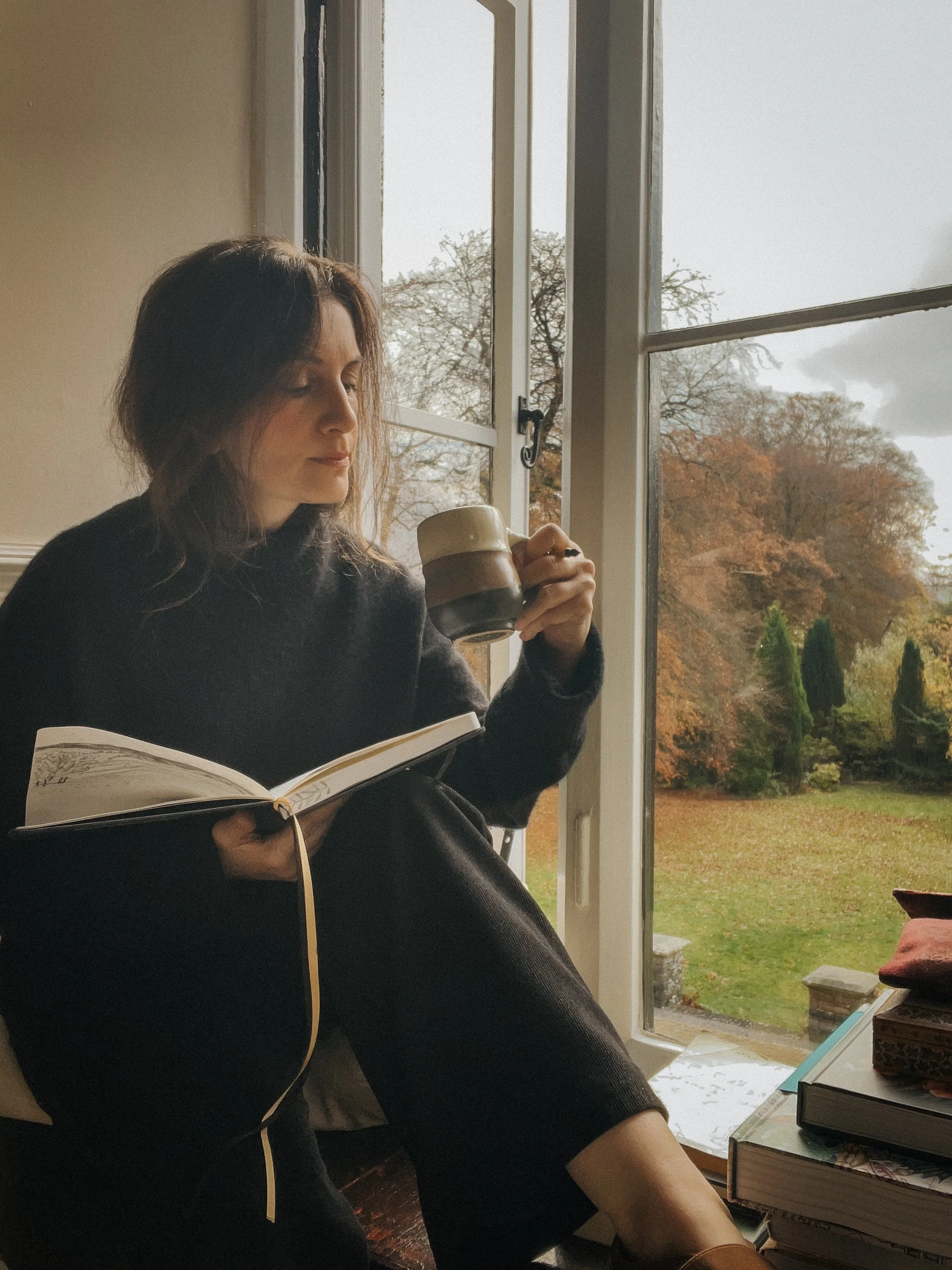
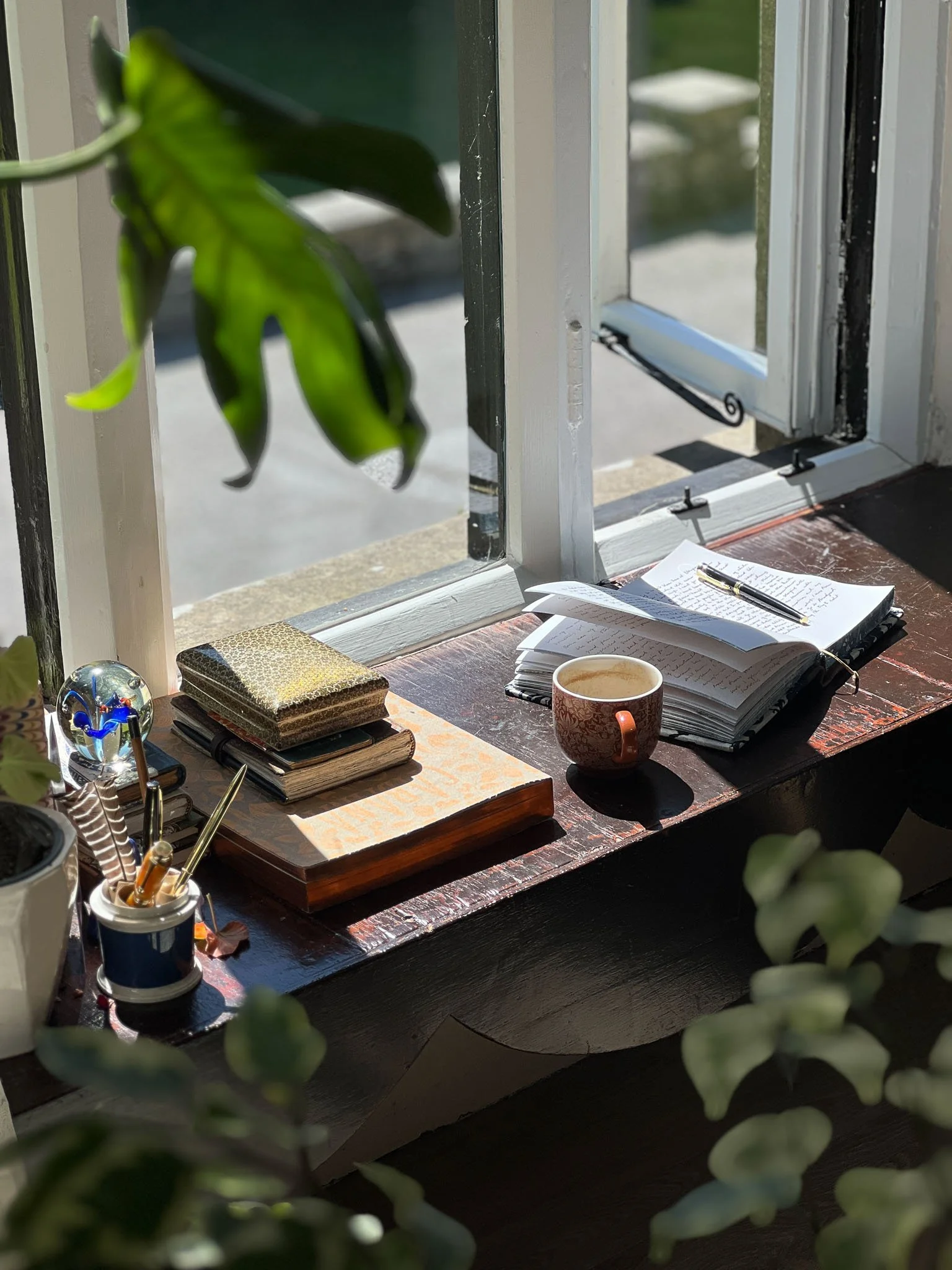
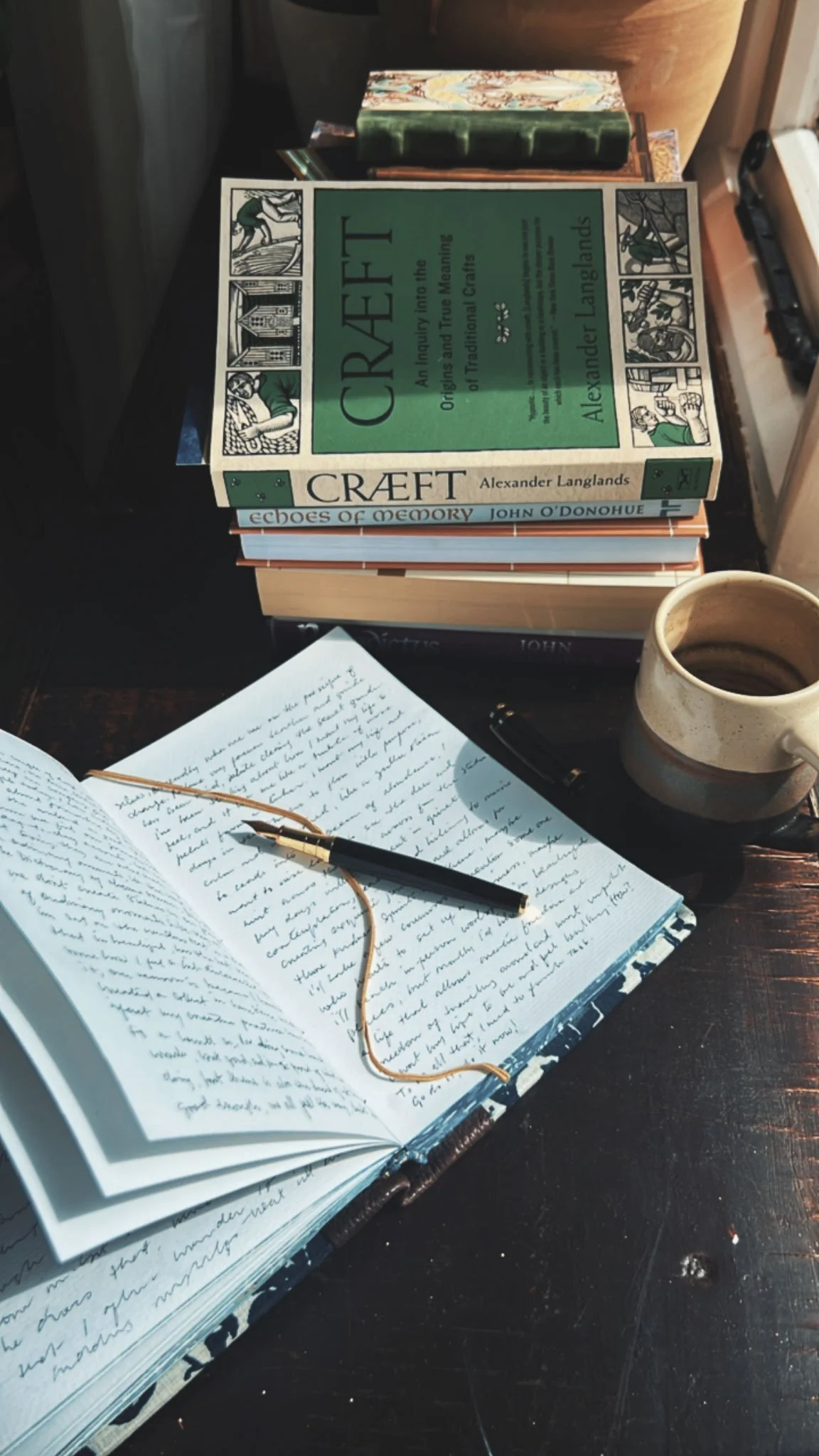
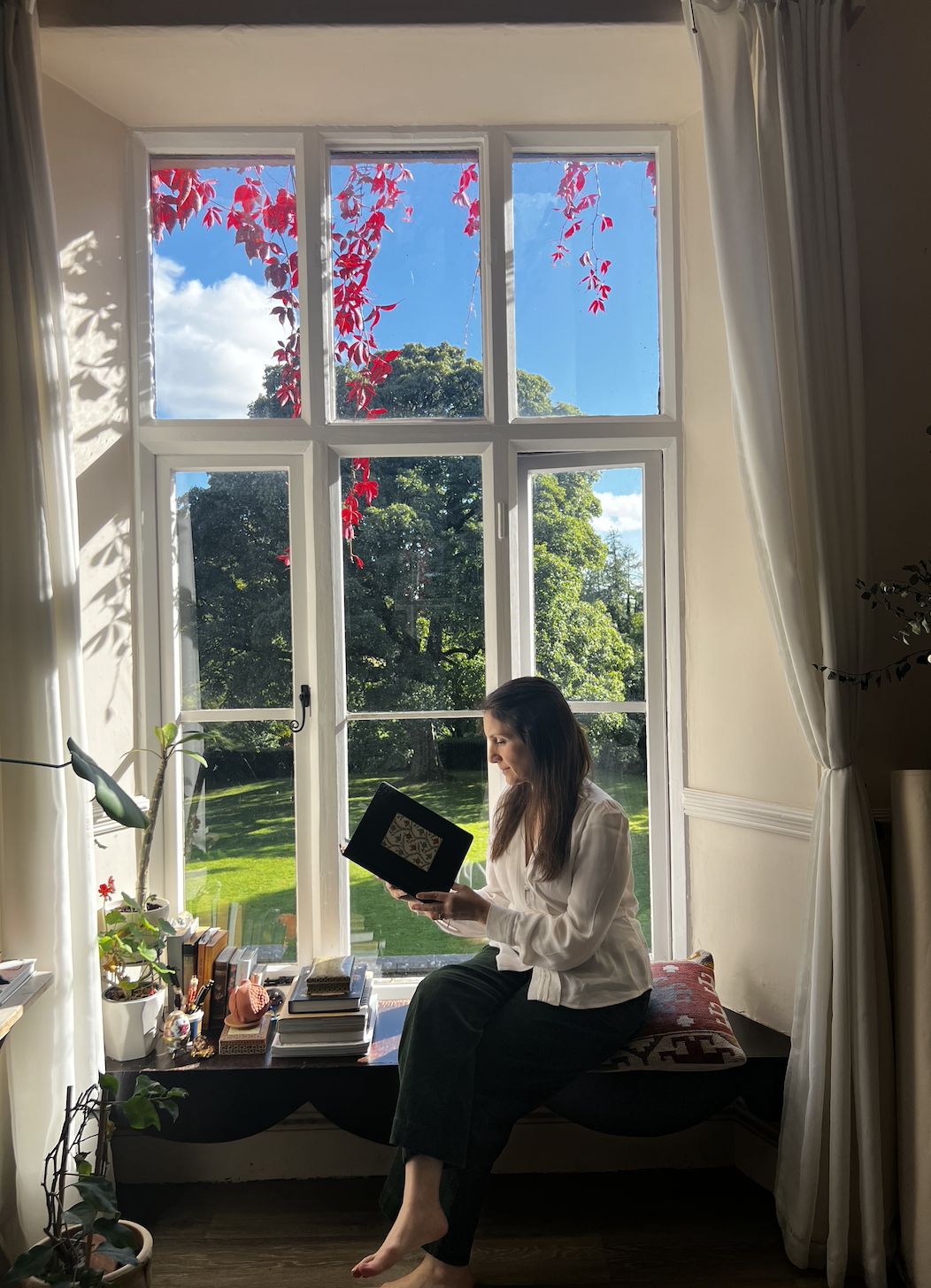
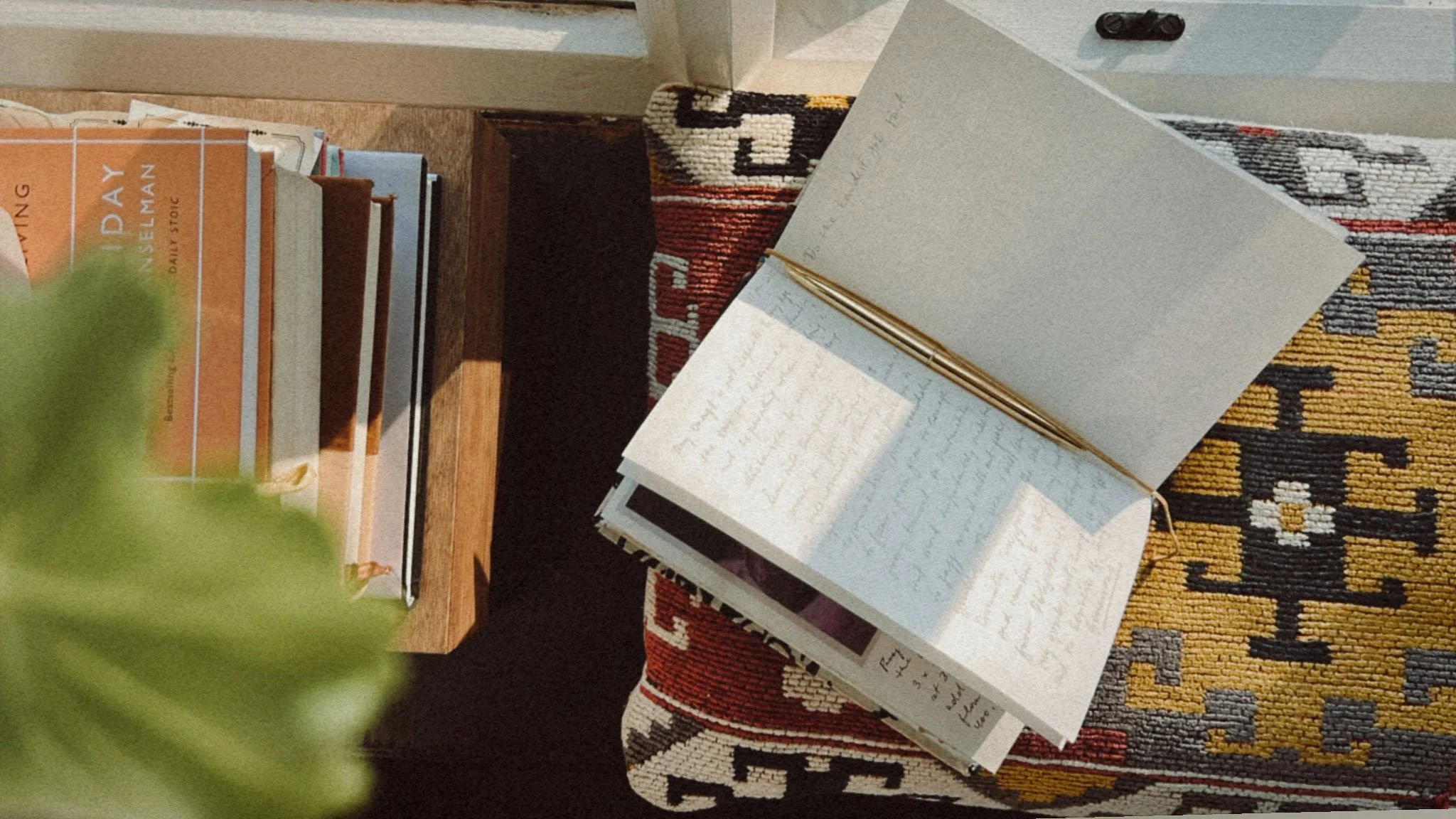
Finding a peaceful place to journal is half the battle in developing a lasting habit. For me that place is usually the window seat in my bindery overlooking a shared lawn, with a hidden secret garden at the far end that inspires endless sketches. I call this place my corner of calm. Each time I share it on my Instagram stories, I often get people telling me it inspired them to create their your own versions of it.
You don’t even need a whole corner, just a tray filled with a few things you love or a craft bag stuffed with all the essentials to get you started is more than enough, plus it’s portable!
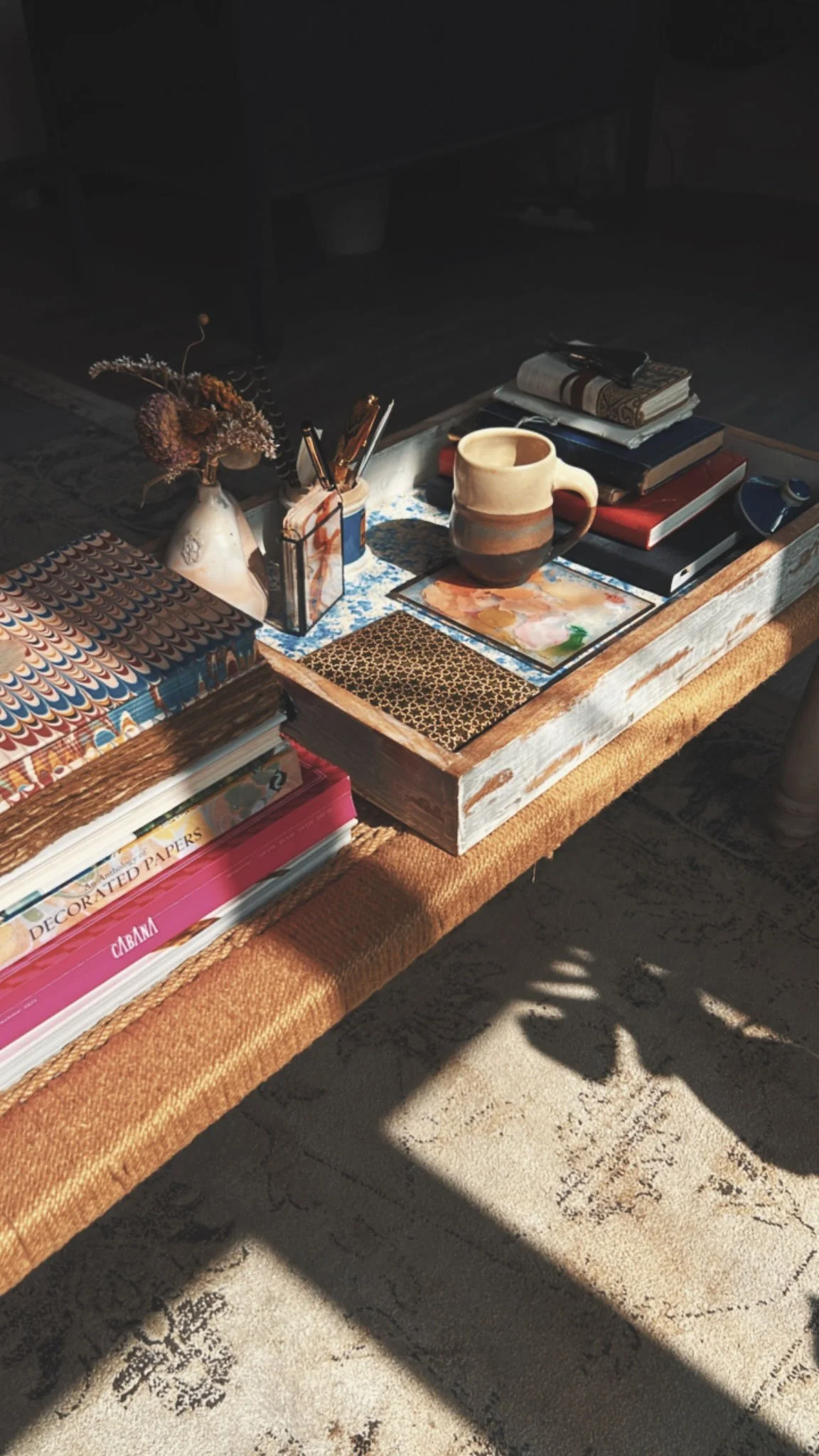
Curate your corner of calm with a little intention, the right vibe makes the difference between a journaling practice that lasts and one that doesn’t. Make it as inviting as possible, because that will help remove any resistance to begin.
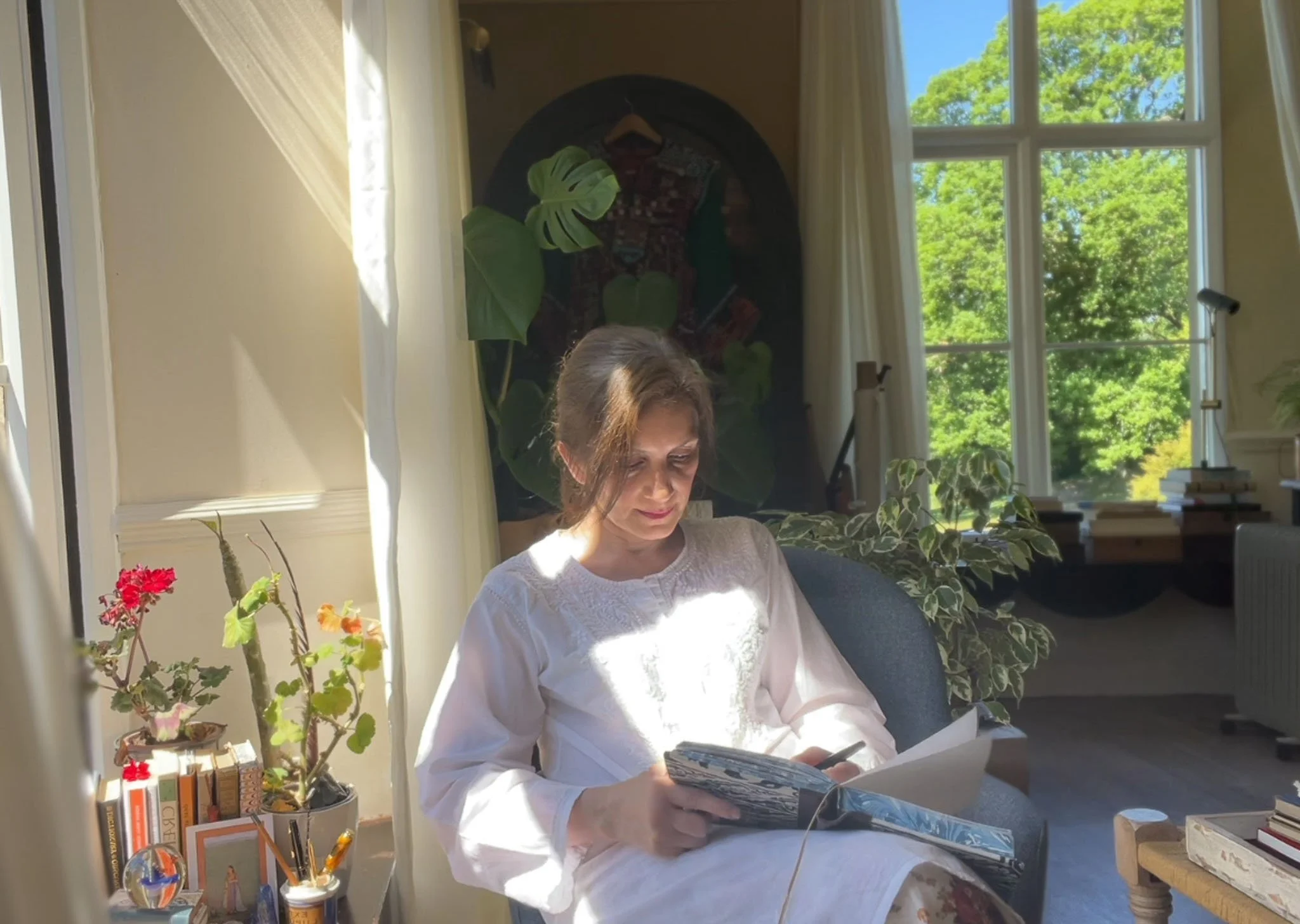
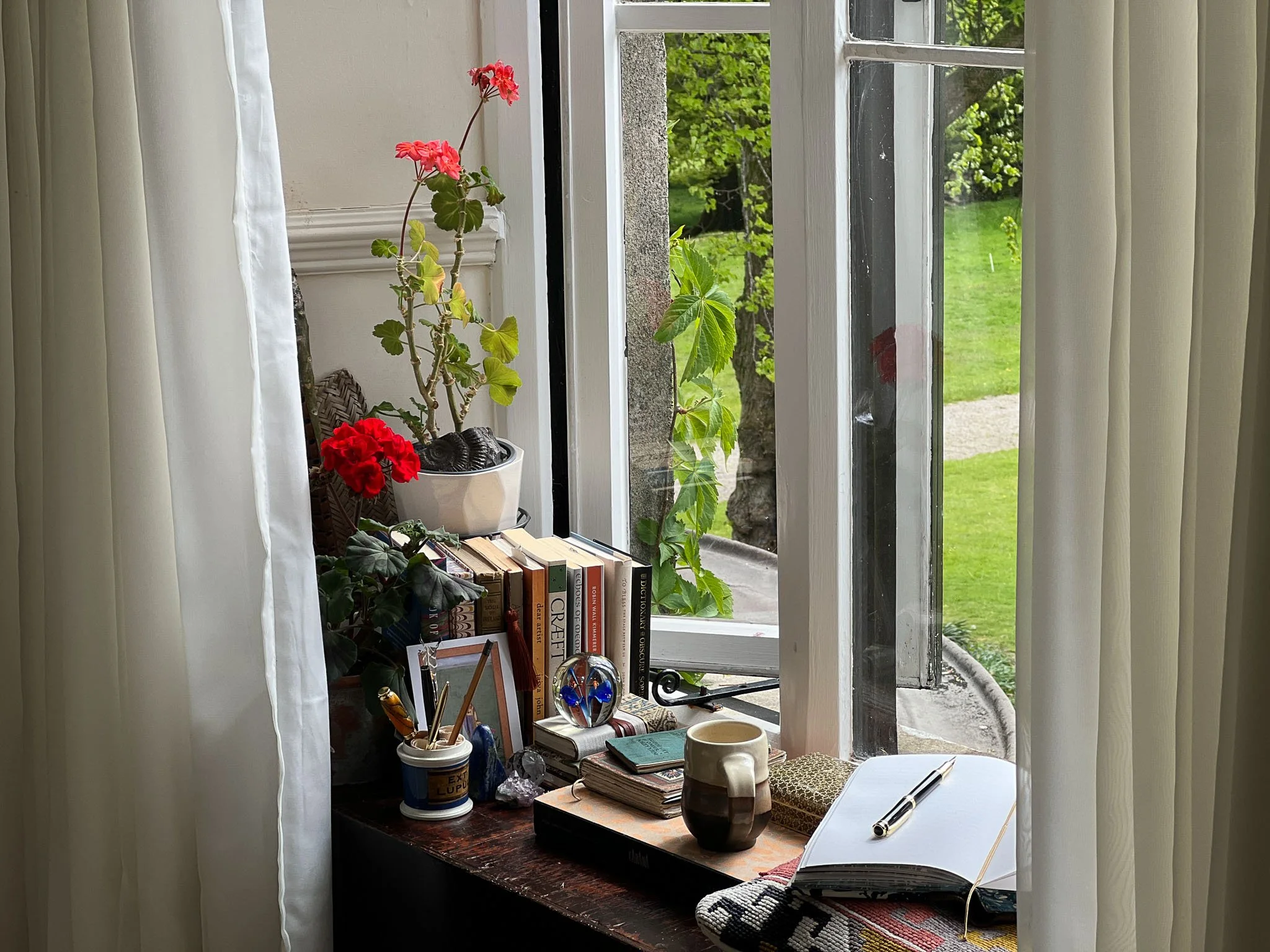
John O’Donohue writes somewhere in Anam Cara about the importance of having a place to be yourself, a space that receives you without demand. I think of a journal that way. Not as a productivity tool or a self-improvement project. Just as a place that’s entirely yours, where the page receives you as you are, on any given morning or evening, in any given state.
I hope you feel encouraged to pick up a journal today, if you’re reading this it tells me you’ve meaning to for quite some time now and that you probably already have the journal or two waiting to be filled.
If you use a Lotus Blu journal I’d love to know how you’re filling the pages or have you still got it stored away waiting for a special day and more time. Let’s make today that day, shall we?
